

JamesAHarrod
-
Posts
158 -
Joined
-
Last visited
Content Type
Profiles
Forums
Events
Blogs
Everything posted by JamesAHarrod
-

Arv Garrison
JamesAHarrod replied to JamesAHarrod's topic in Jazz In Print - Periodicals, Books, Newspapers, etc...
The Previn and Kessel session was from AFRS Jubilee #204. The Kessel/Ashby/Garrison/Paul session is from Jubilee #205, October 14, 1946. Arv' s wife, Vivian Garry also sang with the Benny Carter orchestra on this session. -
I have been researching recordings that included Arv Garrison. Billboard noted the release of Sarco 104, “Rip Van Winkle” and “Stick Around” (Vivian Garry Quartet-George Handy) in their Advance Record Releases column on page 124 of the June 29, 1946, edition. Was this release cancelled? I note that the LP release, Onyx 212, Central Avenue Breakdown, Vol. 1, did not include this release, only the first three releases by this group on Sarco. Also looking for an image of Tonsilectomy on Sarco 103.
-
Arv Garrison
JamesAHarrod replied to JamesAHarrod's topic in Jazz In Print - Periodicals, Books, Newspapers, etc...
Garrison's chops are best displayed during the AFRS Jubilee concert where four of the finest guitarists of the time play, one after another. Barney Kessel plays Cherokee followed by Irv Ashby playing I Got Rhythm, then Arv playing How High the Moon, ending with Les Paul playing Honeysuckle Rose - all accompanied by Benny Carter's rhythm section. Garrison's performance demonstrates he was the equal of his peers. -
I have taken a break from my ongoing chronicle of Tiffany Club to publish Bob Dietsche's appreciation of Arv Garrison: https://jazzresearch.com/arv-garrison/ Members might have heard Arv's name mentioned recently during the many celebrations of Charlie Parker's centenary. Arv was on three of Charlie Parker's first sessions for Dial Records.
-
I have not given up the possibility of putting it all together, but it was such a can of worms. Getting a reply from rights folks at Universal would be s start.
-
I have revised and updated research that was originally published in Names & Numbers, No. 82, July 2017. WP fans can view it at: https://jazzresearch.com/world-pacific-1957-new-york-sessions/
-
Several years ago I blogged about Chuck Landis' two clubs, Tiffany and Surf. That post did not do justice to either club. I have begun an extended examination of Tiffany at: https://jazzresearch.com/tiffany-club-1950-1951/ Please drop by and take a look. Jim
-
A friend recently alerted me to a duplicate LP issue on Calliope - two versions of CAL 3034! I have updated my old blog at google with both covers and labels: https://callioperecords.blogspot.com/2012/11/calliope-records-coda-james-a.html Jim
-
I have concluded my examination of Jack Lewis’ productions as head of A&R at RCA Victor. The last post discusses Rod Levitt’s albums for Riverside and RCA Victor that continued jazz explorations in the spirit of the “Birth of the Cool” sessions with the RCA sides included in Ed Michel’s The Arrangers CD for RCA Bluebird. Here are links to the three posts: https://jazzresearch.com/jack-lewis-west-coast/ https://jazzresearch.com/jack-lewis-east-coast/ https://jazzresearch.com/the-jazz-workshop-redux/ Jim
-
The first post in my examination of Jack Lewis and his tenure as A&R at RCA Victor is now up and viewable at: https://jazzresearch.com/jack-lewis-west-coast/ Information about Jack was scant on the internet except for a semi-obit that was mentioned on this forum a long time ago. He continued to be active in the music business after RCA let him go at the end of 1956, but his production of albums for RCA remain a benchmark in jazz. My next post will present his East Coast work at RCA. Jim
-
I did not bring the Calliope work over to the new site. My history of the Stars of Jazz television series will be published later this month and has links to the last Calliope posts that summarize front covers and artists. The other posts to that google site have been deleted as my book corrects much of that data. Jim
-
I have not seen anything online that gathers all of Bill Holman's activity. Ed Michel produced a recording (07/29/75) for John Synder to see if A&M would spring for a big band recording of Holman's rehearsal band on the Horizon label. Nothing happened and the four charts recorded never saw the light of day. Jim
-
Back in 2012 Groove Merchant and others on this forum suggested that a labelography of Pacific Jazz was needed. I set about that task on the google blogger platform. It has been more or less complete for some time now, but I have concerns about the longevity of the blogger platform and decided to move all of my work to a more stable environment. I employed the services of Steve Albin to design a new web site and move my google blogger content to the new site. That process involved moving my original web site, jazz research.com, as well. All of my work is now under one hat at the same domain, jazzresearch.com. I invite members to drop by and take a look around. It is still under construction as the WordPress environment has many bells and whistles that were not available with google. I will announce new work on this forum from time to time. At present I am working on an extended remembrance of Jack Lewis. When Jack passed away some time ago I found some discussion on this forum, but unfortunately the link to his obituary was no longer active. Did anyone copy and save it? Jim
-
I have concluded my six part examination of The Haig. Here are links to the recent posts: The Haig - Part Six (1957) https://jazzwestcoastresearch.blogspot.com/2020/01/the-haig-part-six.html The Haig - Part Five (1956) https://jazzwestcoastresearch.blogspot.com/2020/01/the-haig-part-five.html The Haig - Part Four (1955) https://jazzwestcoastresearch.blogspot.com/2020/01/the-haig-part-four.html I extend my thanks to all who have followed this odyssey of the club that launched the careers of many jazz artists. The address deserves a plaque to commemorate its place in Los Angeles jazz history.
-
Shorty Rogers Rendezvous Ballroom 9/27/52
JamesAHarrod replied to Stonewall15's topic in Discography
The same drawing on the back cover was used on all of the Vantage LPs that I have seen from this period. I do not believe it was meant to portray musicians on the record. Here is the CHS cover: Jim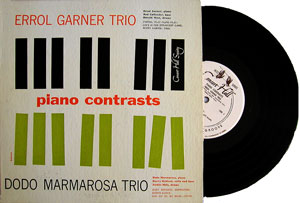
-
Thanks for the kind comments. Parts 4 and 5 are now up and available: https://jazzwestcoastresearch.blogspot.com/2020/01/the-haig-part-five.html Jim
-
Thanks, that clears it up for me.
-
In this clip from Ruth Price’s appearance on Stars of Jazz Bobby Troup says that the first song Price sings is from her new Roost album. She sings “You Are My Lucky Star” (w. Arthur Freed, m. Nacio Herb Brown). This tune is not listed on the back liner as being on that album. Do any members have the LP or CD reissue and can verify what she sings on the album? The last tune on side one according to the liner is “When You Wish Upon A Star.”
-
Yes, the Nieswand book. Let me know if you need a copy of the Tiffany ad.
-
Big Jay McNeely did play at the Tiffany Club in the 1950s. Check out Bob Willoughby's Jazz In LA.
-
Various sources have reported that The Haig seated a maximum of 85 people including those standing at the bar. When Dick Bank was researching The Haig for his Bud Shank production, After You, Jeru, he visited the Los Angeles Department of Building and Safety to look at the planning files for 638 South Kenmore. The four room bungalow was moved to that location around 1932 where it was converted to a cocktail lounge. Fresh Sound issued the Wardell Gray session, and other sessions have appeared on Japanese CDs over the years, some with wrong dates, etc. Back when Bob Andrews was actively leasing his recordings the emphasis was on sales appeal, would there be enough collectors interested in the material to justify the cost of making it available. How many people had even heard of Willie Hawkins, the blind pianist from Detroit?
-
I have resumed my examination of Los Angeles jazz clubs from the 1950s. My current subject is The Haig. Interested members can view the first and second installments at: http://jazzwestcoastresearch.blogspot.com/2018/03/the-haig.html http://jazzwestcoastresearch.blogspot.com/2018/04/the-haig-part-two.html
-
Here is the Lord listing: Lennie Niehaus + Contemporary Jazz Octets : Lee Katzman (tp) Kent Larsen (tb) Bill Perkins (ts) Jack Nimitz (bar) unknown (p), (b), (d) unknown location, prob. Los Angeles, prob. 1960 A bit of Brahms (from the 3rd symphony by Brahms) Highland Music Company HM-1/HM-2 Annie's dance (from Peer Gynt suite by Grieg) - My pal Yachee (from the opera Pagliacci by Leoncavallo) - Lazy day - Here come the lions - Mulliganesque - Moe's art (from G minor symphony by Mozart) - Romeo and Juliet (from the overture by Tschaikowsky) - Ellingtonesque - Will success spoil rock'n roll - Cartagena - Not exactly - Note: The above information obtained from Lennie Niehaus by Coen Hofmann and Gerard Hoogeveen of "Names & Numbers".
-
Miles at the Haig
JamesAHarrod replied to JamesAHarrod's topic in Jazz In Print - Periodicals, Books, Newspapers, etc...
The primary jazz fan who was actively recording jazz groups in the clubs around this time was Bob Andrews. I believe that he had tacit approval from the owners and did so without concealment or hiding his activity. Dick Bock was the gate keeper at this time and most likely granted permission or approval of this activity. -
I am reading the recently published autobiography of Walter Hopps, The Dream Colony. Hopps died in 2005 and had been working on the book for several years. Much of that work consisted of audio tapes of Hopps recalling his life. Thanks to those tapes the editors of the book, Deborah Treisman and Anne Doran, have pieced togther a narrative that I am enjoying immensely. Hopps spent some time in Laguna Beach and some of his relatives figured prominanetly in the history of Laguna Beach. His great-great-uncle, Harry Woods, built a Tudor style ocean front manse that was sold to Bette Davis when the Woods family died out. The area is still known today as Woods Cove. Hopps was an avid jazz fan and regularly visited clubs to hear Billie Holiday, Charlie Parker, Gerry Mulligan, Dave Brubeck, Paul Desmond, etc. In December of 1953 Hopps and Jerry Perenchio presented a concert at UCLA that featured the Lighthouse All Stars, Shorty Rogers Giants, The Dave Pell Quartet, Don Ewell, Barney Kessel, John Graas Modern Jazz Ensemble, and the Chet Baker Quartet. William Claxton mounted an exhibition of his jazz photography in conjunction with the concert. Later in the 1950s and early 1960s Claxton became part of the west coast art scene when Hopps and Edward Kienholz founded the Ferus Gallery. He double dated with Chet Baker and recalled one night at the Haig when Gerry Mulligan stopped the music and told the audience that Miles Davis had just entered the room. According to Hopps Mulligan asked Chet to lend his trumpet to Miles, and Chet sat in the audience while Gerry and Miles completed the set. Hopps does not date the event but stated that shortly after that Gerry spent several months at the Honor Farm in Castaic. At the recent Los Angeles Jazz Institute event Ken Poston presented a survey of Gerry Mulligan’s time in California. The audio clips that Ken played for the audience included some recently discovered/acquired tapes of the Mulligan Quartet at the Haig. Ken said that some of this music would be part of the LAJI Members Bonus CD that will be available later this year. We can only hope that an avid jazz fan had a tape recorder running when Miles appeared at the Haig, and that it will surface one day. I highly recommend this book to members with an interest in the west coast art scene of the 1950s. The jazz content was an unexpected bonus for me.