_forumlogo.png.a607ef20a6e0c299ab2aa6443aa1f32e.png)

jeffcrom
-
Posts
11,694 -
Joined
-
Last visited
Content Type
Profiles
Forums
Events
Blogs
Everything posted by jeffcrom
-
NIS, I was sure that you were wrong about the SME Withdrawal CD, but I went to Emanem's John Stevens page here, and sure enough, it's listed as "out of stock." Oliv & Familie is slightly later music that the track I included, and has some similarities to that track; it's very good. Quintessence, from 1973/74, is one of the best things the SME ever did, but it's rather different from what you heard - long, detailed, quietly intense improvisations. Glad you enjoyed the BFT.
-
Rev. Johnny L. "Hurricane" Jones - Do Your Thing (Jewel). A sermon and a handful of songs and prayers from 1974. Julian Bond is in the congregation - name-checked by The Hurricane. The great Clarence Fountain joins Rev. Jones on "Walk With Me." And The Hurricane somehow manages to mash up one of Jesus' parables and an Isaac Hayes song: "And he said to the servant with one talent, "You didn't Do Your Thing!'" Right now this seems as good as any music / performance I've ever heard.
-
Thanks to all who listened. 1. Fred Dale and His Orchestra - "Mean to Me"; June, 1954. Band includes Fred Dale, Al Kiger, Doug Mettome - trumpet; David Baker, Urbie Green - trombone; Jerry Coker - tenor sax; Al Plank - piano. This was basically the Indiana University Jazz Band, with a few ringers thrown in for the recording. You can read the full story here, but the band won a collegiate jazz band competition, and part of the prize was a recording session. There were four sides, issued on 78 and 45, but I doubt they've ever been reissued. I've loved this one since finding it in the first box of 78s my grandmother gave me 40 years ago. Dave Baker wrote the arrangement, and solos are by (I'm pretty sure) Mettome, Urbie Green, and Jerry Coker. Coker's playing is particularly beautiful, as several people pointed out. 2. Jeremy Steig - "Dark as a Dungeon"; NYC, 1963 . Steig - flute; Denny Zeitlin - piano; Ben Tucker - bass; Ben Riley - drums. This track is from the Flute Fever sessions, but has never seen the light of day except for this 45 RPM issue. (The picture is of the flip side, a two-minute edit of "Oleo.") Some of you really liked this one. I don't think it's as strong as the tracks chosen for the LP, but it's pretty good. 3. Bunky Green - "Sweet Inspiration" (Met); probably Chcago, 1968 or 1969. Okay, this one ain't much, but it's Bunky Green! This record doesn't show up in any discographies I've seen, and I once emailed Mr. Green asking about it, but never received a reply. The flip side of this Paul Serrano-produced record is "By the Time I Get to Phoenix." In retrospect, not much to see here, I suppose. 4. Howard McGhee - "Crepe Suzette" from a Stardust 45 RPM EP, c. 1971. McGhee - trumpet; Cecil Young - piano; Doles Dickens - bass; Juel Curtis - drums. This is another impossibly rare record, very little known - Howard McGhee with a middling rhythm section on Harrison Smith's Stardust label. I like McGhee's playing, but many of you were not particularly impressed with this one. In addition to the listed personnel, Eddie Jefferson sings on "Sammy." Rare as this one is, I found a picture on a Japanese website. 5. Eddy Howard - "Stardust"; NYC; October 4, 1940. Eddy Howard - vocal; Bill Coleman - trumpet; Benny Morton - trombone; Edmond Hall - clarinet; Bud Freeman - tenor sax; Teddy Wilson - piano; Charlie Christian - guitar; Billy Taylor - bass; Yank Porter - drums. Mostly-forgotten pop singer Eddy Howard made one session for Columbia with a great little jazz band led by Teddy Wilson. Although one person liked Howard's singing, this was included mostly for Charlie Christian's short, but lovely guitar solo. This track should have been included in the Columbia Charlie Christian box for that solo, but wasn't. I know this session was issued on LP in Europe at some point, but it has remained difficult to find. 6. Hurricane Brass Band - "Olympia Special" from Leroy Jones and His Hurricane Marching Brass Band of New Orleans (LoAn); New Orleans, March, 1975. Band includes Leroy Jones, Gregory Davis, Gregg Stafford - trumpet; Lucien Barbarin - trombone; Darryl Adams - alto sax; Anthony "Tuba Fats" Lacen - tuba; Charles Barbarin - bass drum. I thought more folks would like this, although it's obviously pretty raw. This is an important album in the history of New Orleans brass band music, even though it's very hard to find a copy. It was recorded at a time when the music was apparently dying out - older musicians were retiring, and young guys had no interest in the music. But Danny Barker organized the Fairview Baptist Church Brass Band, which led to the Hurricane, which led to the Dirty Dozen and to the revitalization of the Olympia. These guys were aged 17 to 23 when this was recorded, and most went on to prominent musical careers - by New Orleans standards, anyway.
-
Thanks to all who listened. 1. The Billy Tipton Memorial Saxophone Quartet - "Miss Ann" from Sunshine Bundtcake (Horn Hut); Seattle; early 1999. Annelise Zamula - alto sax; Jessica Lurie - alto & tenor; Sue Orfield - tenor; Barbara Marino - baritone; Pal Barger - drums. I love this group and its energy; y'all either loved or hated this driving version of Eric Dolphy's tune; Interestingly, MG heard Jewish influences - I don't on this tune, but they do play some klezmer tunes on this album. 2. Connie Crothers - Lenny Popkin Quartet - "In Motion" from the album of the same name (New Artists); Brussels; November 25, 1989. Crothers - piano; Popkin - tenor sax; Cameron Brown - bass; Carol Tristano - drums. This album is (to me) a fascinating glimpse of the Tristano school playing free jazz. I kind of regret not including one of the more hard-driving tracks, but I like the interaction here. 3. Nick Mazzarella Trio - "Do Not Disturb" from This is Only a Test: Live at the Hungry Brain (Sonichla); Chicago; May 8, 2011. Nick Mazzarella - alto sax; Anton Hatwich - bass; Frank Rosaly - drums. Great freebop from one of the young guys on the Chicago scene. 4. Spontaneous Music Ensemble - "Seeing Sounds & Hearing Colors, Movement 2 'C'" from Withdrawal (Emanem); London; March, 1967. Kenny Wheeler - trumpet, flugelhorn; Paul Rutherford - trombone; Trevor Wats alto sax, flute; Evan Parker - soprano & tenor; Derek Bailey - guitar; Barry Guy - bass; John Stevens - percussion. John Steven's SME is a continual source of amazement for me. The Emanem catalog is a rich source of early (and later) material by them. This is obviously an improvisation planned/talked about in advance. 5. Shaking Ray Levis - "Heart Beam" from False Prophets or Dang Good Guessers (Incus). Chattanooga; June, 1992. Dennis Palmer - synthesizer and electronics; Bob Stagner - drums. I knew this one would be controversial. The Shaking Rays are no more, since the death of Dennis Palmer. But when they were active, they played with what seemed to be a very deliberate randomness, as if trying to thwart all rules of aesthetics and reflect the chaotic quality of life itself. But Dennis's use of a digital delay actually imposed some form on the music, since things both musicians played would reappear later. Dennis considered the delay unit the third member of the group, and called it either "The Dis-Similar Twin" or "The Hidden Hillbilly." This was the first album by an American ensemble to appear on the mighty Incus label. The cover art is by Dennis.
-
Thanks to all who listened, either just in this section or all sections. 1. Brew Moore - "Ergo" aka "Zonky" from Svinget 14 (Black Lion); Copenhagen; September 26, 1962; Brew Moore - tenor saxophone; Bent Axen - piano; Niels-Henning Orsted Pedersen - bass; William Schiopffe - drums. Brew playing the McKinney's Cotton Pickers tune he learned from Dick Allen's record collection - see the Moldy Fig Stomp section. Only he couldn't remember the bridge, so he made up his own. Whatever - great swinging playing. Another version of this album is called Brew Moore in Europe. 2. Teddy Charles - "You Go to My Head" from The Teddy Charles Tentet (Atlantic). Band includes Teddy Charles - vibes; Jimmy Raney - guitar; Art Farmer - trumpet; Don Butterfield - tuba; Mal Waldron - piano; Gil Evans - arranger. Some of you found this too precious, but I think it's a brilliant arrangement, and it inspires some excellent solos by Charles and Raney. 3. Hank Jones/Dave Holland/Billy Higgins - "The Oracle" from the album of the same name; NYC; March, 1989. This is a Dave Holland tune, but the whole album's this good. 4. Vic Juris - "Blackberry Winter" from Music of Alec Wilder (Double-Time Jazz); NYC; September 23, 1996; Vic Juris - guitar; David Liebman - soprano sax; Steve Laspina - bass; Jeff Hirschfield - drums. I love Alec Wilder's music, and am willing to put up with Juris' overly-processed guitar sound for a sensitive performance of a beautiful song like this. I consider "Blackberry Winter" the best thing Wilder ever wrote. 5. Gene Krupa - "Disc Jockey Jump" NYC; January 22, 1947. Band includes Don Fagerquist and Al Porcino on trumpet, Charlie Kennedy on alto, Buddy Wise on tenor, and Krupa on drums, of course. I've always liked the post-war Krupa band - interesting arrangements and always some good soloists on hand. I think the trumpet solo is Fagerquist, alto by Kennedy and Wise on tenor; don't know who the trombonist is. Boogie, Ballads, and Be-Bop on Collectables is a good anthology of this period.
-
Thanks to all who listened, either just in this section or all sections. 1. Dewey Jackson's Peacock Orchestra - "Going to Town"; St. Louis, June 21, 1926. The band includes Dewey Jackson and Albert Snaer on trumpet, Willie Humphrey on clarinet and tenor sax, Pops Foster on tuba, and Floyd Campbell on drums and vocals. This nice little St. Louis band (with several New Orleanians) recorded three sides for Brunswick/Vocalion; a fourth side was a Floyd Cambell vocal accompanied only by piano and trumpet. I like Dewey's bluesy trumpet, but I really like Willie Humphey's searing clarinet. I edited out Campbell speaking the name of the tune at the end. The presence of Louisianans Snaer, Humphrey, and Foster is explained by the fact that this band played on the steamboats that ran between New Orleans and St. Louis. It's available on the Timeless Traditional anthology Jazz in Saint Louis 1924-1927. 2. Tim Laughlin - "Blues for Faz" from The Isle of Orleans (Gentilly); New Orleans, December, 2002. Tim Laughlin - clarinet; Tom McDermott - piano; Frankie Lynne - banjo; Matt Perrine - bass; Hal Smith - drums. The track has not one, but three of my favorite living Crescent City musicians - Laughlin, McDermott and Perrine. Laughlin's beautiful playing represents a clarinet style handed down from Leon Roppolo, who influenced Irving Fazola (honored here), who influenced Pete Fountain, Laughlin's mentor. The Isle of Orleans is unusual in that it's a traditional jazz album composed of all original pieces. Laughlin said, "If I'm going to play obscure music, it might as well be my own." 3. McKinney's Cotton Pickers - "Zonky"; NYC; February 3, 1930. Band includes John Nesbitt, trumpet and arranger; Don Redman - alto sax; Prince Robinson - tenor sax; Dave Wilborn - banjo and vocal. The great pioneering big band with the unfortunate name. The most swinging banjo/tuba rhythm section ever, probably. Solos are by Nesbitt and Robinson. I wanted to include this partly because Brew Moore learned this tune from the late jazz historian Dick Allen, when he lived in the apartment above Dick in New Orleans. Dick told me that Brew often asked to hear this one; see track one of the Straight No Chaser section. This is available on lots of reissues; I took it from the excellent one-disc survey of the Cotton Pickers on RCA/Bluebird, The Band Don Redman Built. 4. Kid Howard - "Bogalusa Strut" from Kid Howard at the San Jacinto Hall (GHB); New Orleans; August 2, 1963. Kid Avery Howard - trumpet; Jim Robinson - trombone; George Lewis - clarinet; Creole George Guesnon - banjo; Alcide "Slow Drag" Pavageau - bass; Cie Frazier - drums. This CD amazes me because it shows how subtle and intricate New Orleans collective improvisation had become by the middle of the 20th century. Almost every chorus here has a different texture, a different balance between instruments. One chorus might be and equal three-part conversation; the next might be a clarinet/trombone duet with the trumpet commenting; the trumpet might clearly have the lead in the next. 5. Jimmy McPartland - "The World is Waiting for the Sunrise"; Chicago; October 11, 1939; Jimmy McPartland - cornet; Bud Jacobson - clarinet; Boyce Brown - alto sax; Floyd Bean - piano; Dick McPartland - guitar; Jim Lanigan - bass; Hank Isaacs - drums; Just great Chicago jazz, but Boyce Brown is something special, and I wanted to include him. This is probably available on a CD, but I took it from and MCA LP twofer, Shades of Bix. 6. Willie Humphrey - "China Boy" from the LP New Orleans Clarinet (Smoky Mary); New Orleans; May, 1974. Willie Humphrey - clarinet; Sing Miller - piano; Frank Demond - banjo; James Prevost - bass; Betty Carter (not that one) - washboard. Willie is one of my favorites, and remained creative into his 90s - although as he aged the listener had to accept more eccentricities in terms of sound and execution. The imagination was present until the end, though. Nobody much liked the needlessly archaic rhythm section here, and neither do I, but I think Humphrey's playing is very exciting. He was probably at his peak in the early 1960s - check out his playing on the Eureka Brass Band's Atlantic album. This track was reissued on a Humphrey CD on the Mardi Gras label.
-
Computer problems have left The Magnificent Goldberg unable to post here, so he has emailed me his comments so that I can post them. Since I'm revealing the answers in a few hours, I'll let that serve as my reply. 1 I know the tune but can’t recall the title. Yeah, this is a jazz record all right; instantly recognisable :D 2 ‘You go to my head’; a very beautiful song; kind of preciously arranged. The vibes player sounds a bit like Milt Jackson to me, on days when he’s under the control of John Lewis. Guitarist sounds like Herb Ellis, Jim Hall or one of those other guys from out there in the fifties; I can never tell one from another. 3 Sounds like a Blue Note recording from the intro. Well, I was expecting the tenor and trumpet to come in then, but they didn’t, so perhaps they’re not there at all. Good. Sometimes real jazz just gets me – I’ll think seriously about getting this when I find out what it is. This is definitely something I can live with and need from time to time. I’m thinking McCoy Tyner and Elvin Jones in a Larry Young mood, but not whoever the bass player is. But I’m probably wrong. 4 Oh, yet another flute player who isn’t Fathead or Herbie Mann. And not a flute player, either! A soprano player who isn’t Fathead. With a seventies guitarist, ten years out of date. Well, very pretty, I’ve got to say. 5 This is a Basie tune; is it ‘Midgets’? I think so. I don’t suppose it’s Basie’s band, though it might just as well be for all the impact it’s having on me. (Hands up everyone who’s noticed I’m not a great Basie fan :)) That was all pretty interesting, Jeff. I knew I wouldn’t get anything, and don’t think I have. But even the stuff that really ain’t for me was interesting.
-
Computer problems have left The Magnificent Goldberg unable to post here, so he has emailed me his comments so that I can post them. Since I'm revealing the answers in a few hours, I'll let that serve as my reply. 1 ‘Mean to me’. Big band. Well, the start of the trumpet solo signalled Maynard Ferguson, but the rest was remarkably subdued, so it probably wasn’t him. Well, almost certainly, really. 2 Wonder what kind of flute the guy was playing at first? Well, I can tell you it ain’t Fathead. ‘Snot Herbie Mann, either. Something from the West Coast fifties, I’m reckoning. Oh, my computer says this is only 2:08, but here we are at 2:45 and it’s just finishing. 3 Organ band. Yeah, this is rare all right! Funny band; strange arrangement; strange tune; strange rhythm, like it’s trying to be a modern dance craze. I wouldn’t be surprised if it weren’t someone completely off the wall like Billy Vaughn. Here’s another that’s longer than the computer sez. 4 Oh, a jazz record. OK, I suppose, if you like that kind of thing :G Hey! That one was SHORTER than the computer says! Duh? Need a cuppa. Back soon. 5 Lazy trombone, ‘Stardust’. Beautifully sung. The singer sounds English, by his accent, which is quite cultured Home Counties. There was an English singer who was fairly popular in the US during the war years (NOT Vera Lynn). I’ll look him up later. Enchanting! 6 Ho! Wonderfully rowdy New Orleans band! Shows how much we’re missing not collecting this staff. I keep meaning to, but the lure of Haiti and the Dominican Republic, not to mention Cuba, is too great at present. But there’s a sense in which this is really NOT very far from the musics of those islands. I do hope this one is as long as the nine minutes it says it is. Damn! Only 6:55!! Well, ‘tis pity this is rare, because I want it. You could listen to it all night and never want anything else.
-
Computer problems have left The Magnificent Goldberg unable to post here, so he has emailed me his comments so that I can post them. Since I'm revealing the answers in a few hours, I'll let that serve as my reply. 1 Don’t know this but I’m going to guess Bennie Moten. After the very classic vocal chorus, I’m a LOT less sure. If it ain’t Moten, maybe it’s Erskine Tate’s Vendome Orchestra. 2 Booful! Don’t CARE who it is, even if it’s Benny Effin’ Goodman! But I think it’s the guy who played with EVERYBODY but never made a name for himself. His name… (frantically digs out John Kirby CD) … was Buster Bailey. I love the tune, too. It’s nearly something else, but isn’t. 3 Oh so really nice! Oh, I know that voice! It’s a guy who worked a lot with Red Allen… (frantically digs out Red Allen CD)… Billy Banks. Maybe this is Red Allen. I’ll give it another go and see if I can get closer. Thinking about it while having a cough and a drag outside just now, I concluded it ain’t Red, which doesn’t mean it’s not Banks, who sang with lots of people. Well, we’ll see tomorrow. For the moment, on to 4. 4 By its length, something from the LP era, obviously, but pretty New Orleans. Why do I think it’s the De Paris brothers? Really nicer than I thought they were from the only LP I ever had of them (which was with Spoon). 5 Lord, another booful one! ‘The world is waiting for the sunshine’, but I think it has another title when NO jazzmen do it. Just right for a totally wet November, though. Sounds a bit hifi for an old 78. And the clarinet honk! Well, that really got me. 6 Could this be Sidney Bechet? There’s that lovely broad sound that went straight into Earl Bostic’s alto and came out like a cement mixer.
-
BFT 140 - Discussion of The Freedom Principle
jeffcrom replied to jeffcrom's topic in Blindfold Test
Computer problems have left The Magnificent Goldberg unable to post here, so he has emailed me his comments so that I can post them. Since I'm revealing the answers in a few hours, I'll let that serve as my reply. 1 Very exciting! Well, I can’t say I like it, but I AM excited. I think I’ve heard the alto player making those forties honks before – that Jewish guy who made a couple of albums with John Patton; can’t be asked to dig out those CDs at present. And I think he plays the same kind of Jewish music you do, only without the Fela Kuti angle. 2 Is there a sub-genre called Lounge Avant Garde? Or would this be its only representative? Well, really, it’s lounge music in the same way that Ahmad Jamal was, in that it depends on the listener, not the player. 3 Ah well, back to normality; players trying too hard to take bop nine steps farther on. 4 Hm… Chicago. Or St Louis. 5 Quiet. -
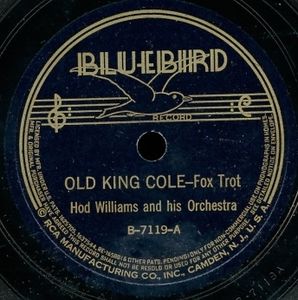
Listening to a bunch of 78s tonight, but really enjoying a 1930s Southern "territory" band. Hod Williams' North Carolina big band recorded five 78s for Bluebird in Charlotte in 1937 and 1938. I've got three of them. Three of Williams' recordings had vocals, but these six sides are all instrumental. The band is competent, not very original, and a lot of fun. I'm glad to be able to hear these local heroes nearly 80 years later. Old King Cole / Monopoly Swing Southland / Williams' Sophisticates The Big Apple / Shades of Hades
-
Monday is the last day of the month, but it looks like I'll be pretty busy that day, so I'm going to reveal the answers to all parts of BFT 140 late tomorrow afternoon - Sunday, November 29. Jump in quickly if you want to participate.
-
One of my favorite New Orleans band, the Panorama Jazz Band, is taking a new approach to releasing their music. Clarinetist Ben Schenck, the leader of the band, told me during my New Orleans visit last month that, after four albums (and one by the mighty Panorama Brass Band), he doesn't plan to release any more physical CDs. The band has started a subscription program through Bandcamp - they release one track a month, and the download link shows up in your e-mailbox. The first (ridiculously cheap) subscription fee entitles you to the 19 digital tracks they have released so far, then you get a track each month going forward. The Panorama Jazz Band plays traditional jazz, klezmer, Caribbean music, and Balkan tunes, all with a New Orleans flavor. The personnel varies from track to track, but my favorite New Orleans saxophonist, Aurora Nealand, is on many of the tracks, as is The Best Tuba Player On The Planet, Matt Perrine. Ben is a friend, but I'm posting this because of the quality of the music - and because this is an interesting 21st century distribution model. I'm curious to see whether it turns out to be a viable thing.
-
Steve Lacy - Points (Le Chant du Monde). Lacy's 1978 tribute to the soprano saxophone. I mean, that's what all his albums are, but this one was specifically meant to be a tribute to his instrument. It's got a two-soprano version of "The Mooche," a solo medley of "In a Sentimental Mood" and "My Favorite Things" to honor Hodges and Coltrane, and his soprano duet suite "3 Points."
-
Sidney Bechet - King of the Soprano Saxophone (Good Time Jazz). 1952-55 French recordings; the 1954 session with Jonah Jones along with a pretty random selection of other tracks.
-
Rudy Tepel - Chassidic Wedding (Collector's Guild mono). A really nice album of the most conservative style of New York klezmer as of 1962, featuring Tepel's strong clarinet. My cover looks similar to this, but without all the type.
-
Jazz for a Sunday Afternoon, Volume 1 (Solid State)
-
My copy came today. Great!
-
Daytrotter #14 - a split LP: Son House at the Ash Grove, 1968 & Gary Clark, Jr. at South x Southwest, 2012. Both sides are pretty great.
-
Love that album. Just played and now playing: Jackie McLean - One Step Beyond (BN mono) Joe Callicott - Blues Masters Vol. 6 (Blue Horizon)
-
-
Bingo on Hank Jones and "Oracle." Not that I've heard them all, but this is my favorite Hank Jones album. I'm with Bill - I had never noticed any connection between "Disc Jockey Jump" and "Four Brothers." It's really only the first phrase that's similar. I like the texture at the beginning of Mulligan's tune - a small "bebop band" against the full big band.
-
Edmonton - 50 I know nothing about Canadian football, but i love that you do this every year.
-
BFT 140 - Discussion of The Freedom Principle
jeffcrom replied to jeffcrom's topic in Blindfold Test
There's a synthesizer (one at least) and other electronic devices involved, as well as a percussionist. (Don't mind giving hints this late in the month.) I'm very glad someone was so enthusiastic about this weird little track. -
"Mean to Me" indeed. More like a couple-of-stars-and-a-bunch-of-unknowns band. I'm looking forward to telling the story of this band in the reveal.