_forumlogo.png.a607ef20a6e0c299ab2aa6443aa1f32e.png)

JSngry
-
Posts
86,191 -
Joined
-
Last visited
-
Days Won
1
Content Type
Profiles
Forums
Events
Blogs
Everything posted by JSngry
-
Funny you should mention Jug and reverb...that reverb "works" to an entirely different end with Jug & B3 than it does with Jug and piano....With the B3, it's damn near visual, a whole other layer of sound to go through. With piano...not so much, it just sounds like reverb. Also...Bob Porter & RVG...listening to Gentle Jug 3 in the car most of this week, the reverb on "Didn't We" is yet another thing still, transitioning from the merely visual to the outright hallucinatory, and I mean that as a high compliment. So again i have to wonder, how much of this was board reverb, and how much was miking to get it from the room. Because as much as "we" all love Albert Lion, it seems that Rudy felt that Creed Taylor us the one who REALLY got all uh dat.
-
Jacks Or Better by The Jimmy Russell Trio (Russell -orgsn, Hartshorne Alexander - tenor, Speed Ahamed-drums) on Cuca Records out of Sauk City, Wisconsin. About the players, I can find nothing, and what I can find of both the label and the town provide no indication whatsoever of who these guys were, why they were there, or why they were on that label. The music itself is slightly idiosyncrayic but mostly typical lounge trio organ jazz of a definiely "local" flavor, which is why...what/where the hell was "local" here, and did anybody get out alive? HeyBrandon, where the hee you brrn? Good to see you!
-
Redundancy entails multiple inventory of identical items. Pack-Ratism is an OCD type thing where volume of inventory trumps breadth of inventory. Practical considerations always bump up against philosophical goals, Art vs Commerece, one of the older games in the book, what do I want vs what can I have and the what do I really need. Otoh, shit does get cluttered, so cull as needed, just don't forget. Or just be a consumer, It's fun, it's legal, and doggone it, it's necessary. Either way, just don't shit in the closet, that's not what it's there for.
-
Keeping it for that picture of Bill Perkins, but only for that.
-
Mindfulness of function and required skill set for effective execution of same. What used to be called compartmentalization, what "men" were targeted at as being infamously excellent at in matters of intimacy, now less pejorative but perhaps also more simplistically called "multi-tasking'. Time and a place for everything, including fugue of roles, and certainly no moral obligation to take on all that, it's very much a choice, nothing more. But an archeologist who throws away all their vinyl because CDs "sound better" is no archeologist at all, nor is the one who refuses to hear what modern performances of modern music can really sound like on the grounds that it "lacks warmth". Those are both subjective consumer decisions, not the objective findings of an archeologist, who after all, looks at what is there AND for what is not there. Both, not or. We like to think that being presented with options is an automatic mandate to choose which one is "better". I mean, if the option is life or death, or marry or desert, or eat or starve, yeah, probably need to make that chpice. But otherwise, enjoy both, travel multiple roads, not a single one. Binary Choices, false paradigm for having a chance of maybe experiencing the cumulativity of life. But that's just me.That's what I want, for me. Anybody else, hey, not my gig.
-
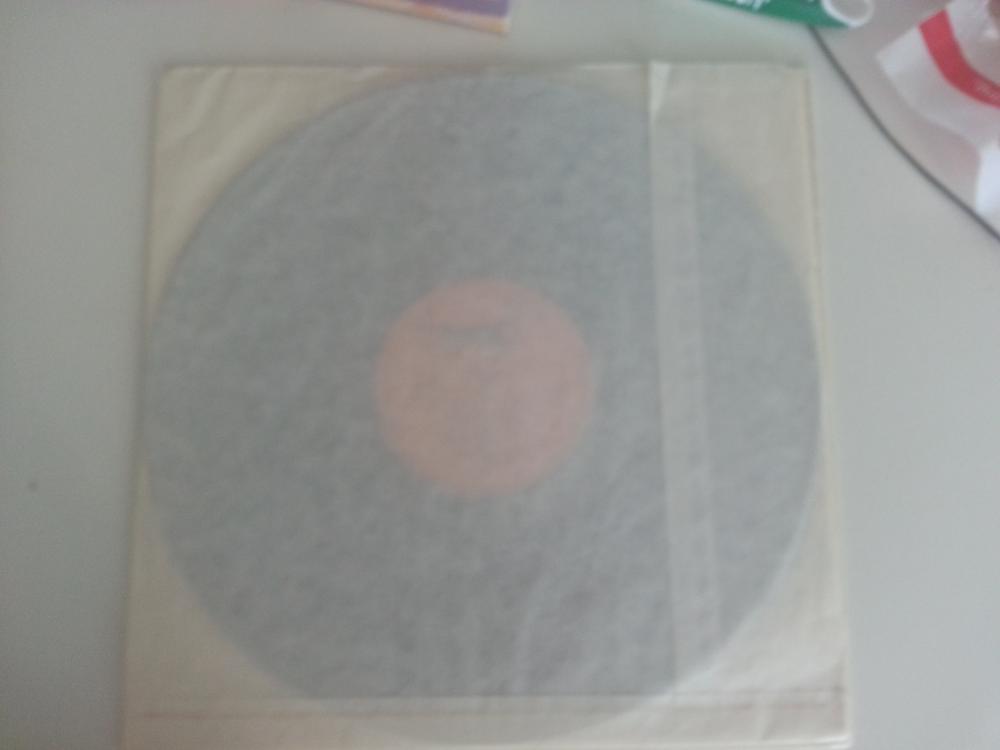
Just noticed the inner sleeve on the Tax LP, like an off-center grocery bsg, have not seen that elsewhere.
-
Not many...scheduling conflicts, mostly. Does W.A. Richardson sound right, or had he died by then?
-
Today's consumers seed tomorrow's archeologists, that will be a point I make. That and you can be a consumer and an archeologist both, but as with any multiple identities, it tends to work better when one is aware of which one is being deployed at any given time, lest the correctness of function for one identity wreck havoc on the executional viability of the other (s).
-
Hmmmm...not primarily....both sound contemporary to their time. The linear-time math that has 1965 being "older" than 2014 is true, but not really the point. The point is that we like to talk about things "sounding dated", well, hell, everything "sounds dated" when things stop sounding dated is when time stops moving. That's true for pretty much everything, fasion, design, smells even (I've noticed a change in elevator smells over the years as different demographics become the ridership, different choices of perfume/cologne, soap/shampoo, food carried, etc.). "Older" is not the point. "Period" is, and with recorded music it's a question of sonic archaeology, not so much "age" as "time". Of course you have do get the age to place the "time", but "age" is just the beginning, not the end. So, a 1965 record that sounds like 1965, hey, no problem, reverse engineer the sonics through whatever kinds of experiences and received data you have and "experience" the music in its "real time", illusory yes, but not inherently dangerous, and remember, in 50 years, 2016 will not sound like 2066.If you have a big enough experiential/informational backlog, if you know what TV looked like in 1965, you can tell that digitalized Bewitched reruns don't look like they do now when they first aired, or even in syndication (and this is due to both input and output, content and reproduction). But each iteration does carry with it auras of its time, and if you're the kind of person who can derive value from that, hey, it's there for you. And if you're not, carry on, no problem. But a 2015 record that sounds like 1965? Unless it's a part of the concept, like using retro visual effects in a film for a specific/intentional purpose, then...why would you want to do that? And let's not even open that can of worms as it applies to actually playing like 1965 in 2016.....ggggrrrrrrrrrrrr, Gotta have a damn good reason for doing that, "because it's timeless" ain't it either. Abstractions don't change over time, maybe, but people sure as hell do.
-
I call everything "records" these days, have been for the last few years. I play my records, all of them. .
-
He used Randy Drake quite a bit.
-
I've been listening to a lot of "Contemporary Classical Music" on both LP and CD, and the thing I'm getting is that the older stuff sounds older on LP, the record is as much a part of the experience as the music, and for, say, 1965 music that's cool, That's what 1965 records sounded like, and by extension, that's a legitimate part of what 1965 sounded like, musically and otherwise. But a modern performance...it's great when 2014 sounds like 2014, ya' know?
-
Been there, eh?
-
But to reference Rudy - blame the mastering then, or the engineers, blame the data-handlers, don't blame the medium, the medium itself is neutral,
-
Exactly - He indeed speaks directly to the question of the "sound" of digital and states that "digital" has no "sound". "has no attributes" - it's just data. Whatever "sound" it has is what the handlers of the data give it. Rudy, again: if people don't like what they hear in digital, they should blame the engineer who did it. Blame the mastering house. Blame the mixing engineer. That's why some digital recordings sound terrible, and I'm not denying that they do, but don't blame the medium. There is nothing he says that would imply that digital per se is a guaranteed superior "sounding" format . Engineers can still fuck up, Mixes can still fuck up. Masterings can still fuck up. But they get fucked up because the data was handled poorly. The data itself (assuming that it was recorded correctly) is fine, and will be available as fine for as long as it needs to be. Digital is data. Digital data is neutral, it had no quality of its own. Therefore, digital is the ideal storage medium from which to construct a record (every record you hear is in some form or other stored data) because it neither loses nor gains anything. Of course, this makes it neither a more or less perfect input medium, because your input still needs to be handled with care. But once input, there it is, stored exactly as entered. If you get great input, it's not because digital made it great, it's because you input it great, and digital did not color your efforts. How could data color itself? It's three paragraphs of one wholly consistent thought, which is - I can make my records sound better now because of the superior data storage medium of digital. Analog came with a lot of links in the chain that compromised the data. Digital does not. Digital outputs exactly what it receives. That's all he's saying. People can project whatever they want to onto that, but that's all he's saying,
-
I think that's supposed to be an next-gen apple/serpent tongue/Eden thing, but either way, yeah about Wade Marcus, got him from a business pov, but never felt him from a musical one.
-
Little known fact - when.James Clay died, his will specified that that particular sweater be made into a Tony Williams floor tom. It was headline news here, but I'm not sure about the extent of coverage it got elsewhere. I like that drummer, btw. His shirt and Heavy's sweater combine to look like sky and sun.
-
And about some of those bizarre (imo) later reverbs...was that actual board reverb or was he just miking people in such a way that it was all room? Because that ceiling looks like you'd not have to ask it more than once to go gonzo while you judt kinda look the other way...
-
Or a knockoff Emma Peel? Or a bit of each? Imagine a retro reboot of the PPG using digitalized faces of: Anne Francis Arlene Francis Arlene Dahl This iceberg has just begun to be tipped.
-
No, it still has (everything) to do with data and data storage: They say digital is cold, so they've given it an attribute, but linear digital has no attributes. It's just a medium for storage. It's what you do with it. He's saying that it's data, it's value-neutral data stored in the same manner, you can fly with it or fuck it up based on what you bring to the data, not what the data brings.to you. You got no ears, your product will suck. You got great skills, you can do anything you want to because it's not magic, it's just data. He's not talking about music, he's talking about recording, engineering, mastering, all that, That's what he did, these were not his indulgences, these were his tools. He was a master craftsman and he appreciated the ability to have value-neutral data with which to work with. Which is why I wonder what he had to say about reverb. some of his shit was definitely not value-neutral when it came to reverb. Again, was he paid to do that, or did he just think that was the way that music "should" sound? You get into some of those later Muse albums and....YIKES! But he's totally right about digital - it is value neutral and it can sound great or it can suck. The days of really horrendous suckage seem to be over, thank god. The downsides are pretty much over, thanks to improved technologies and improved users. The upsides that were there all along, the ridiculously expanded dynamic & frequency ranges and total lack of "noise", can be stunning, especially in, say, classical music with incredibly quiet bigass concert bass drums that are at something like -50 hz (jk) that don't really "sound" as much as they do "appear", really, a wonderful experience. But again, it only does that because A) the data was collected in that way and B) the data was not fucked up after it was collected. Sound, otoh, not raw data to turn back into sound, but sound itself, is nowhere near that objective. Hell, I like the sound of a scratchy LP or a tinny transistor-radio-y cell phone, but do I think that's in any way "better" than a fully clean digital equivalent? No, it just means that I enjoy those particular sounds as what they are - sounds, sensory stimuli that create a feeling of enjoyment for god knows what reason. You know, you see all the old video footage now is showing its age, it's got that fuzziness to it, well, that's something people can use deliberately now, that's part of the collective subconscious now. So, like on Mr. Robot, people can create that shit intentionally, not because they "like" it "better", but just because it's another tool, another item on the palate. That may have an element of "nostalgia" to it, but hell, people recognize it even if they didn't live it, so that's something else, that's...part of the lingua franca, for better or for worse, you make the call for yourself, I don't get paid that much. Now, some people will say, hey Jim, why would you enjoy an inferior product at all? And my answer is, hey you, I don't know what that means, at least not when I'm receiving sound. When I'm creating it or managing it, yes, there is a standard in mind for each situation, and that is the standard to strive for. But hell, if that was all I did with sound....well, it's not. You might as well ask me how I can eat greasy diner food as well as Dean Fearing and never get tired of either. Because they please me, that's why, each in its own way. Beyond that...hell if I know, and hell if I care. Or maybe, kind of like Ornette said, it was when he discovered that he could make a mistake that he realized that he was truly on to something. If I like an Aretha Atlantic 45 better than the same song on an Aretha Atlantic LP or CD, it's not because I "like 45s better", it's because I like the noise that particular 45 makes better. And if I like the 45 less, it's because I like it less. But if I want to hear "1967 jukebox Aretha", yeah, I will turn to a 45, because that IS what that was, scratches and all. Especially the scratches, because if a jukebox 45 ain't got no scratches, there's only one explanation - nobody was playing it. But if I want to hear the intricacies of the performance, if I want to do an objective evaluation of all the data that got collected and processed to create that final presentation of that performance(s) (plural because among other reasons, guide vocals were not necessarily the final vocals), I will waste no time in getting me a good digital rendition (and by the way, the first generation of Aretha Atlantic CDs were just godfucking awful abominations, not "cold", just empty). None of that has anything remotely to do with data storage, and data storage is what RVG was talking about, what would allow him to make the objects that would make me the listener like a record better than somebody else's record of the same data. It's really "shop talk", and enlightened shop talk at that. But it's not a manifesto on Throw Away All Your Old LPs or anything like that, because he's not the guy to talk about how you should play your records, he's the guy to talk about how he will make the records of the music you want to listen to in a way that will make you listen to them that much more better. Or...he was the guy, RIP.
-
Start hete....Chicago guy, great early 1960s, maverick trio, Daley himself apparently not as maverick, but still...peoples could play. This wsd, through a totally random act of cutout kindnrsd, one if the first 100 jazz records I had. People have offered me good money over the years, but...hell no.
-
Yeah, and this was big shit back in the day, all these unreleased alternates.(Jerry Valburn?).Obsolete now, surely, except as an object. Between Lester on the cover and the dog on the label, it's still a keeper here. But you know how a bootleg looks like a bootleg, even the good ones, and how when you find one in a regular store you get a kind of surge of eeirdness, like seeing cleavage in church? Well, yeah, that with this. You know you shouldn't, but dammed if you won't.
-
What is that cover photo, Lester on alto and without a strap? That's some weird looking shit.
-
Suspenders matching neck strap, excellent, Sonny Rollins one of the best-kept secrets of jazz fashion, I kid you not, especially the Milestone albums, whatever the music, Sonny looked sharp, always. Casual, quirky, but always SHARP!
-
I bought the perfect CD because I already had it on origina, imperfectl Lp. When is Joe Daley, please?