_forumlogo.png.a607ef20a6e0c299ab2aa6443aa1f32e.png)

AllenLowe
-
Posts
15,489 -
Joined
-
Last visited
-
Days Won
4
Content Type
Profiles
Forums
Events
Blogs
Everything posted by AllenLowe
-
I love Wheatstraw - Throw Me in the Alley may just be the most amazing early jazz/blues fusion I have ever heard. Wild stuff.
-
$8.50 shipped in the USA - (and $4 to Europe) my paypal is alowe5@maine.rr.com
-
interesting - I'm convinced it's Chu, which definitely makes the date (which is reported elsewhere as well) incorrect.
-

FS: Anthony Braxton Creative Orch. Koln 1978
AllenLowe posted a topic in Offering and Looking For...
mint, like new; $10 plus shipping prefer paypal: alowe5@maine.rr.com -
hmmmm - it's definitely him; will have to check the date -
-
if you have any doubts about how strong an influence Chu Berry must have had on Charlie Parker (attested to, of course, by Bird's own comments) listen to the November 25, 1941 session with the great St Louis blues man Peetie Wheatstraw, along with Berry and Lil Armstrong; Berry's solos are clearly bebop in embryo.
-
Dan: there are a few full performances, including a mediocre blues and a version of Tenderly which goes nowhere - I have more piano chops than this guy, honestly. the "jazz treasure" thing is implied in a few of the articles which detail his whole history, meeting Tatum, Buffalo, etc - hey, if they wanna deal with Buffalo, where were all these journalists when Al Tinney was around? HE was a pianist. This guy is an impostor.
-
well, as I said, I have no problem with his playing as a hobby.....but to portray him as some un-sung and re-discovered hero is just....dishonest. Listen to Sonny Rollins at 80 - he doesn't need any propping up. Or better still - Von Freeman - is Von "great for his age" or is he just great? I heard Benny Waters when he was almost that old, and Benny Carter; Art Hodes when he was pretty advanced in years; George Kelly; Russell Procope, Dickey Wells, Earl Warren, even Jo Jones had more on the ball. Or Sammy Price - these were real musicians. This guy is a phony, sorry.
-
did he have any chops back then? he just sounds musically clueless in those clips.
-
it's fine that he's having some fun - but you read the articles and they treat him like he's some undiscovered jazz treasure - would that someone had done the same for Bill Triglia when he was 80 and still had chops as good as Hank Jones. It's the context that bothers me, the condescension of praising him just because he's old - he is not a jazz player.
-
he is not a pianist - no chops, no ideas. It's just another condescending, age-ist pile of crap. And I don;t think it's deterioration - he's got less keyboard harmonic knowledge than I do. This is just the worst kind of racialist B.S,, too, IMHO; if they'd found an old white guy he wouldn't have seemed "authentic" and nobody would have done a thing.
-
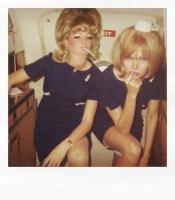
Transvestite muggers charged
AllenLowe replied to Chuck Nessa's topic in Miscellaneous - Non-Political
they'll get a dressing down. -
try listening. This is all a bit depressing. It's a little like the Emperor -
-
New Artie Shaw bio
AllenLowe replied to ghost of miles's topic in Jazz In Print - Periodicals, Books, Newspapers, etc...
I would add, just parenthetically, that the late recordings are not as great as Shaw thinks they were - my recollection is that his playing is good, but in a tense and overly careful way as though (at least they way I heard it) he was trying to prove that he had come along with the (bebop) times. However, it's been quite a while since I listened to that stuff. as for Shaw personally, and re what Larry points out, I read The Trouble With Cinderalla years ago and felt it was padded with pseudo-intellectual blather. -
well, when I sent an email they indicated that it was intended in the sense that Hamlet was mad - if you ask my wife, she'd probably say "both." As for me, I feel like the voice inside Tony Perkins' head at the end of Psycho - I think everyone else is nuts; this is all normal to me. it probably seems a little silly, but the worst thing about getting such nice reviews with this project is that with the next one (which is very much in the works) it will be very difficult to match the quality. But my plans are to do that (which is also along the lines of an American song thing) and one more and then take a rest.
-
New Artie Shaw bio
AllenLowe replied to ghost of miles's topic in Jazz In Print - Periodicals, Books, Newspapers, etc...
in terms of what he got wrong (as in the engagements cited by the reviewer) I wouldn't say it was a high percentage unless I actually knew the percentage - in other words, if there are 1000 citations in the book, and he got just those wrong that the reviewer mentions, than it's not, to me, a serious problem. So it all depends on how much he used this kind of info and how regularly he does it wrong and right. anybody who writes a (non-commercial) book these days can tell you how difficult it is - no money and no editors, so one ends up doing it on the side, and it's very difficult and easy to make even obvious mistakes. on the other hand, I would take Larry's criticisms more seriously, as they get more to the core of the book, -
yeah, that's one I've never been called before - though one other review said I was "mad."
-
New Artie Shaw bio
AllenLowe replied to ghost of miles's topic in Jazz In Print - Periodicals, Books, Newspapers, etc...
I understand. -
New Artie Shaw bio
AllenLowe replied to ghost of miles's topic in Jazz In Print - Periodicals, Books, Newspapers, etc...
I'm not impressed with that review, sorry. The corrections he makes and the errors he catches seem primarily designed to illustrate and impress with the reviewer's own grasp of minutia, and are really of no consequence in a book like that (it's like someone on Amazon who took off a star my collection of Devilin' Tune because I mis-identified a song; I felt like asking him if he had verified the other thousand included). -
thanks, Mark, had missed that one. Puts us on 5 top tens, if I am counting correctly -
-
here we go (I'm thinking of doing a little cut and paste, put my name at the top and Sonny's at the end): http://seynah.blogspot.com/2011/12/gene-seymours-top-ten-jazz-discs-for.html
-
nice little thing from Seymour; I finished behind Sonny Rollins, but ahead of Muhal Richard Abrams - hope this doesn't go to my head (I've already ordered a fur sink): 4.) Allen Lowe, "Blues and the Empirical Truth" (Music & Arts) – Is it music or is it scholarship? Or musical scholarship? Is it criticism of the blues or just critical of them (or at least of what people say about them)? These and dozens of other questions aroused by "Blues and the Empirical Truth" are far more significant than any answers I or anyone else pretending to know more about music than Allen Lowe can cobble together. Lowe is a gnomic, compulsively idiosyncratic polymath who lives in Maine, plays a red-hot saxophone and has for years put together epic inquiries into the history and nature of American music and how it shapes – or doesn't – the national character. On this three-disc set, recorded over a two-year period, Lowe arranges, composes and plays "inside" and "outside" jazz as well as such makeshift forms as neo-gutbucket-progressive-punk (at least that's what I'm calling it for the moment.) He is backed by a typically eclectic guest list that includes guitarist Marc Ribot, pianist Matthew Shipp, trombonist Roswell Rudd and Lowe's fellow musicologist Lewis Porter, contributing here and there on keyboards. Along the way, tribute is made to civil rights activists Pauli Murray and Ella Mae Wiggins, forgotten or obscure musicians such as saxophonist Dave Schildkraft and pianist Blind Tom Bethune and…Doris Day, who should have been invited to Portland to jam with this crowd; except you have to wonder what she would have made of a song list with such titles as "Speckled Shaw Crippled Pete Boogie," "Blues in Transfiguration," "Elvis Died With His Sins Intact," "In a Harlem Ashram" and "(Bull Connor Sees) Darkies on the Delta." Guess it doesn't matter as long as no animals were harmed in the process.
-
I think that's the session with Triglia - who, as IMHO, one of the best pianists of the bebop era (same league as Haig/Wallington/Hank Jones) deserves some press, to answer the initial questions posed by this thread.
-
Tiptons Sax Quartet West Coast Tour: Dec 9-18
AllenLowe replied to Johnny E's topic in Miscellaneous Music
I've heard one version Tipton made of Sweet Georgia Brown which actually sounds as though he/she might have had some jazz chops - is there anything on your record which might indicate same? -
Tiptons Sax Quartet West Coast Tour: Dec 9-18
AllenLowe replied to Johnny E's topic in Miscellaneous Music
I'm proud to say that I actually own a Billy Tipton LP - and if my blues series ever gets issued in its entirety, he/she will be on the last volume (with a not-very-good version of Willow Weep for Me.)