_forumlogo.png.a607ef20a6e0c299ab2aa6443aa1f32e.png)


Peter Friedman
-
Posts
31,232 -
Joined
-
Last visited
Content Type
Profiles
Forums
Events
Blogs
Everything posted by Peter Friedman
-
-
What Classical Music Are You Listening To?
Peter Friedman replied to StarThrower's topic in Classical Discussion
-

-
-
-
What Classical Music Are You Listening To?
Peter Friedman replied to StarThrower's topic in Classical Discussion
-
In line with my personal preference for the earlier playing of Bill Perkins and Harold Land, I hold the same view on Frank Foster.. My favorite of his recordings is a Prestige date called - Elmo Hope Quintet and Quartet - Hope Meets Foster - recorded in 1955. On the other hand, Frank Wess who did not get bitten by the Coltrane bug, became (in my opinion) a more interesting tenor player over time. I found more depth and creativity in his playing in his later period.
-
-
Hutchfan, you should have bet a lot more than a dollar because you were correct. I much prefer the early Harold Land. These recordings on Contemporary are examples of some of my favorite playing by Land. The Curtis Counce Group Vol.1 - Landslide You Get More Bounce With Curtis Counce Harold In The Land of Jazz Hampton Hawes - - For Real
-

-
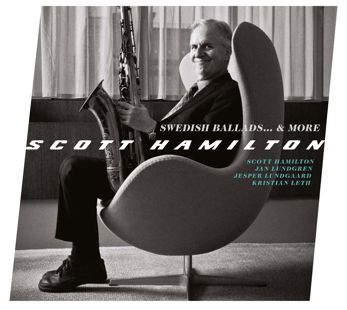
Larry, I find your thoughts here highly interesting. I too read , though long ago, the Perkins interview in Cadence. We are in agreement on Al Cohn too. My view on Kamuca is pretty much the same as what you said about Al Cohn. I love his playing throughout his career. The Bill Perkins with Lennie Niehaus dates are, to my taste, partially successful. There are portions I like, and some are for me just OK. Are you familiar with the Fresh Sound CD titled Perk Plays Prez? It has Jan Lundgren, Dave Carpenter and Paul Kreibich. This is from 1995 and Perkins reverts (maybe that is not the best term?) to his earlier style. Though not great, in my opinion, I do enjoy hearing him, once again, play in that Lester Young style. I also find it interesting that after changing his style on tenor, I found Perkins baritone sax playing very good, and without that Coltrane, Rollins problem I hear in most of his later tenor playing. The CD - Bill Perkins & Frank Strazzeri - Warm Moods on Fresh Sound has Perkins playing Baritone sax on 9 tracks, bass clarinet on 2 tracks, and clarinet on 1 track. I like it quite a bit. Larry, you mentioned being 78 years old, so I decided to mention that I am 83 years old and have been listening to jazz since I was about 15 years old.
-
-
Larry, where I differ from your comments on SH is that as an "old" jazz fan, I appreciate that there is a very good tenor player who did not succumbed to the Coltrane, Rollins, etc. style of playing. No long strings of 8th notes, but a great appreciation and comfort in the style of the earlier masters such as Prez, Ben Webster, Bean and Al & Zoot. Yes, I can and do play the records by those Masters, but find it very satisfying to know that that style did not fade away when those elder Masters died. Hearing players continue those traditions does not cause me to view the musicians as lacking growth and maturity. Rather I believe that there are musicians such as SH that love those earlier styles and I for one would rather hear Scott Hamilton than most tenor players active today. This probably says more about me and my somewhat "conservative" jazz taste, than about anything else. To be able to play records by tenor players such as Bud Freeman, Coleman Hawkins, Lester Young, Ben Webster, Stan Getz, Zoot Sims, Sonny Rollins, "Early" Coltrane,"Early" Bill Perkins, Grant Stewart, and Scott Hamilton, offers me a wide range of musical enjoyment. Bill Perkins is perhaps a relevant case to mention. When his tenor playing "grew and matured", the enjoyment I received from his playing greatly declined. Perkins, in my opinion, was at his best when he followed in the path set by Lester Young. At some point, he must have felt he needed to "advance" and grow and move into what was the musical present at that time. Perkins decided to follow the direction set by players such as Rollins and Coltrane.. To my ears he was not successful playing in that "newer" style.
-
What Classical Music Are You Listening To?
Peter Friedman replied to StarThrower's topic in Classical Discussion
String Quartet No.5 in F major and No.6 in A minor
-
-
What Classical Music Are You Listening To?
Peter Friedman replied to StarThrower's topic in Classical Discussion
-
We agree. I think you may have misinterpeted one of my previous posts, or I was not as clear as I meant to be. My main point though was that as a very young musician, the opportunity to play with and hang out with masters of a previous generation is apt to rub off in a positive way. Many, perhaps most go todays younger up and coming musicians lack that same opportunity.
-
I don't discount learning from records. But up on the bandstand playing next to Al Cohn, Zoot Sims, Buddy Tate, George Coleman, Art Pepper, and numerous others is a bit different. Hanging out, hearing the stories, experiencing life next to the "older" generation offers something very special.
-
-
There may be different ideas about the significance of my next point. I sense there is a difference between those players who get their influences from recordings, as compared to those who learn, so to speak, directly at the feet of the masters . Both Scott Hamilton and Eric Alexander, though style wise very different from each other, both played and learned alongside the generation older than themselves. In my view these two tenor players have a legitimacy / authenticity in their playing related to their experience of living the music next to their influences. The generation of players following EA and SH that play in those same styles lack some of that authenticity.
-
-
What Classical Music Are You Listening To?
Peter Friedman replied to StarThrower's topic in Classical Discussion
K.281, K.282, K.283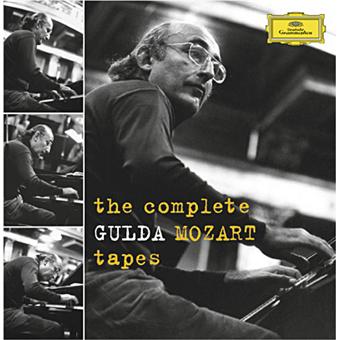
-

-
What Classical Music Are You Listening To?
Peter Friedman replied to StarThrower's topic in Classical Discussion
Dvorak - String Quartet No.12, Op.96 "American" Borodin - String Quartet No.2 The RoyalPhilharmonic Chamber Ensemble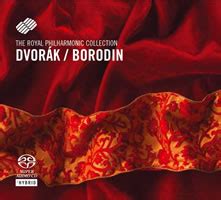
-