_forumlogo.png.a607ef20a6e0c299ab2aa6443aa1f32e.png)

JSngry
-
Posts
86,215 -
Joined
-
Last visited
-
Days Won
1
Content Type
Profiles
Forums
Events
Blogs
Everything posted by JSngry
-
Minstrel football, why not?
-
Was listening to Total Eclipse the other day...don't think I'll be able to look at that cover the same way again, at least not for a while...
-
The game yesterday ended up pretty pathetic. It was like the Harlem Globetrotters playing football, only with poorly rehearsed jokes.
-
We can fix that! http://www.youtube.com/watch?v=yOH_DMO-qCo
-
Can we just kill the Pro Bowl? As in no more, never again, enough is enough, the joke's not funny anymore, it's an insult to professional athletes everywhere? Just kill it. Dead. Now. Please.
-
The signature Nancy Wilson song? I had no idea it went back to 1952!
-
Lean Baby Olive Oyl Leroy Vinnegar
-
Bobby Battle Buddy Fite Barbara Boxer
-
Milton M. Levine, 97, Inventor of Ant Farm, Dies
JSngry replied to Brownian Motion's topic in Miscellaneous - Non-Political
I never had one, but I made sure that my kids did. It was good for a few months of genuinely interesting fun. I'm still liking Nordine's idea of the picture window ant colony, though. "Why aren't you working?", that's been on more than one of my screensavers... -
Damn.
-
Completely new to me as well, but hey... The album, originally on Roulette, has been reissued and is available at CD Baby: http://www.cdbaby.com/cd/annephillips
-
Wow. More elastic time, for sure. The way she sings "...that I may kiss"! This is she, right? http://annephillips....s/performer.asp Seems to be, yeah. Her Born To Be Blue album just kinda fell into my lap today, and....I'd recommend it. Nothing about it particularly/overtly calls attention to itself, but on almost every cut I found myself giving out with an admiring "hmmmm....". She's got this really nice instrument with a nice full lower end, somewhat like Miles of the time hitting the low notes when he had the Harmon mute in, and there's no break between any of her registers, so she delivers the melodies like there's no gravity or friction. Really, really a satisfying vocalist, and...have you ever heard of her? I hadn't.
-
Milton M. Levine, 97, Inventor of Ant Farm, Dies
JSngry replied to Brownian Motion's topic in Miscellaneous - Non-Political
-
Same general vein, but less husky, more airy voice than Merrill's to my ears. And more elastic time.
-
Her phrasing, liquid in time and wholly enunciated without any exaggeration of vowels or consonants in the process, gets my attention, and holds it. Nothing obvious or even "great" (in the generally recognized sense, anyway), but...DAMN. This lady really knows how to sing a song. http://www.youtube.com/watch?v=PQiGuIKHig0
-
Milton M. Levine, 97, Inventor of Ant Farm, Dies
JSngry replied to Brownian Motion's topic in Miscellaneous - Non-Political
http://www.youtube.com/watch?v=oJiH7T281as -
Pablo Casals Charlie Callas Paul Bunyan
-
http://video.yandex.ru/users/musichub-ru/view/15/ http://video.yandex.ru/users/musichub-ru/view/15/
-
Anne B. Davis World B. Free Alice B. Toklas
-
Benito Santiago Honey Chile Nataly Chilet, Miss Earth Chile 2005
-
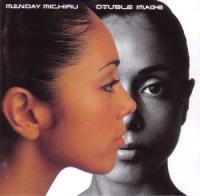
Long before the Davis estate had anything to do with it, for whatever reason, this was called "The Lost Quintet" with good reason. I'm sure there's a reason why Columbia didn't do something to document this band, but damned if I know what it is. Just as the (re)discovery of the now-legendary "Second Great Quintet" precipitated the mainstreaming of a once "esoteric" musical sensibility, so might a reversal of the de facto supression of this band. The "walls" are finally starting to crack (and have been for the last 10 years or so, when those two grey-market CDs - Double Image & Paraphernailia - came out and all the underground talk of badassness from those who had actually heard the various tapes proved to be accurate, to put it mildly), but there's yet no (and may never be) a Plugged Nickel-like "Rosetta Stone" for this music. Part of that is because it was evolving so rapidly, but an equal part is that most of what exists is amateur recordings of variable quality. Again - where was Columbia? People need to hear this band's output. At least people interested in jazz as something other than "repertory music" do, becuase this was a band where a lot of then-"controversial" currents in the music - free jazz, "rock" rhythms, and electric instruments - came together in a music that was still unmistakably "jazz". All the revisionary bullshit about how all those evolutions were "mistakes" and "not really jazz" and "commercial sellouts" falls apart when you hear this band play what it played how it played it. There's a few bands whose lack of "official" documentation has really skewed the "common history" towards the inaccurate as well as allowing for the agenda-driven revisionists/faux-preservationists to get far more of a free pass than they deserve. From early in the 1960s, the Rollins-Cherry band is one, but at least they hade a little piece on RCA. From late in the 1960s, there's this, The Lost Quintet of Miles Davis. One - one - Japanese-only Sony CD, period. That and a buttload of bootlegs, audio and video. No matter what you think about it, it's next to impossible to fully understand so much of what happened in the so much of the jazz of the early 1970s without hearing this band go from where it started to where it ended up. But how is that supposed to happen? In the meantime, anybody who tells you that the '70s was when jazz "got away" from itself, please allow for the distinct possibility that they are either ignorant or else full of shit. There is that argument to be made, but making it to advance the cause of putting Humpty Dumpty back together again ignores the fact that one way or another, eggs end up getting broken, even if allowed to conclude their natural cycle. Especially if allowed to conclude their natural cycle.
-
Details on the extras, please?
-
Dopey John Doe John Deere
-
Larry Bethea Frank Lary The American Continental Army