Jump to content

Peter Friedman

Members
  • Posts

    30,591
  • Joined

  • Last visited

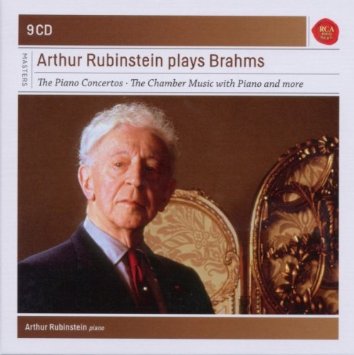
  • Donations

    0.00 USD 

Everything posted by Peter Friedman

  1. The question of labeling things has long been a bone of contention is all sorts of realms. If we extend Jim's argument just a tiny bit (or perhaps not at all), we should do away with all labels in jazz. No more use of tems such as New Orleans Jazz, Dixieland, Swing, Mainstream, Bebop, West Coast Jazz, Hard Bop, Avante Garde Jazz, Free Jazz, Latin Jazz Soul Jazz, and whatever others I left off the list. Just use one term - Jazz. And following that let's drop the terms Jazz, Classical, Pop, Rock, etc. and just call all of it music. I suspect some would prefer such an approach, but I am not one of them. As long as We understand that music labels are not rigid and limiting, but rather shorthand devices that provide assistance in making sense out of greatly diverse areas, they are very useful. When I come across the name of a saxophone player with whom I am unfamiliar, or the name of a symphonic composer whose name is new to me, one of the things I am interested in discovering is what stylistic approach is involved. Perhaps that should not matter, as quality must be the key. However, for me personally, stylistic caterories are important.
  2. This discussion strikes me as going over the cliff ! Perhaps my age is a factor. At the time I was becoming interested in jazz West Coast Jazz was making itself heard with Hard Bop right on it's heels. The term West Coast Jazz which the photos and album covers by William Claxton helped solidify had definite meaning to me and many other jazz listeners. It was stylistic and understandable though as I said in a previous post, the bounderies were quite loose. The distinction between the music played by Horace Silver's groups and that of Shorty Rogers groups was easily heard. I get the sense that many of the comments in this thread are trying to make far more of that historically meaningful term West Coast Jazz than necessary. Of course there was much more going on in California, and the high quality music being played by Sonny Criss, Teddy Edwards, Harold Land and Eric Dolphy, to mention just a few,is not being denigrated or ignored. An earlier Post by Larry closely mirrors my own experience. I very much liked West Coast Jazz, then as Hard Bop moved into the drivers seat I began to look less positively at West Coast Jazz and saw it as lacking the soulful, bluesy more hard swinging qualities I found in Hard Bop. But as time moved on I began to regain my love for West Coast Jazz, and saw it as one more wonderful listening option along with a variety of other styles within the world of jazz.
  3. It seems clear that attempting to agree on a definition of West Coast Jazz is a tough if not impossible task. These are some of the things I usually think of when I think of West Coast Jazz. 1. Shorty Rogers recordings. 2. Highly arranged pieces. 3. Less agressive playing by musicians 4. A cadre of specific musicians such as Shorty Rogers, Early Bud Shank, Bob Cooper, Chet Baker, Jack Monterose, Bob Gordon, Shelly Manne, Larry Bunker, Bill Perkins. None of these are absolutes. The Basie influence is often there, but somehow sounds a bit more "cool" when played by West Coast musicians. The Mulligan Quartet especially with Chet seems more in line with WCJ than the Sextet. I don't view Zoot, or Getz as West Coast jazz players even though they Could be seen in that camp. The famous Shelly Manne Quintet recordings with Joe Gordon and Richie Kamuca , as well as recordings by Teddy Edwards and Harold Land are , for me, more in the Hard Bop genre. So the boundries are quite loose.
  4. Glad that you've come to feel this way, but I don't agree with the implicit dis of Quinichette. Yes, he's very close to 1940s Pres but within that intense affinity Lady Q definitely had his own thing IMO. Don't recall ever mistaking either one for the other. Check out Quinichette on "For Basie" with Shad Collins or "For Lady" with Webster Young (see below). And there's a lot more Quinichette of value on record. Yes, it is quite unusual, perhaps even exceptional, for a man to model himself so closely on another player and still be a creative figure in his own right, but that's what I hear. I agree with Larry. There are many recordings by Quinichette that I find very worthwhile. Not only the two Larry mentioned, but also "The Kid From Denver" on Dawn, and "Like Basie" reissued on Mighty Quinn.
  5. Though I don't read Japanese, I was able to identify some of the East Wind reissues as I have them on Earlier Japanese CD releases. These are all things I definitely recommend along with the Cedar Walton at Pit Inn which is great. Art Farmer Quartet with Cedar, Sam Jones and Billy Higgins - To Duke With Love and also The Summer Knows. Art Farmer Quintet Live at Boomers Vol. 1 and Vol.2 with Clifford Jordan, Cedar, Sam & Billy H. Pentagon with Clifford Jordan , Cedar, Sam, Billy Sam Jones - Seven Minds with Cedar, Billy, and a string quartet on a couple of tracks There may well be others I was unable to identify.
  6. It is my impression that many jazz musicians today play with less volume than was typical of the previous generations. A good example. Was when I heard both Al Grey and Bill Watrous both play at a concert. al had a big sound on his horn and stayed back from the mic when he played. Watrous had the mic right inside the bell of his horn as far as it would go to get the sound of his horn out to the audience. When he was a bit away from the mic it was hard to hear him. Though Watrous has great techniques and is able to play very fast, I actually preferred to hear the less technical playing by Grey because I liked his big , more natural (less amplified) sound . Watrous seemd so dependent on the mic that it kind of annoyed me.
  7. Thanks Larry. I hope to get to hear some of the earlier Rubinstein Chopin.
  8. Larry, it will be interesting to see what those changes were by Rubinstein playing Chopin?
  9. I agree with those who believe that Art Blakey was the best drummer with Monk. Ben Riley with Monk was nothing special, BUT when I saw him live a few times with the Kenny Barron Trio he was marvelous. Riley playing with Kenny was the ultimate in tasty trio drumming. His 8's, and 4's were perfect. in fact, Ben with Kenny Barron reminded me at times of the best tap dancer in the world. Ben's playing with Kenny Barron on a number of recordings is, for me, simply outstanding.
  10. "Quintessence" from - It's A Good Day - by the Rossano Sportiello Trio on Arbors. As far as I know, this is only the second recording of this lovely Quincy Jones tune by a piano trio. The other trio version is by Hank Jones. Rossano plays it beautifully!
  11. With just rare exceptions, I don't care for the sound of the soprano sax in jazz from the bebop period on. I am able to enjoy Zoot and Lucky Thompson on soprano, but much prefer to hear them on tenor. For some reason I find the use of soprano sax in traditional jazz to be far more acceptable to my ears.
  12. My favorites include a few that were probably released in 2013. Listed in alphabetical order. Frank Basile Sextet - Modern Inventions - FBM Peter Bernstein with the Tilden Webb Trio - Cellar Live The Miles Black Trio with Grant Stewart - Cellar Live George Cables - Icons & Influences - High Note Harold Danko Quintet - Oatts & Perry III - Steeplechase Phil Dwyer & Don Thompson - Look For The Silver Lining - Triplet Steve Fishwick / Osian Roberts / Frank Basile / Albert Sanz / Dave Whitford / Matt Fishwick - When Night Falls - Hard Bop Benny Green Trio - Magic Beans - Sunntside Dexter Gordon - Candlelight Lady - Steeplechase Scott Hamilton - Live At Smalls - Smalls Live Tardo Hammer Trio - Simple Pleasure - Cellar Live David Hazeltine Quartet with Seamus Blake - For All We Know - Smoke Sessions Joe Magnarelli Quartet with Mulgrew Miller - Live At Smalls - Smalls Live Eric Reed - The Adventurous Monk - Savant Rossano Sportiello / Harry Allen / Joel Forbes - I Walk With Music : The Hoagy Carmichael Songbook - Harry Allen Lester Young - Boston 1950 - Uptown Peter Zak Trio - The Eternal Triangle - Steeplechase
  13. Reading all the selections mentioned demonstrates that my taste is extremely different from a large number of those here. I purchase a significant number of jazz CDs, yet with the exception of a Duke Ellington recording mentioned by one person, I do not own nor have heard any of the others from any of the lists. As a lover of bebop, mainstream, and some traditional jazz, and some blues, it is highly doubtful that I would have much, if any, interest in the recordings listed thus far.
  14. I had the Bert Dahlander LP at one time. It was not bad, but nothing exceptional either.
  15. I tend to share this opinion about Coltrane's contributions on this recording. While somewhat interesting to hear him in this context, they just don"t fit well with the tunes and group. On the other hand I love Trane's playing with Miles on the various Columbia recordings.
  16. I read an article in Jazz Journal a couple of days ago by Steve Voce that referred to the Miles Davis 4 CD set of broadcasts from the Paris - Olympia. The first 2 CDs were from March 21,1960 with Coltrane on tenor. The other 2 CDs are from October 11,1960 and have Sonny Stitt in place of Trane. What I found of particular interest is that the article stated that" today Sonny's work sounds much fresher and more vibrant than Trane's of the same period." That evaluation stuck me very much in opposition to the generally accepted viewpoint. So I located the set ( that I have not listed to in quite a few years) on my shelf , and played 1 CD with Coltrane and 1 CD with Stitt. I was surprised to find that I was in full agreement with the point made in the article.
  17. But sometimes the quest continues in a different direction. Art Pepper comes to mind. I get the sense that the Coltrane influence , in particular, was responsible for his strong search ( or quest) in his later years. Some of what Larry described as meaningful hesitations compared to a more seamless solo seems more a part of Pepper's later playing. In some ways the same thing can be said about Lee Konitz. What I personally find interesting from this discussion is that I much prefer the earlier long flowing seamless lines of early Konitz to his heistating searching in his later playing. With Art pepper it is a bit more complicated for me. Overall I prefer Art's more seamless early solos, but every once in a while his more searching later solos grab me too.
  18. "Kawa Power ' by Grant Stewart Quintet on CD titled - Shadow Of Your Smile - on Birds (Japanese)
  19. Larry has done a nice job by showing Jackie's sessions by the year they were recorded. It makes it very clear that the albums i like the most are from 1959, 1960, and 1961.
  20. This is just the kind of set for Mosaic. Often Mosaic sets include things that have already been reissued on CD. But the Bee Hive material has not, to my knowledge, shown up on CD anywhere. Another similar concept would be for Mosaic to put together a set of the many Xanadu sessions that have not made it to CD. Some Xanadu things were reissued on CD, but a large number have not.
  21. My opinion regarding the Steeplechase albums is at odds with many of the others who posted here. I did not care much at all for the duet with Michael Carvin, New York Calling, Cosmic Brotherhood, Dr. Jackle, or Tune Up. Had them all at one time and disposed of them. The Steeplechase albums I do enjoy are - Live At Montmartre, A Ghetto Lullaby, Ode To Super and the two sessions with Dexter Gordon - The Meeting - The Source.
  22. I was a relatively young jazz listener when I recall finding a copy of the original Ad Lib Jackie McLean LP in a small shop in Detroit. It had just been released. I liked it a lot then, and still do today though I now have a CD copy. Not long after I acquired the original McLean Prestige LPs as each one was issued. The intensity of Jackie's playing was something that thrilled me. My three favorite Prestige sessions by Jackie are - Lights Out - Jackie McLean & Co. - Jackie's Pal. I do also enjoy the other Prestige recordings by Jackie McLean as both leader and sideman. McLean was one of the first jazz musicians for whom I wanted to acquire every single album on which he appeared. I prefer the Prestige albums to those on Steeplechase, and I get as much pleasure from them as i do with most of the Blue Note sessions.
  23. I saw this film at the Vail Jazz Party over this past Labor Day Weekend. It was terrific, and there was not a dry eye in the house.
  24. Lady Be Good - Lester Young and Parker's Mood - Charlie Parker
  25. Sounds like a terrific evening of music. Your comments on the venue reminds me a bit of the place where the chamber music series is held here in Tucson. A small concert hall with about 400 seats. The very best string quartets , piano trios, etc. come in every year from all over the world. When I moved to Tucson 16 years ago I would never have expected a small city to have such a world class chamber music series.
×
×
  • Create New...