_forumlogo.png.a607ef20a6e0c299ab2aa6443aa1f32e.png)

jeffcrom
-
Posts
11,694 -
Joined
-
Last visited
Content Type
Profiles
Forums
Events
Blogs
Everything posted by jeffcrom
-
-
Yep. Now playing: Anthony Ortega - A Man and His Horns (Herald mono)
-
Alton Purnell - Funky Piano New Orleans Style (Warner Bros. mono). I've never been able to figure out what this 1958 album was supposed to be - jazz, pop, R & B? But at some point I stopped caring - it's just a blast. Plas Johnson, Red Callender, and fellow New Orleanian Earl Palmer help Alton do whatever it is he's doing.
-
It's a take intentionally consisting of just part of the tune being worked on, for the purpose of splicing into/onto another take to produce a complete tune.
-
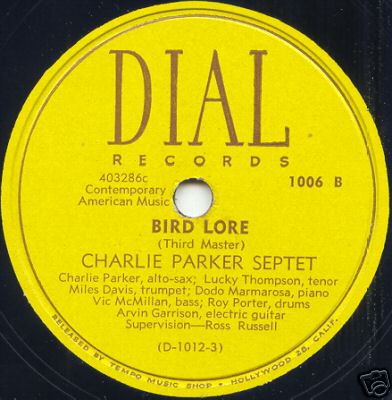
In a few minutes, I'll be posting in the 78 thread, but I wanted to mention this here - I found a stack of 78s in an antique store yesterday and bought some for two dollars apiece. One of the really nice finds was a 1924 Perfect record by Five Birmingham Babies, a smaller version of the California Ramblers. "Copenhagen" has a fabulous, hot, full chorus solo by Rollini. Two bucks well spent.
-
Yes, that's a good one.
-
The variation between blindfold test presentations is pretty interesting, too. Some are pretty tightly focused on one style; others have a wider range. Mine are kind of all over the place, because my tastes are all over the place - I don't like to listen to any one style too long. I actually tightened mine up a little bit - I listen to more early jazz and more avant-garde than this mix would indicate, but I knew that many folks here wouldn't have much patience with those styles.
-
-
I'm listening to this very pleasant album right now. (It's been a very long day, and I need pleasant, not profound). I was looking for a picture of the cover - there doesn't seem to be one online, at least in a format this forum likes - when I found this thread. It's kind of amazing that Clark recorded this just about 50 years after he replaced Adrian Rollini in the California Ramblers. My sax repair guy has an old Conn bass sax hanging from the ceiling in his shop. It drives me crazy every time I'm there - I really want that horn. I don't know what I'd do with it, but I want it. One more cheer for Adrian Rollini. Every time I find a California Ramblers 78, I buy it, hoping that there will be a Rollini solo, or at least some breaks.
-
Nice work - more points! Track seven is "Sunday Driving," composed by the interesting John Benson Brooks (he wrote "Where Flamingos Fly") and arranged by the great Gil Evans. It is indeed Claude Thornhill's great post-war band, and the alto solo is young Lee Konitz. I love this arrangement - Evans goes off on some odd, but wonderful, tangents. I took this from another album (details later), not The Real Birth of the Cool, so I can't really answer the Chris Connor question - she's not on the album I have. The singer on #12 is not Archibald. I don't know any of his music except that great version of "Stack-a-Lee." The artist on 12 is probably not best known as a singer.
-
Record two. Followed by a Bobby Hacket mood music album which I'm not even going to name for fear of mocking. How's that for contrast?
-
The pianist is not Harold Mabern, nor is he the leader. Too early for more hints. Not Ibrahim or Blythe. I think you (and many others) will be surprised by the identity of these guys, especially the pianist. I'll bet you don't have this! You eventually figured out that it's not Bostic, but the record company was probably going for that market. Be grateful - I had planned to include a more radical track in this spot, but it didn't fit at all in context. You're on the right track - it's a New Orleans guy. The song isn't "Big Chief," but something along those lines. It was indeed originally issued on 78. I'll say more later about why I chose this. Right now I'll just agree that it is indeed beautiful. Not them - it's later. This particular duo is hilarious and painful. Thank you for the comments - I enjoyed reading and responding.
-
Thanks for your quick response - although I was kind of hoping that you wouldn't be the first person to post, because I knew that you would ID that Charles Earland track right away. I kind of agree about the guitarist (and there's a story there, to be revealed later), not so much about the pianist. I like his solo and think it's pretty interesting. And no, you don't get a point! Don't be ridiculous! Interesting comments. But no, it's not Mingus, and it's not even "Lush Life" - you're getting your tunes mixed up. Not Bailey, Ellington, Bechet, or Snowden. But I'm very gratified that you like this one - I thought it would be too much the Ancient Musik for some folks here. Yeah, the dude's lip gave out at the end. And it's still not Buster Bailey. But this track was included mostly because of this clarinetist - he's a favorite of mine, and most jazz fans don't know his work at all. And it's not exactly "Make Love to Me," but it kind of is.... That pop song was stolen from based on this very old instrumental jazz original. I had no illusions that you would like this, but I hope some folks do. Okay, now you get points! I was actually thinking about you with the programming - I thought that this would be a nice reward for sitting through track 5. And in case it's not clear, the "Washington" that MG mentions is Grover Washington, Jr. I thought that there would be many folks who hadn't heard him in a context like this. Plus, this track just swings like hell. Thanks for the Newark memories! You're righter than you think, even.
-
It certainly isn't bop the way I think of it, but it's touched by bop, and MG is probably right when he says that they thought they were playing bop, or at least boppishly. The bari player's triplets sound like he's trying to play "modern," and I wonder if he thought his "Merry-Go-Round Broke Down" quote was the kind of thing that a bebopper would do. The trumpet player sounds more like Eldridge than Gillespie, but things like his little "bebop turn" (at around 1:11), a few of his more "daring" note choices, and the Charlie Parker phrase (admittedly one of Bird's more conservative signature licks) at the end of his first chorus are clues that he was trying to play like a bopper, at least a little bit. And listen to the piano behind the horn riff at around 1:41 - he just might be a real bebopper. Jim is probably right in saying that the term "soul jazz" was not in use at the time, but I don't think that invalidates MG's point. Substitute the term "jump blues" if you wish. MG's example of the Hampton band is right on target - in the late 40's they were a melting pot of swing, bop, and R & B. So you're both right. Now you kids shut up and bring me a whiskey and soda.
-
I sent out the link last night - I thought. But a technical glitch prevented it from going through. I think I know what happened, and have resent the link to everyone who requested one. Let me know of problems.
-
Let's talk about the music.
-
"The member JSngry cannot receive any new messages." Clean out your inbox, moderator dude!
-
Steve Lacy - Stamps (Hat Hut); record one.
-
Thank you, Marcello. As you can tell, I've really enjoyed this thread. Thanks to Bev for starting and continuing it.
-
The Arrival of Kenny Dorham (Jaro reissue)
-
Wow - quite a BFT, MG! I want to go back and listen again now.
-
Which Jazz box set are you grooving to right now?
jeffcrom replied to Cliff Englewood's topic in Mosaic and other box sets...
Duke Ellington - Centennial Edition (RCA). Disc eight, from 1940 - some of Ellington's most amazing masterpieces, interspersed with tracks which are merely excellent. -
Happy Birthday, Duke Ellington! Since no one has jumped in to talk about "Black and Tan Fantasy".... This is one of Ellington's earliest masterpieces - one of those pieces that first defined the Ellington sound. It's co-credited to Bubber Miley, who presumably came up with the main theme, an adaptation of the hymn "The Holy City." All of Ellington's early recordings of "Black and Tan" are pretty similar in outline. On the two earliest, for Brunswick and Victor, Miley and Tricky Sam Nanton harmonize on the theme, which turns the hymn into a twelve-bar blues. Most of rest of the piece is a series of blues solos, by Miley, Nanton, and Ellington. Between the first theme and Miley's solo there is contrasting secondary theme, presumably Ellington's work, played by Otto Hardwick. It's a repeated eight bar melody, and it sounds pretty corny compared to the blues theme. It never reappears, although to my ears, Ellington manages to suggest it in his solo, which is sweeter than the other blues solos. The October, 1927 Victor version is better than the May Brunswick version for several reasons, notably for Miley's exquisite, perfectly controlled long note with which he opens his solo. The Okeh version, from November, is interesting because Miley was absent (hung over or in jail?), and Jabbo Smith substitutes for him. Jabbo's plunger mute style is very different; more fantastic and freewheeling, perhaps, but not as expressive/emotional as Miley's. Ellington gives Nanton the "long note" solo, I assume because his style was closer to Miley's than was Jabbo's. Ellington was still using the same basic outline in 1930, when he recorded the piece for the related Velvetone/Diva labels, but by this time Miley was out of the band, replaced by Cootie Williams. The impact of Williams' playing falls somewhere between Miley and Jabbo Smith, to my ears; it's strong playing, but more lighthearted than Miley's. Hardwick has also left the band, and Harry Carney (on alto) presents the second theme; he seems to treat it a little more seriously than does Hardwick, if that makes any sense. "Black and Tan Fantasy" stayed in the book until the end, and later versions showed Ellington's efforts to update it while retaining the flavor of the original. The 1938 Brunswick version is slow and majestic, with some very nice updated harmonies. By this time Cootie's interpretation is magnificent. Hardwick is back to play the second theme; it's still is something of a letdown and still doesn't reappear. My favorite moment is Barney Bigard's long, slow glissando over Nanton's trombone solo. It's almost painful, but in a good way. I also like the 1943 Carnegie Hall version, which is even slower (except for Ellington's sprightly piano solo) than the 1938 version, and the 1966 recording from The Popular Duke Ellington album. In some ways, the 1966 version is closer to the original arrangement than most of the intervening recordings. We're back to a simple presentation of the main theme by trumpet and trombone in harmony, for instance. And this is my favorite treatment of the second theme yet - it's played by Carney on baritone, and his sound and style lend weight and gravity, as do the imaginative reed saxophone/clarinet chords behind him. I realize that I haven't mentioned the quote from Chopin's Funeral March which ends the piece. It could sound stupid, coming off like a joke, but it doesn't. It's the perfect elegiac coda to a wonderful piece of music.
-
Some discs which blur the line between jazz and R & B: Bill Doggett - Eventide/And the Angels Sing (King promo) Bill Doggett - Sweet Lorraine/Tailor Made (King promo). Percy France is on both of these; they're from the same session, in fact. Tiny Bradshaw - Off and On/Free for All (King). Red Prysock wails. Tiny Bradwhaw - Later/South of the Orient. Syl Austin plays frantic for the people on side one. Tom Archia - Mean and Evil Baby/Fishing Pole (Aristocrat) Tom Archia - McKie's Jam for Boppers/Downfall Blues (Aristocrat). Nobody seemed to know where the ending of "McKie's Jam" was going to be, so Ike Day kept playing drum codas until everyone was done.
-
Live at Pit Inn, Volumes 1-3: Queer Notions/Prelude No. 7 (Chopin) - DIW DEP 1-1 East of the Sun/Frisco Fog - DIW DEP 1-2 Opus Springtime/Cosmos Swing Blues - DIW DEP 1-3 Pit-Inn, Tokyo; August 8, 1988 (same concert as the album) I'm assuming you don't need the personnel, since you have the album.