_forumlogo.png.a607ef20a6e0c299ab2aa6443aa1f32e.png)

Rabshakeh
-
Posts
7,554 -
Joined
-
Last visited
Content Type
Profiles
Forums
Events
Blogs
Everything posted by Rabshakeh
-
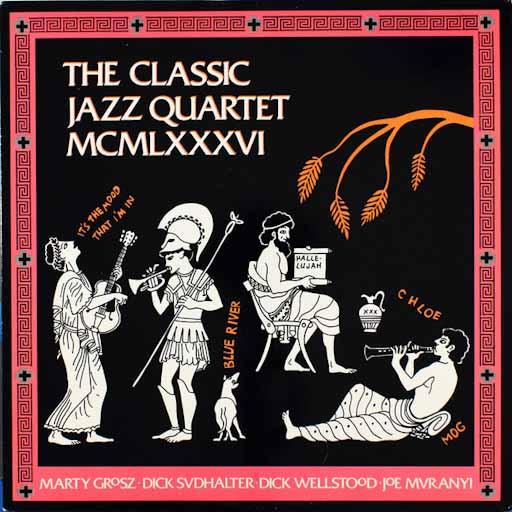
The Classic Jazz Quartet – MCMLXXXVI
-

Newport Jazz Festival 70th Anniversary
Rabshakeh replied to tranemonk's topic in Live Shows & Festivals
He was half of the group OutKast and has been a highly rated A List personality for about 20 years. OutKast was known for highly creative music that moved beyond hip hop, and Andre 3000 in particular. You might remember their mainstream hit "Hey Ya" from two decades ago. Currently he is making new age flute music on a flute-shaped synthesiser, with a sort of 'spiritual jazz' brand identity, even if not much musical content. I don't think that his flute music is as good as a Paul Horn record even, but it looks cool and the "jazz" turn of such a significant artist has drawn huge press. His flute record was probably the most talked about improvised album of the last three years. His record has shown up on this forum. So he does make perfect sense as a headliner for a jazz festival. -
Yeah, but they also released records, which is what I liked about the post. Like all scenes, it developed. The Dixieland of 1984 was not the Dixieland of 1944. There continued to be cool stuff put out. Jim Cullem (who you mentioned upthread), the Black Eagles, Soprano Summit. I'm sure there's a lot more of which I'm not aware. But it is rarely talked about. If the traditional jazz revival is mostly ignored, it's later tail is completely ignored.
-
I vaguely recall that you are a fan of Ken Peplowski and some others from the most recent end of the scene. Perhaps not part of the revival itself, but part of the lineage. Thanks for this. Basically exactly what I was looking for from this thread. There was a long life to this stuff. It is like the People's Front of Judea. Now, this is the real question. The one that motivates all of civilisation.
-
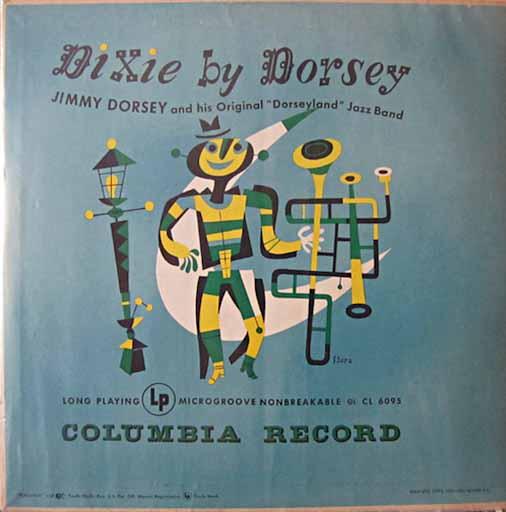
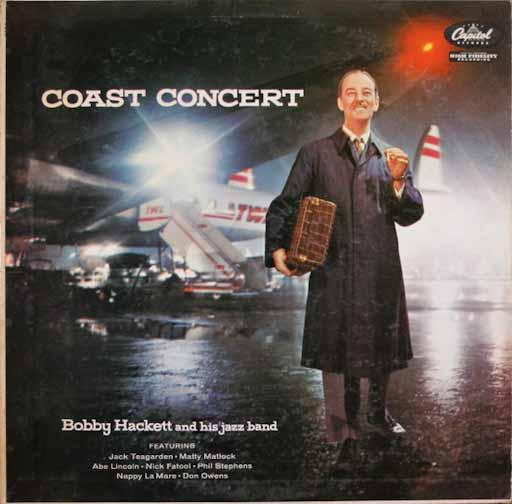
Another area that Wyndham misses in his classification, again probably because they were not part of the then-festival circuit, is the swing-to-bop phenomenon of swing era musicians playing hot jazz in smaller groups, whilst retaining "inauthentic " elements from Goodman-era swing or dance bands, e.g. in the rhythm or arrangements. An obvious example would be this one: Jimmy Dorsey And His Original "Dorseyland" Jazz Band – Dixie By Dorsey Lots of other examples out there. Such as many of Bobby Hackett's or some of Pee Wee Hunt's records (e.g. Swingin'). Again, I think that the stuff sold pretty well in comparison to the more purist forms.
-
Bobby Hackett And His Jazz Band – Coast Concert
-
Odd how?
-
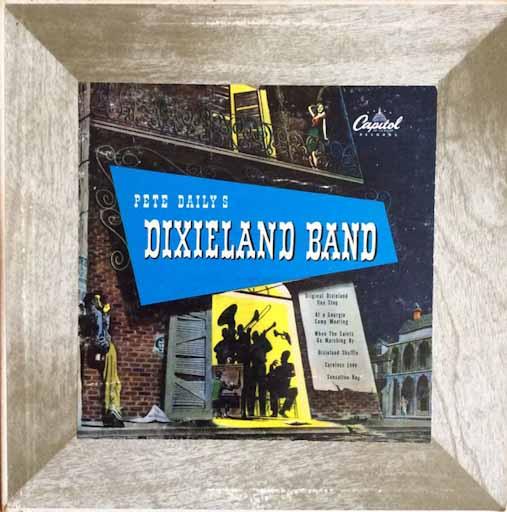
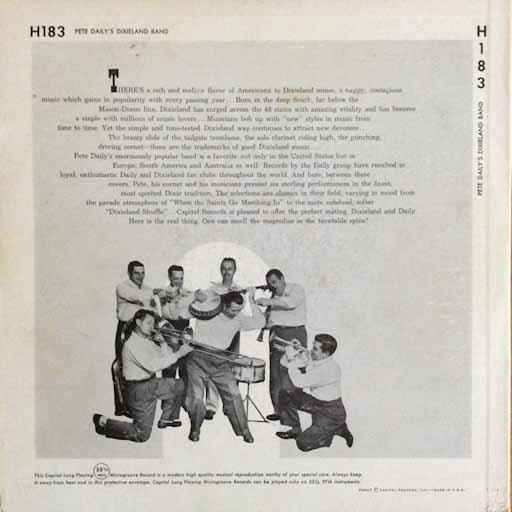
Pete Daily's Dixieland Band – Pete Daily's Dixieland Band I must say that I enjoyed this one. A very fun record with lots of interaction and very nicely recorded. Tellingly, I think Daily might have been an old timer who rode the revival, rather than a revivalist per se. Does anyone have an idea of who was in the group? There is a photograph of them on the back cover but no names.
-
Thanks. That American music is a great resource. Lots of great stuff and these days easily accessible.
-
Actually that is a pretty accurate review. It is not a bad album. Panama Francis is a refreshing change after listening to two weeks of Dixieland thumping. And Kenny Davern, if that is who it is, certainly sounds likes Kenny Davern. I certainly enjoyed this one, which I can't say for all of them. The "Most Collected" is what I take as the closest proxy for "most owned". I suspect that the metric is a passive one that brings to the front the second hand bin dwellers that sold well at the time and still lurk in collections, rather than what is being sought for actively or is actually prized. The Dukes are definitely the ones to avoid. They are like the Firehouse 5 but more goofy and less 'charming', but with much more of the 'good old southlands' and the New Orleans is great themes. "caricaturesque Dixieland bands" is a nice way of putting it. Okay, come on. Please let's have a recommendation. You can't leave me hanging here.
-
I get that sense too. But is that more of a "fake" Chicago style vs "true" Dixieland styles (the San Fran and New Orleans)? There seems to be a lot of crossover between the San Francisco and the New Orleans "uptown" scene of George Lewis etc. I really enjoyed this one. Played with actual feeling and nice phrasing. Thanks for suggesting it Not even Provocative Percussion? Thanks. Not sure it is that admirable - more compulsive really. Normally I can scratch these itches myself and no one else has to hear about it. That sort of sentiment seems to be everywhere with this stuff. Tiny micro scenes battling each other. That Tex Wyndham guy is another example. He clearly cannot stand Chicago style. He tries in his article on Chicago style to be even-handed as possible and to imagine why and how a person might enjoy listening to it (perhaps they enjoy solos...?), but you can see it is a strain. Particularly interesting because I'm sure that 99% of serious jazz fans, including most of us, would pick the "fake" Chicago stuff any day.
-
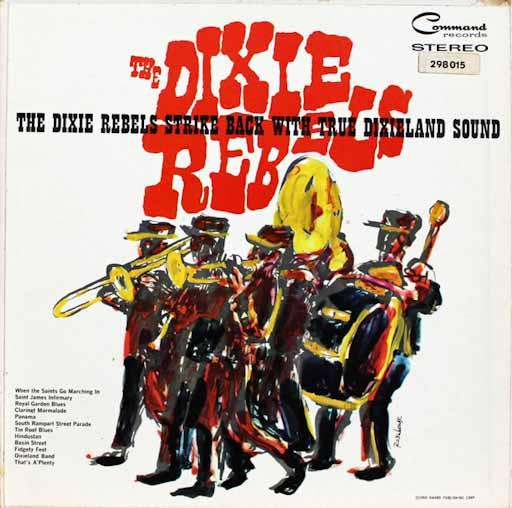
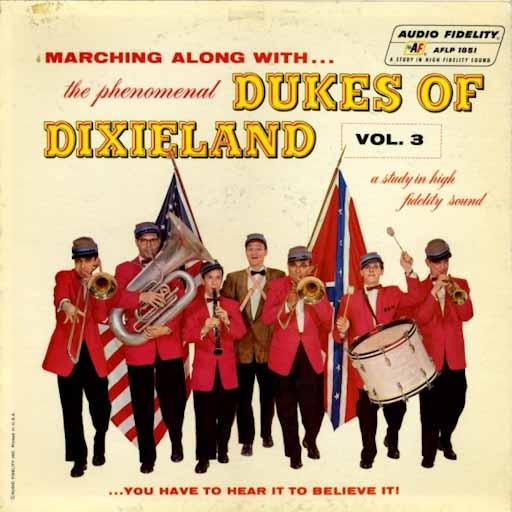
Two examples: Obviously, both groups' names, the records' titles, and the covers. The Rebels' album also has an alternative cover that has a stylised confederate flag on it. This is not the hot jazz revival trumpeted by John Hammond or played at CND marches. Note the stress on the "true Dixieland sound" for the Rebels record. The liner notes (available on discogs but I can't post here in readable quality) point out that this sound that they play was the original jazz played by the ODJB and the NORKs, before Condon degraded it. A tiny one-line reference to Black marching bands, but no mention of Bolden, Armstrong etc. It goes out of its way to erase the Black origins of hot jazz. --- Edit: Having written the above, and having listened to the Rebels record (I had only heard the Dukes one), I am actually not sure that this album is from New Orleans at all. It seems to be a producer's record, by Enoch Light (I assume an @Teasing the Korean favourite). The musicians are either not mentioned or are fictional. Looking up the group on Allmusic suggests that the group might actually have included Milt Hinton and Panama Francis. If that is the case, then it is an interesting twist, and would account for the strange non-trad rhythmic underpinning of the record.
-
As I mentioned in the Listening To thread, I've been digging pretty deep into the "white" New Orleans revival's records, off the back of @JSngry 's comment in response to the Wyndham categorisation that I posted above. I mean artists like Al Hirt, the Dukes of Dixieland, Sharkey Bonano and Pete Fountain. This is not an area that I have ever bothered with, despite the fact that it seems to have been one of the biggest-selling scenes in the revival, going by presence on the second hand market. My methodology for finding these albums was to go to discogs and search 'Most Collected' in the Jazz/ Dixieland category. Records from this scene far outnumber other categories of trad / dixieland when it comes to presence in collections, with Louis Armstrong being their only competitor. That is despite the fact that they are rarely mentioned even in the limited discussions of the subgenre. It does seem to be its own style. It is quite separate even from the Firehouse Five / Turk Murphy type of Dixieland, which I assumed would be the blueprint for them before I started to explore. Drilled stiffness as a virtue. Lots of kitsch comedy. Very little blues (or, if present, blues apparently learned from swing era records). Lots of New Orleans tourist schlock. All those terrible album covers on Capitol or Audio Fidelity with their white backgrounds and hilarious hijinks. Not really much to like although sometimes the hard arrangements are enjoyable in small doses. I'm not surprised that these records don't get discussed much, because they really are not that good. More a genre of 50s kitsch than a style of music. It is perfectly explicable why one would focus on Eddie Condon, the DSCB or Kid Ory, and not even bother to talk about the Dukes of Dixieland. More sinister is the racial edge. Obviously this is something that is present throughout jazz, including dixieland, and throughout wider culture in some form or another, but so strong here. The likes of Lu Watters and Ken Colyer seemed to see themselves as reviving the original sound of jazz focusing on its Black and Creole origins, as embodied in King Oliver / the Hot Sevens or the likes of George Lewis, respectively. But the New Orleans White scene in contrast sometimes tries hard to erase those origins and instead to stress continuity with the "real" original white jazz of the Original Dixieland Jass Band or the New Orleans Rhythm Kings (unsaid: the likes of King Oliver and Louis Armstrong were not the "real" originals). Liner notes carrying this message are common. Also common are names and covers that pun on the "Dixie" name tag, often in pretty queasy ways, with confederate military imagery and terminology. A strange flip side of this is that there are not many examples of the two New Orleans scenes of the time collaborating. George Lewis and his colleagues were Right There. Ken Colyer crossed the ocean to play with them. But for the Assunto brothers or Al Hirt they basically don't exist. Examples of them even playing with Black musicians are few and far between - perhaps the only famous example being that Louis Armstrong record with the Dukes, which I think is unlistenable. I think that a few had mixed bands when it came to playing live (including a young Ellis Marsalis) but on record that is not visible. I don't think that enough is really made of this. Many histories of the genre treat Dixieland as deriving from the well meaning but blinkered progressive viewpoints of East and West Coast revivalism, which was then misunderstood or found patronising by younger musicians. But this stuff is, from any objective standpoint, really really reactionary at its core, as well as being musically of pretty minimal interest. And this too is a central part of what the revival was. Not sure why I would find any of this surprising. Perhaps if I had lived through this stuff originally it would have been top of mind that this is a large part of what Dixieland was actually about, not Left Bank intellectuals or Emile Barnes records. Once I had spent a week or so with this stuff I began to feel that not even mentioning it in the context of a thread like this would not be right.
-
Nice one!
-
Jack Sperling does a good job on the record. Not a good job playing classic jazz: he comes across quite modern. That's one thing I enjoyed.
-
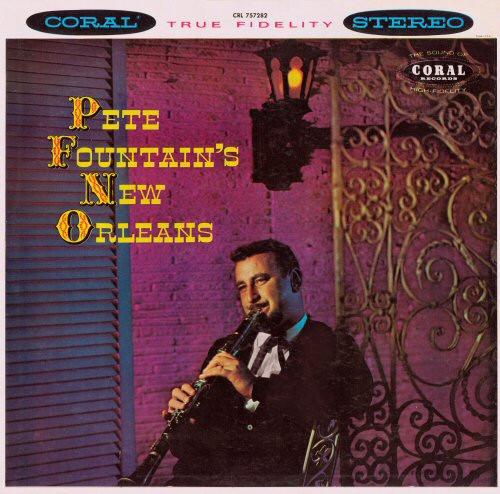
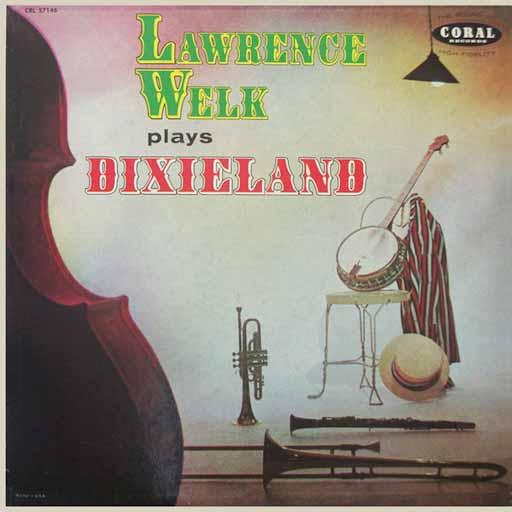
Pete Fountain – Pete Fountain's New Orleans I've been pretty deep in the weeds with this stuff over the last week. The kind of Dixieland that fills the bins: Fountain, Hirt, the Dukes, Hunt, etc. This one is perfectly pleasant, if not something I am likely to think about ever again. Most of these records haven't reached that kind of height. Now on to: Lawrence Welk And His Dixieland Boys – Lawrence Welk Plays Dixieland Another Pete Fountain. This one is actually not bad at all. A nice raggedness to it.
-
Dave Lambert at this stage always reminds me a bit of Harry Shearer's character in A Mighty Wind.
-
File next to Karyobin...
-
This is such a good record. Was it ever reissued on vinyl? It seems a real hole.
-
Martin Archer & Simon H. Fell – Pure Water Construction

-
He's not a player whom I know very well. Those first two Soprano Summit records are good. Otherwise, pretty unknown to me. Currently listening to The Gotham Scene by Bobby Hackett after the post of the Mosaic a few days ago.
-
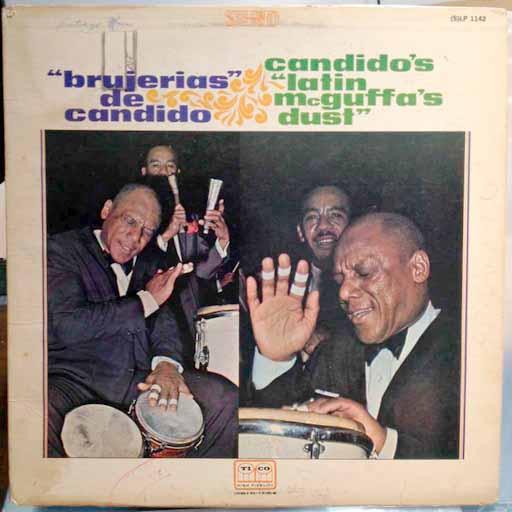
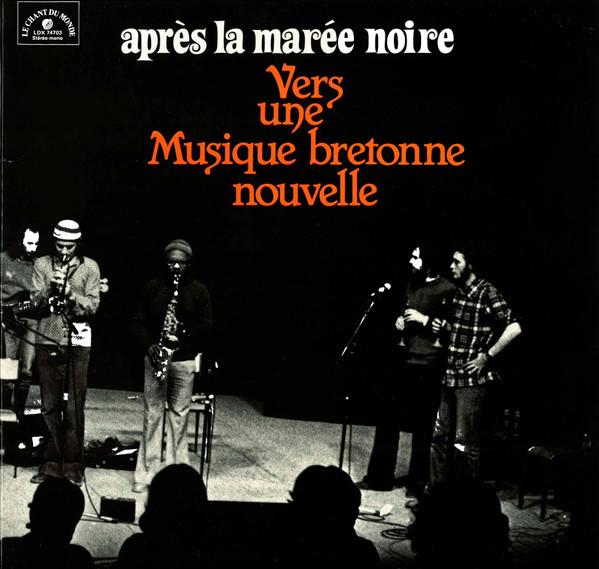
Candido – "Brujerias" De Candido / Candido's "Latin McGuffa's Dust" It is interesting. A mix of Breton players on traditional instruments and themes with freeish jazz piano and reeds, plus percussion. It slightly suffers from being a bit of a porridge, but it is enjoyable. Could have been more than enjoyable though, I think.
-
François Tusques – Après La Marée Noire - Vers Une Musique Bretonne Nouvelle
-
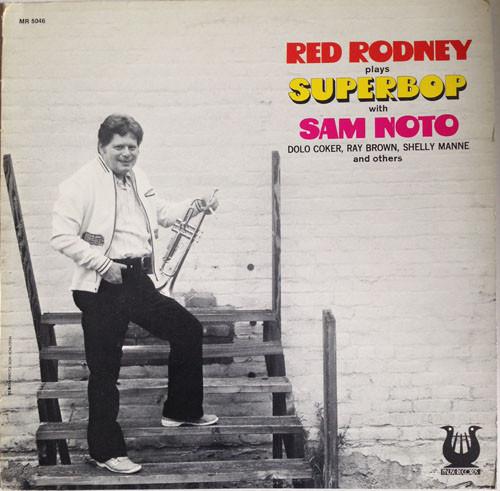
Red Rodney – Superbop
-
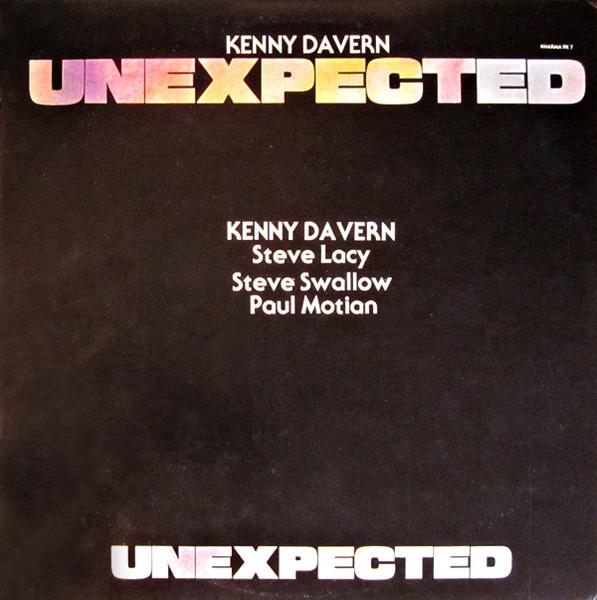
Kenny Davern with Steve Lacy, Steve Swallow, Paul Motian – Unexpected.