_forumlogo.png.a607ef20a6e0c299ab2aa6443aa1f32e.png)

Rabshakeh
-
Posts
7,656 -
Joined
-
Last visited
Content Type
Profiles
Forums
Events
Blogs
Everything posted by Rabshakeh
-
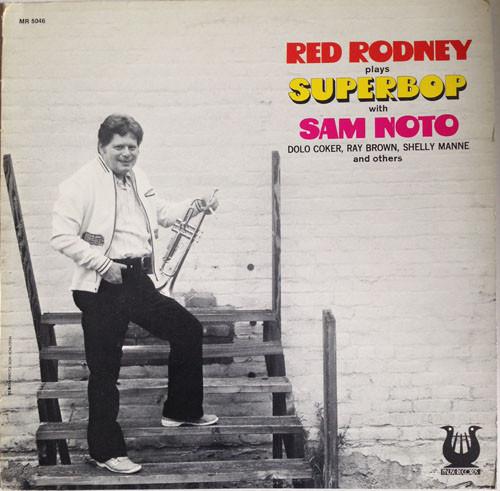
Red Rodney – Superbop
-
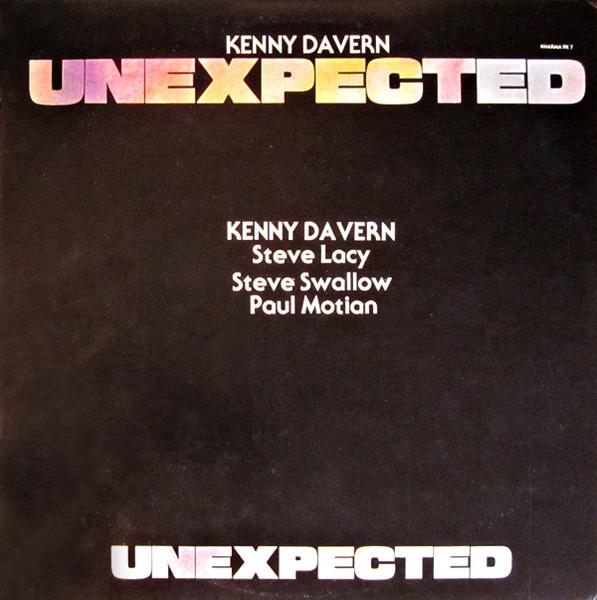
Kenny Davern with Steve Lacy, Steve Swallow, Paul Motian – Unexpected.
-
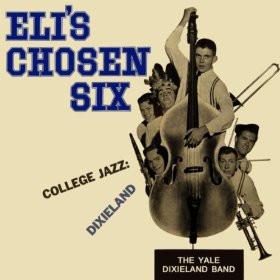
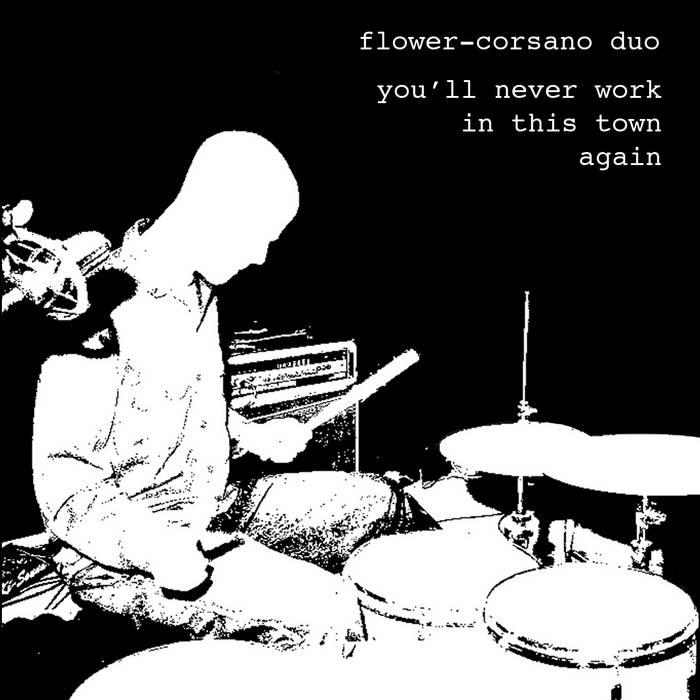
Eli's Chosen Six – College Jazz: Dixieland Flower - Corsano Duo - You'll Never Work In This Town Again
-
The White Album...
-
These clips are just great. Watched them three times.
-
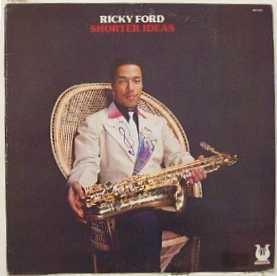
Ricky Ford – Shorter Ideas
-
It seems to me that a lot of the comments above assume a gradualist approach to the development of popular music, rather than what I think is the more accurate step based approach. I really don't think that it matters whether Frankie Laine "loosened up" white pop music. I like that Jazz Spectacular record, but I think that the style of white pop music which Laine did or did not loosen up was, whatever way you look at it, one of the dead-est of evolutionary musical dead ends. "Traditional pop" or "Pre-Beatles pop" - Really, I'm not sure whether Frankie Laine and his ilk actually made any lasting impact on white pop music. I enjoy Laine like I enjoy Sinatra (or like I would have enjoyed Sinatra, had Sinatra had a record with Budd Johnson playing wicked solos). But it didn't go anywhere. Edwardian banjo music probably had a bigger impact on the post-1964 pop scene. What loosened up white pop music was white bands adopting R&B. Nothing to do with this lot.
-
I once went through an eclipse in a tent in Zimbabwe. Every other night, I was kept awake / lulled asleep by animal noises: lions prowling, hyenas making love, hippos humping, water bird squarking, etc. When the eclipse happened, around 3am, there was such a complete cessation of noise that I, and everyone else in their separate tents, woke up.
-
 All of this makes sense. Save that, as I said above, Wyndham's position seems to be a deliberately parochial one. He is not claiming to be surveying all forms of classic jazz revivalism, and is only looking at the categories of bands on the various circuits that he classes as revivalist. As mentioned, I think his view of the European bands is not so much that he is ignorant of them (maybe he is and maybe he isn't), but rather that the bands in question would already fit into one or another of his categories regardless of geography. The main thing that seems to qualify "British Trad" as a genre for Wyndham is the difference in the banjo's role. Not geography. I assume that if one attended a Dixieland festival event in 1982 (which I certainly did not, being non-existent at that stage), there would have been American bands that described themselves as playing "British trad", but not bands playing, say, "Dutch trad", or equivalent. That isn't a comment on the strength or existence, or lack thereof, of non-UK scenes. It is just a reflection of what I take from Wyndham’s article to be the contemporaneous American reception of overseas developments. I hope that, in any case, I am not being seen to suggest that I agree with this seven-part classification. I find Wyndham's seven point scheme most interesting for the way that he compartmentalises the various New Orleans scenes. As regards the revivalist scenes, a reading of his articles shows him as a narrow devotee to Dixieland in the Lu Watters style, albeit he takes an allegedly open-minded approach when writing his articles. But the truth is that there is such a vacuum of commentary or recommendations in this area that it is something that I have at least paid attention to. Perhaps I might not have done had it been on a better covered area of jazz.
 -
She is an FMP completist, as are all mothers-in-law.
-
Define "culture"...
-
I should say in Wyndham's defence that the shoddy descriptions in brackets are mine, and not his. With respect to "Hot Dance", he makes some of the points that you make in his article on the style: https://syncopatedtimes.com/texas-shout-3-hot-dance/. That includes the difficult choice of where one draws the line between jazz and not-jazz - is it a band's repertoire? Style? Rhythmic sense? the occasional solo? - as well as the divergent approaches that seem to be adopted towards classifying white and black groups. On the British trad point, his approach seems very strange. He concentrates on Ken Colyer, which is maybe not the the first person that the term 'Trad' brings to mind to a British reader. I get the impression that "British trad" was a category of US and Canadian dixieland bands playing the then-thrivin Dixieland festival circuit that adopted Colyer's attempt to emulate the 'New Orleans Uptown' sound of George Lewis and Bunk Johnson, including what Wyndham considers to be Colyer's ensemble's incorrect / innovative use of the banjo. I don't think he is talking about the European trad scenes in general so much as this derived style as viewed from the point of view of the US: the only recent group that he mentions as playing in this "British trad" style is the Climax Jazz Band, who are Canadians. I suspect that Wyndham would classify a group like the Dutch Swing College Band as a San Francisco style band, rather than a European trad band. As for the Australians, I wonder where he would put them? I don't know of the Kustbandet. What record would you recommend starting with?
-
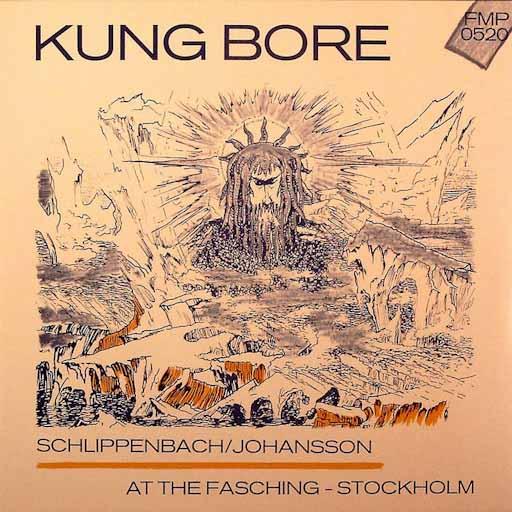
Stuck at my mother in law's, in rainy Devon, forcing the kids to listen to this mix of free jazz piano and tuneless vocals and accordion, whilst we play dominoes on the floor. Real character building stuff.
-
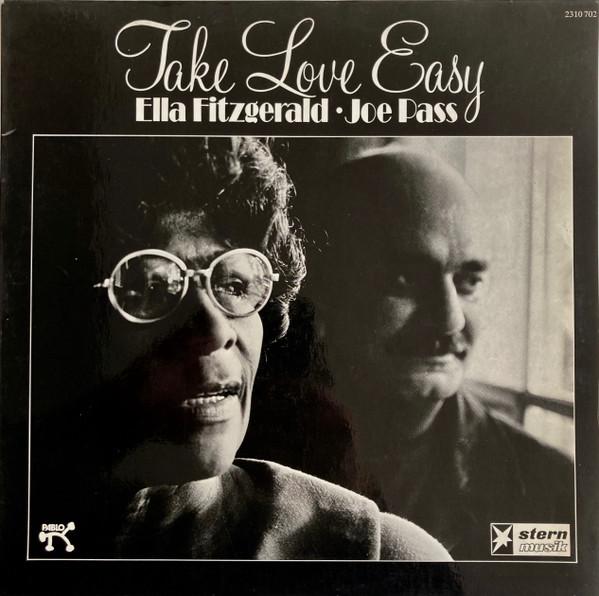
Ella Fitzgerald and Joe Pass – Take Love Easy This is another of the Pablos that is up for re-issue. I am a lifelong Joe Pass sceptic but in the last month or so I seem to have flipped.
-
Half and half. Both turn a moment into a style. That's something, isn't it?
-
I liked that Super Satch record. The more famous Hooray for Hoagy, a little less so. Something about these two did really capture someone’s imagination for a while, though. There is something more than that. A lot of time and energy put into refining something that once happened into something that is a free-standing style. In their case, the emphasis seems to be on the group’s arrangements. Maybe not a million miles from the way that Marsalis and co turned the Plugged Nickels sessions into Black Codes.
-
Knowing how to land a beat is crucial for most of the jazz that we all like, but not for all jazz and certainly not for all music. Boisterousness and raw excitement is something too. I don't really care whether Black Flag or Charlie Feathers can swing. They have their own rhythmic power. Same goes for some Dixieland, I guess. Some of those arrangements are enjoyable though. Interesting that these players are at the heart of the genre in the eyes of most Dixieland fans, but have barely showed up here.
-
There's that whole run of Bill Lee and Bill Lee endorsed records that are basically Isthmian League, if that.
-
There is a writer called Tex Wyndham who did a series of columns called Texas Shout on dixieland (currently available to view for free on the Syncopated Times website here: https://syncopatedtimes.com/tex-wyndham-texas-shout/). They are a bit dated but still interesting. His theory was that there were seven "styles" of classic jazz. Three historic and four revivalist. They were: Historic - White New Orleans (ODJB, NORK, etc) - Hot dance (non-jazz or partly-jazz white and black pre-swing dance orchestras) - Downtown New Orleans (Oliver, Armstrong, De Paris, etc). Revivalist - Chicago style (Eddie Condon, Wild Bill Davison, etc) - Uptown New Orleans (Bunk Johnson, George Lewis) - West Coast revival (Lu Watters, Turk Murphy, etc) - British trad (Ken Colyer etc) Obviously any taxonomy has glaring holes. Even within revivalist terms, this one makes no allowance for ragtime players or Bix-enthusiasts (surely a major feature in Dixieland world). It also ignores that stylistic middle ground between swing, trad and blues that I suspect is the one area of post war classic jazz that most of us on this forum actually really do enjoy. But one interesting idea, which ties in to what you mention above, is the idea that the lineage of stiff, and not particularly bluesy, white New Orleans musicians, which stretches from the Original Dixieland Jass Band through to the likes of Al Hurt and Pee Wee Hunt, was its own distinct "style", with continuity from the 1920s. Also interesting is that Wyndham, who was writing from the perspective of the 1980s Dixieland festival circuit, regards that style as having since the 60s become "extinct".
-
I did see that. I didn't know it was the first and I certainly did not know it was going to be $40 a do, but the announcement was indeed what led to me listening to this one. Pablo reissues are long overdue. There are only so many C league Strata East records that need reissuing.
-
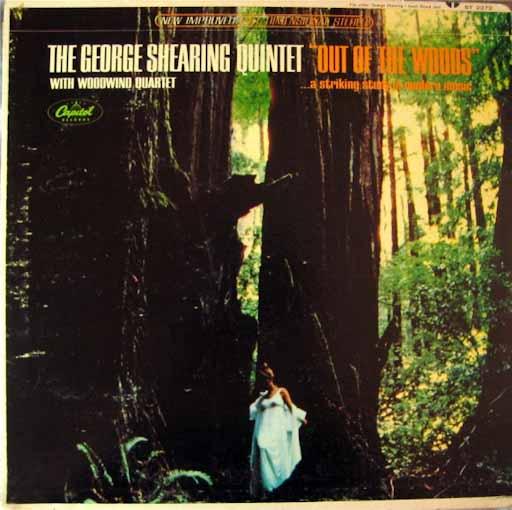
George Shearing Quintet With Woodwind Quartet – Out Of The Woods This is an intriguing one.
-
Pee Wee Hunt – Dixieland Classics First listen to this after the comment in the Dixieland thread. This is super-stiff stuff.

-
By the way, the One Album Per Artist thing is my logic for what I own in my hard copy collection, and is mainly a matter of space restrictions, as well as my own insecurity about owning excess things. We don't need to restrict ourselves in that way here.
-
"Tourist-friendly trad" is a good description. Do the Dukes of Dixieland fall into that category?
-
I mean, all of this is part of the scene, I guess. The classic jazz revival was as much about Al Hirt, Pee Wee Hunt, and the Firehouse 5 as anything else. Hence the reference to records which were "important historically", i.e., records that made a big splash of were influential but which we, being honest, might not like very much.