_forumlogo.png.a607ef20a6e0c299ab2aa6443aa1f32e.png)

Rabshakeh
-
Posts
7,554 -
Joined
-
Last visited
Content Type
Profiles
Forums
Events
Blogs
Everything posted by Rabshakeh
-
Trumpeter who was part of the late Mingus crowd. Did some leader records in the late 70s and early 80s that must have sold reasonably because I see them everywhere. I am not sure why he dropped off after that. Other members will know more than me.
-
George Wein Is Alive and Well in Mexico Great record. Three leads who are full of character. Disappointed that they didn't take the Herb Alpert gimmick further though.
.jpg.8fe709845684acadf031450a87ef39ab.jpg)
-
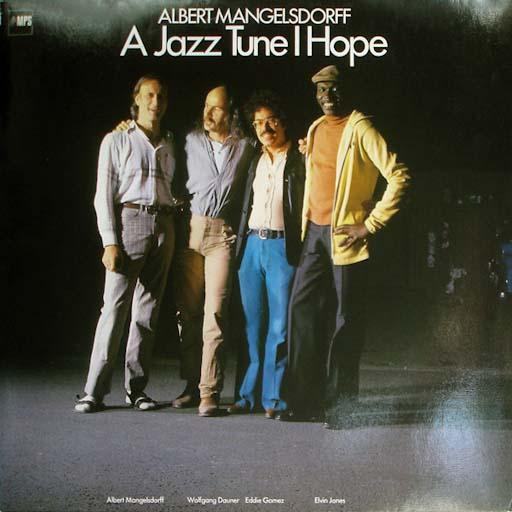
Albert Mangelsdorff – A Jazz Tune I Hope
-
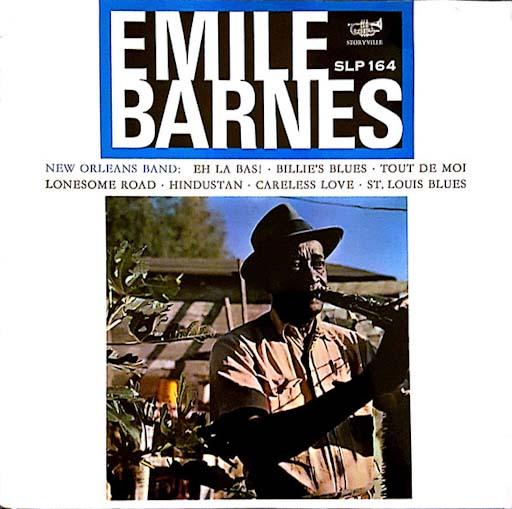
Emile Barnes New Orleans Band – Emile Barnes New Orleans Band
-
 Thanks! These are some great suggestions. Also promoted me to listen to that Barbara Dane record again. Not really jazz but what a great record. I think that I hadn't heard of it until around 4 years ago when I saw it flagged up on Twitter. Thank you. Some great stuff. That George Wein record is one I had meant to check out and it is nice to see that it is now streamable. I think what these posts show is that the wider revival / trad movement is quite a diverse place. There's a wide range of different styles grouped under the same umbrella. Nice. On the records front, do you have anything you'd recommend. Either from these performers or more generally. As I said up front, I'm also interested in where this music went after the air goes out of the movement in roughly the mid sixties (is there a date that is often pointed to, like 1947 for big bands?). It seems like there was a sort of revival of the revival sometimes in the 70s and 80s, but I know next to nothing about it.
 -
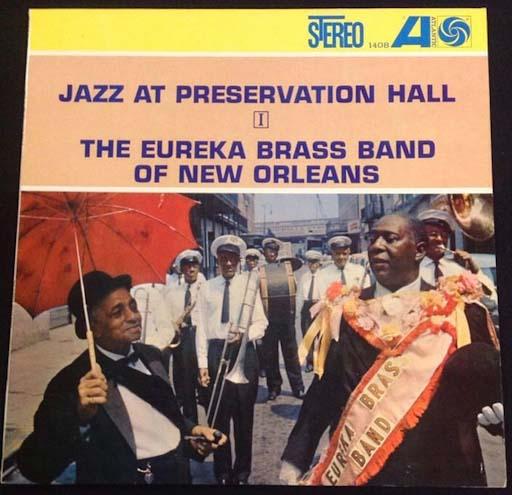
The Eureka Brass Band Of New Orleans – Jazz At Preservation Hall I
-
I understood @jazzbo to be referring to their sales, rather than their quality.
-
I like that Mitchell one a lot. Then again, I have that but not the Smith...
-
It was a good morning!
-
One area of jazz that seems to be comparatively little-discussed here is the music produced by the classic jazz revival. What I mean by this is that style of jazz based around the models of Louis Armstrong's Hot Fives and Sevens, King Oliver, Bix Beiderbecke, the earlier ragtime and stride pianists, as well as the Original Dixieland Jass Band, which experienced a revival in the late 1930s, as an alternative to the then-dominant swing and/or big band styles. Dixieland, hot jazz, Trad, New Orleans Jazz, Chicago style, San Francisco style, ragtime, New Orleans marching band, and the rest. There are a few threads here and there touching on this music: I started one specifically on European trad around a year ago. There is also a good thread somewhere about New Orleans marching band records. But other than that, I am impressed at how little comes up on this music when searching the Organissimo database. I'm not sure of the comparative commercial and cultural impact that the Dixieland etc. revival actually did have at its height, as against swing and bop. Clearly it was a major movement within jazz, though. It created the careers of younger revivalists like Lu Watters or Ken Colyer, it led to a renewed surge of interest in the careers of surviving greats like Louis Armstrong, Sidney Bechet, Eddie Condon, Jack Teagarden and Pee Wee Russell, and it uncovered "unappreciated" talents like Bunk Johnson or George Lewis. Histories of jazz, these days typically written from the point of view of bop fans, often have a little bit of space dedicated to the movement. Typically, this is to set the classic jazz revival up as an antagonist to the bebop movement that arose at roughly the same time. But there is rarely much said about the music or the movement itself. In the internet age, this music seems to be basically forgotten. Going by the substantial amount of revivalist records that are still readily available on the second hand circuit (often cheap), and the prevalence of references to it in non-jazz culture (Spike Jones, Country Joe and the Fish, Bonzo Dogs and the Star Wars Cantina scene music, being classic examples), it must have been a substantial part of the jazz ecosystem in its time, even if, with age, it has mostly withered away. With that introduction, I'd be very interested to hear forum members' recommendations for which albums and records, in their views, represent the key musical 'moments' of the revival. That could be either because they are Important (capital I) records historically, or because they are among your personal favourites, or both. For the purposes of this thread, let's take music recorded from or after 1939 as the timeline. Most of this stuff presumably comes between 1939 and roughly 1955(?). So, bonus points for music released after the initial wave had subsided. Ideally, LPs or classic contemporaneous compilations or reissues (although that's unlikely to be possible for the earliest parts of the revival genre's emergence). -------------------- Some examples from my side, in deliberately careless order: - Muggsy Spanier - The Great 16! - 1956 compilation of 1939 sides, that I think are regarded as a major step in heralding the revival. - Eddie Condon's Commodore recordings - Essentially laying down the template for 'Chicago style' Dixieland. I'm typically allergic to box sets, but the Condon Mosaic is one I would definitely buy. - Percy Humphrey - New Orleans The Living Legends: Crescent City Joymakers - One of my favourites from the Riverside series of Chicago and NO 'living legends'. Filled with blues and pre-war hokum stylings, but lots of space for actual solos. - Jack Teagarden - Mis'ry and the Blues - A personal favourite from Teagarden's later period, mixing croaky blues songs with upbeat Dixieland. - Dave Dallwitz - Ern Malley Jazz Suite - From 1975. Australian trad that goes somewhere that is a lot more advanced compositionally than one would expect from this kind of music. - Henry Allen - Ride, Red, Ride! - A great bluesy group with Coleman Hawkins, from 1957. A mix of styles that refuses to be hidebound and mixes up trad, swing and blues (they aren't really different in this setting). Lots of fire in the playing. - Howard Alden and Ken Peplowski - Pow Wow - From 2006. Swing and trad-rooted playing that sometimes goes quite far outside, with an emotional core to it that it really like. - Lu Watters - San Francisco Style - 1946 recordings that are probably the cornerstone of what became known as 'dixieland', taking the King Oliver and Hot Sevens template into a heavily arranged direction, and introducing Turk Murphy, Bob Scobey and the rest of the team. Certainly an Important one for inspiring the movement. - Louis Armstrong - Satchmo at Symphony Hall - A live record from 1947. A classic of Louis Armstrong's return to something closer to his original style, with a great group including Teagarden and Hucko. I like it more than the more famous Ambassador Satch and Satch plays Fats records. - Tuba Skinny - Owl Call Blues - Currently very popular group in the surviving revivalist circles. Basically a retro mix of Dixieland and pre-war blues styles. It sounds like the kind of music that would be played in a barroom scene in some half-arsed immersive theatre. This record seems okay to me, but I haven't enjoyed any of their others. - Pee Wee Russell - Ask Me Now - I know this is a favourite with a lot of members. A nice mixture of Russell's clarinet with a group playing in later styles. I love this record. - George Lewis and Kid Thomas Ragtime Stompers - My favourite of Lewis's records. A lot of people find it slapdash but for me that is the charm here. Loose with a lot of feeling. - Black Eagle Jazz Band - S/T - Taking the Watters Dixieland style but upgrading the arrangements for the 1970s. - Dejan's Olympia Bass Band - Here Come Da Great... - An excellent and very funky marching band record from the early 70s. - John Handy - John Handy's Quintet - From 1966. Adding a bit of R&Bish chaos to the trad mix. - Kenny Davern and Humphrey Lyttleton - This Old Gang of Ours - A lovely relaxed transatlantic session from the 1980s. I really enjoy Kenny Davern's clarinet playing. - Bunk Johnson's earliest sides - The New Orleans folk revival's big discovery. Controversially loose, then as now. - Wally Rose - Ragtime Classics - A nicely boomy recording of ragtime revisited, from Lu Watters' pianist. Recorded in 1958. - Shel Silverstein and the Red Onions - A comedy Dixieland record by the illustrator and comedian. Repeatedly my Spotify Wrapped most listened to record. Aggressive vocal Dixieland that plays on what I assume was the testosterone-heavy associations of the varsity crowd who followed this music at the time. - Sammy Remington and the Mouldy 5 - Reed My Lips - A 2006 record from New Orleans with Big Bill Bissonette on drums. Clear George Lewis influence to my ears. I really enjoy this one. - The Best of Ball, Barber and Bilk - Budget British trad comp on Pye that somehow got to number 1 on the British charts - probably a commercial high point of British trad. - Sidney Bechet's Blue Note recordings from 1945 - Packaged in multiple different formats. Bechet's postwar style in it's muscular glory. Any others that you can think of would be welcome. I've been listening to this music for a while now, but it can be hard to find out about it. It would also be interesting, quite aside from recommendations of records, to hear people's recollections of the revival movement, its musicians and its fans, or just any comments that they might have on the revival, where it went and how it played out.
-
It is really good, isn't it! They must have done pretty well though. They're everywhere.
-
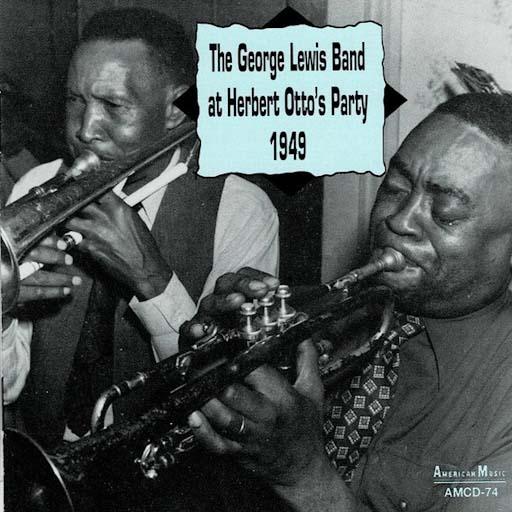
George Lewis – At Herbert Otto's Party - 1949 This one is a little shambolic. This is a nice record. Like a JATP revival. I always like the original cover with the panes of colour that reminds me of vintage Tour de France posters' colour schemes. Was it a hit at the time?
-
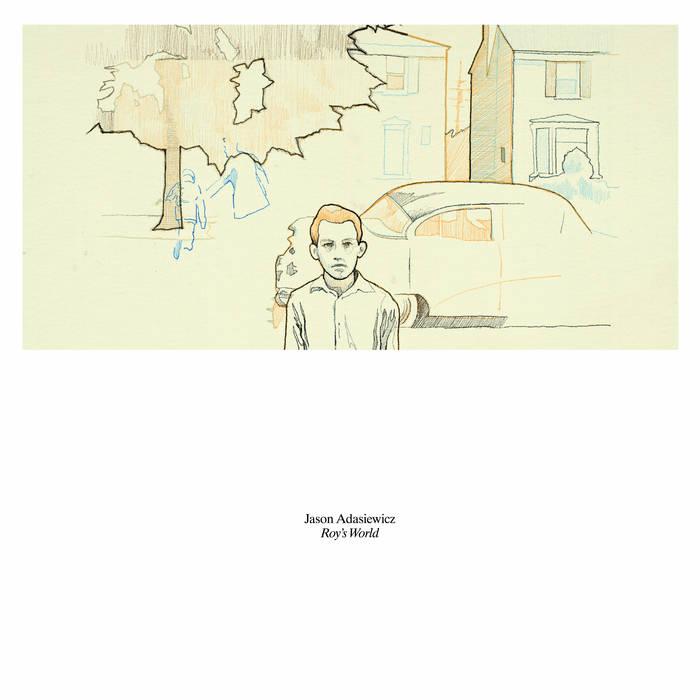
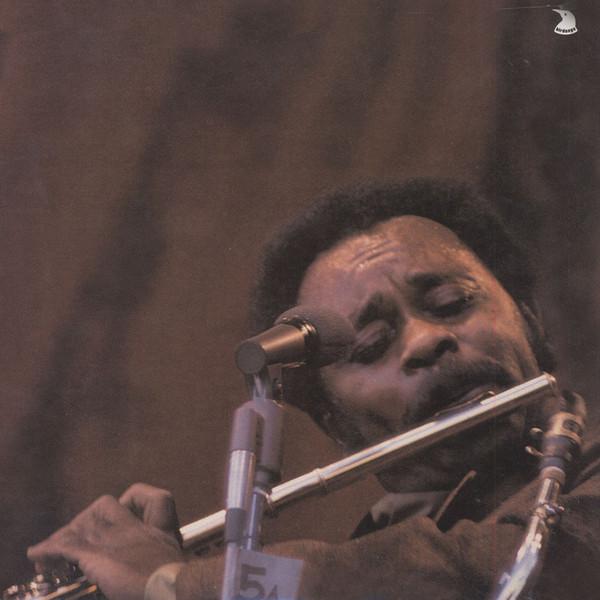
Jason Adasiewicz - Roy's World Prince Lawsha – Firebirds Live At Berkeley Jazz Festival Vol I
-
I get a constant and irritating advert when streaming on YouTube by a piano player who threatens to teach me to play 400 songs in one hour. The logic being that all these songs have the same four chords, so they're easy to learn. The advert cycles through them, and it is pretty depressing hearing all these identical songs. It's just mulch. Also to flag the point I made above. It is not just studies showing decreasing complexity, etc, but also the fact that all industry metrics indicate even younger people are less and less likely to listen to recent music.
-
I keep expecting my kids (6+3) to like that stuff more than they do.
-
Currently listening to the McKenzie and Condon’s Chicagoans sides on loop whilst doing washing up.
-
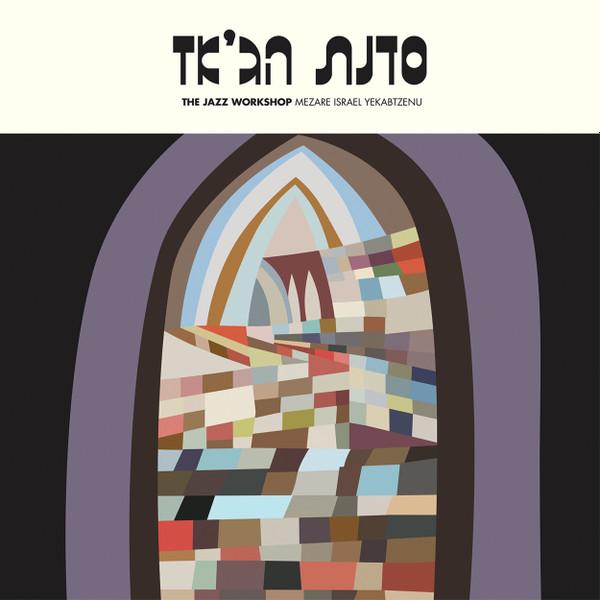
Almost certainly. I didn't know about it until I saw it. It's good. I was very impressed. At times it is close to an Ahmed Abdul-Malik thing. But it is quite varied in choice of tunes.
-
The Jazz Workshop – Mezare Yisrael Yekabtzenu
-
Definitely. In fact that phrase is something I stole from an article in the Wire circa 2004.
-
Cultural black hole.
-
Just listened for the first time. Great record. Thanks for recommending.
-
I hear this a lot whenever I voice a complaint about current culture. I think it might be true occasionally, but (without wanting to start a fight) it does also get deployed to shut down discussion. I was 18 in 2001, and that was *not* a good year for culture. There is very little between 1996 and 2006 that I think was much good. The cultural run from around 2006 to 2013, on the other hand, I remember as a good time - the point at which the pre-algorithmic social media internet really cut through the decaying structures, in my opinion. I really remember that feeling when the corporate cultural monoculture that had sat over my childhood and young adult life cracked and, however briefly, things in the mainstream and alternative cultural spaces became interesting. Anyway, the article that was originally posted is actually quite good. It criticises the idea of stagnation constructively, rather than adopting it wholeheartedly. I enjoyed reading it. For my part, I do think that there is something there. With respect to music, it is telling that all figures for consumption (streaming, purchasing, in person attendance) show that interest in recent music is way down. If even 18 years are not listening to the current music much, then that tells you something, I think. Fashion and design seems to just be cycling through past "aesthetics", and that has been the case for a while. But it isn't spread evenly. I don't think that the state of films is that bad at the moment - In fact Hollywood seems to be doing better than in recent years. Thankfully the superhero films seem to be on the way out, too. Other areas, like comedy, also seem to be getting better again. The truth is that things do come in cycles, with periods of stagnation and growth, albeit I think they are much shorter than the usual 'generations' that get talked about in the media and online (including in this article). It is quite easy to pinpoint periods of stagnation, provided you take a suitably restricted view: 1974-6 for example would be a good example for rock music - a point that sits between the exhaustion of the musical and political developments of 1969 and the remarkable turning of the cultural, social and political tides that started in 1976-1977. Sure enough, the retrospective appearance of a difference in quality to the preceding and following periods is not just subjective / retrospective: music consumption figures were down in real terms then too, enough that the music industry was in crisis (although some blame the oil shock, I believe). I'm sure that there were many 18 year-olds alive then who still think that 1975 was the best musical era, just in the same way as I occasionally meet someone who thinks that it was all downhill after Limp Bizkit or 50 Cent, but they're in the minority. At the moment, culture does seem to be edging away from the twin meta-influences that seemed to me to define post-2016 culture: "poptimism" (or whatever you want to call the critical distrust of 'difficult' culture that seemed to take hold in around 2016) and the valorisation and reward of high politicisation in art. There has been a sudden flood of articles, decrying the state of culture, not just from older writers on legacy media but also from younger writers on social media / substack etc. I think that all of that is coinciding for a reason, in that we've reached a point where the post-2016 moment, perhaps never as great as it thought itself to be, has exhausted itself, and people are tired of the same old thing. Whether we are about to see a flowering of something more interesting is another question. As our chosen genre of jazz and improvised music shows, periods of stagnation and low sales can sometimes just be followed by periods of worse stagnation and even lower sales.
-
I was confused.
-
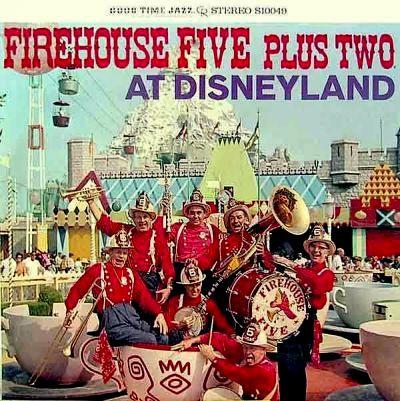
This was intended as a joke, but I popped into Rough Trade today during an office fire drill to see the second hand racks (and I mean display racks, not the Sale boxes) full of Dixieland. They'd obviously bought a job lot of old jazz from somewhere. The swing comps and west coast stuff (some quite significant records in the latter category) were stuck into the sale box, but the Dixieland went on the racks.
-
I thought that was funny too.