_forumlogo.png.a607ef20a6e0c299ab2aa6443aa1f32e.png)
All Activity
- Past hour
-
+1
-
And, for classical music, Opus Kura. I also really like the Harlequin label, where you can find -->
-
-
I always found that Joe played Invitation too fast for the melody to really shine. Many play it for the changes, but Kaper's melodies deserve serious attention. My favourites are Cal Tjader and Milt Jackson.
-
This one is a lot of fun. McFarland is always a stamp of musicality.
-
-
That Rosemary Clooney version is really nice—it sounds like it should be played while credits for a James Bond movie crawl up the screen. Goodness—I have that Lucky Thompson disc...and spaced it contained "Invitation." I need to spin it soon! I dig Joe on that Roy Haynes record!👌 I haven't heard the Konitz or Friedman versions. Need to change that.
-
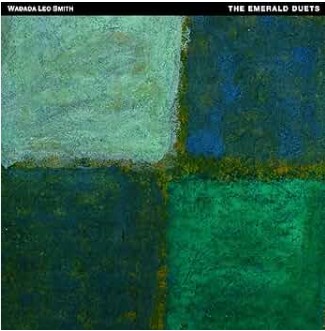
Wadada Leo Smith -- Emerald Duets. The disc with Jack De
-
- Today
-
-
-
Not at all for me.
- Yesterday
-

What rock music are you listening to? Non-Jazz, Non-Classical.
GA Russell replied to EKE BBB's topic in Miscellaneous Music
-
Daggerboard Showcases A Pair of Iconic Musical Associates on "The Skipper and Mike Clark," Set for Release March 6 on Wide Hive Album Features Bassist Henry "Skipper" Franklin, Drummer Mike Clark Joining Core Daggerboard Duo of Erik Jekabson & Gregory Howe, Performing 10 Original Compositions By Jekabson, Howe, & Franklin February 9, 2026 Daggerboard—the collaborative effort of trumpeter/composer Erik Jekabson and multi-instrumentalist/composer Gregory Howe—retrains its spotlight on the rhythm section with The Skipper and Mike Clark, dropping March 6 on Howe’s own Wide Hive Records. The titular characters are bassist Henry “Skipper” Franklin and drummer Mike Clark: two of the living legends of jazz, whose alchemy when brought together forms the core of the new album. Neither Franklin nor Clark is a newcomer to Daggerboard’s pool of collaborators. The bassist previously featured on their 2022 sophomore effort, the aptly titled Daggerboard and the Skipper; the drummer entered the fray two years later on Escapement (which also included Franklin). The two have been friends and collaborators, however, for going on three decades, evidencing a remarkable chemistry even after long silences between them. “We always could right away play together without saying anything,” Clark says. “I love Skipper. He’s a very close friend and a deep musician. His time is so strong.” However, their solid, powerful groove has never been quite so front-and-center on Daggerboard’s recordings as it is on The Skipper and Mike Clark. (The album also includes guitarist Dave MacNab, pianist Matt Clark, violinist Mads Tolling, and saxophonist Dave Ellis—also regular fellow travelers of Daggerboard’s—along with two new additions, vibraphonist Dillon Vado and conguero Babatunde Lea.) Its eight Howe-Jekabson compositions are clearly shaped around the rhythmic possibilities that the two bring to the fold. From the seamy, crawling opener “Desierto de Tabernas,” to the funky struts of “Runnin’ Into One” and “A Pride in the Prairie” to the mellow melancholia of “Tranquil Blue,” it’s the eponymous pair that provide definition and direction. Erik Jekabson and Gregory Howe aka Daggerboard at Wide Hive Records' Berkeley studio. Ironically, it’s Franklin’s two gentle contributions, “Tanzanian Skies” and “Ruaha Daybreak,” that seem to be the album’s most melodically inclined. Yet there’s some sleight of hand at play there, with “Tanzanian Skies” offering one of the bassist’s meatiest and most rhythmically complex solos and both tunes giving Clark’s virtuosic kit chops a serious workout. That said, there are wonderful melodic jewels to be found all throughout the record. “Changing Emphasis” is deliciously orchestral, featuring as its centerpiece a tough but thoughtful tenor solo from Ellis. The saxophonist takes another top-flight turn, this time on soprano, on “Brother Ranelin.” Clark and MacNab do gorgeous work on “Tranquil Blue.” Jekabson’s flugelhorn, meanwhile, takes the focus with a bravura display on “Street Sheik,” itself a moody and lyrical ballad. Bass and drums may get pride of place on The Skipper and Mike Clark, but it’s a tour de force for all involved. Daggerboard is the fruit of the creative union between Bay Area trumpeter and composer Erik Jekabson (far left) and composer, keyboardist, guitarist, singer, and percussionist Gregory Howe (near left) who is also the founder of Berkeley-based Wide Hive Records. Erik Jekabson, born March 23, 1973 in Berkeley, is a link in the chain of superior trumpeters to come out of Berkeley High School. His musical journey took him to Oberlin Conservatory, New Orleans, France, and New York, where he developed both his skills and his résumé. A homecoming at the age of 30 made him a permanent Bay Area presence, and in the intervening years he’s established a fearsome reputation around Northern California as not just a player and composer, but an arranger, bandleader, and educator. Gregory Howe, born in 1969 in Santa Barbara, came to jazz music through his father’s record collection. Though his initial impulse was to work in environmentalism—he studied political and environmental sciences at Massachusetts’ Williams College and worked in the environmental activist sector in ’90s San Francisco—music became a calling that he couldn’t ignore. He broke into the Bay Area music scene with the fusion band Liquid Ambar, then, in 1996, he founded Wide Hive: a café, live music venue, recording studio, and record label in San Francisco’s Mission District. Over the next three decades, Howe recorded and produced albums by the likes of Larry Coryell, Phil Ranelin, and Eddie Henderson (among many others), eventually moving his operations to Berkeley. Howe and Jekabson came together in 2014, when Howe recruited Jekabson to record trumpet parts for an album he was producing by Throttle Elevator Music (an early project of California saxophonist Kamasi Washington). The trumpeter became both a regular with TEM and a Wide Hive artist in his own right. He and Howe decided to initiate a project together, taking the name Daggerboard from the title of a track from the last TEM album. Their own first recording, 2021’s Last Days of Studio A, placed the duo at the nucleus of an assemblage that included Bay Area stalwarts like saxophonist Kasey Knudsen, organist Mike Blankenship, guitarist Mike Ramos, and drummer Mike Hughes. For the following year’s Daggerboard and the Skipper, Howe and Jekabson invited esteemed bassist Henry “The Skipper” Franklin to join them, with spectacular results. Another renowned veteran, drummer Mike Clark, signed on for 2024’s Escapement. The Skipper and Mike Clark, again featuring Franklin and Clark, is Daggerboard’s fourth album. Photography: Scott Chernis Daggerboard EPK Daggerboard Website
-
What rock music are you listening to? Non-Jazz, Non-Classical.
HutchFan replied to EKE BBB's topic in Miscellaneous Music
-
-
-
-
-
-
Gotta say, Tranemonk's question resonates with me a lot more than Late's does. If even Tiberi and Verve have concerns about the SQ,, then those of us without a financial (or as potential buyers,a negative financial stake🙂) surely should. I love Trane, but I'm not optimistic about this coming down well. Benedetti Parker's seem like a reasonable best case secenario. We'll know more in April, can assume that the RSD release with be the ceiling for SQ.
-
... and Archeophone, in that segment of the market. Not only for what must be about the most fitting label name if you reissue really old music.
-
👍
-
👍
-