_forumlogo.png.a607ef20a6e0c299ab2aa6443aa1f32e.png)

Rabshakeh
-
Posts
7,655 -
Joined
-
Last visited
Content Type
Profiles
Forums
Events
Blogs
Everything posted by Rabshakeh
-
I used Audio Gold for a portable record player about a decade and a half ago. It took them ages and when they'd finished it immediately burst into flame. Nice place though. It felt like a group of men living their ideal lives, surrounded by bits of old machinery.
-
Same here. Gravity's Rainbow is also very good. Not an original point of view, but it is. Really it is very similar to Mason & Dixon, notwithstanding that it is not written in mock 18th century prose.
-

New Orleans and Jazz History
Rabshakeh replied to Rabshakeh's topic in Jazz In Print - Periodicals, Books, Newspapers, etc...
I see that he has a book called Jazz Transatlantic. Is that the one to which to go? -
I'm a very big fan of the first version. The re-recording has more of what Hutchfan is speaking about and less of what TTK is speaking about. Much more of the advanced folkloric jazz and a bit less of the strange menace. It still has the magic though. It is on any analysis very good. Easy streamer and listening to the one won't ruin the other.
-
New Orleans and Jazz History
Rabshakeh replied to Rabshakeh's topic in Jazz In Print - Periodicals, Books, Newspapers, etc...
Taking it as a given. -
The re-recording. Quite a different vibe.
-
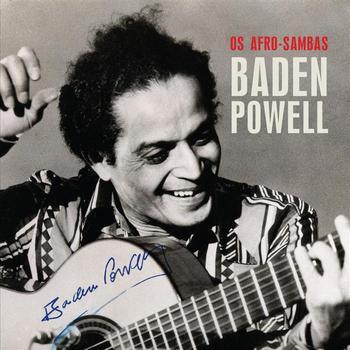
Baden Powell – Os Afro-Sambas
-
Off topic, but where do you get repairs done?
-
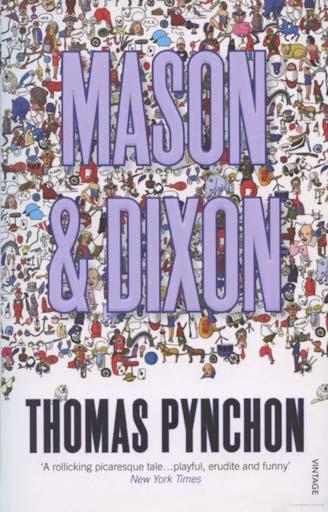
Mason & Dixon by Thomas Pynchon I'm not sure why I hadn't read this until now. With Pynchon I'm in the 'forget how much I enjoy it until I read it' camp. Perhaps the idea of a late career book as long as Gravity's Rainbow but written in mock 18th C prose about the mapping of America seemed like it would be tedious and silly. Anyway, it is really good. I can see why many people regard it as the best thing he's written. Edit: It's not. The best thing he's written is that two or three page section of GR where Slothrop tries the old lady's chocolates.
-
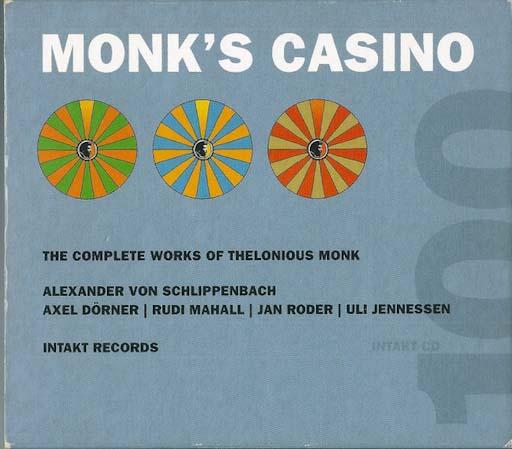
Alexander von Schlippenbach, Axel Dörner | Rudi Mahall | Jan Roder | Uli Jennessen – Monk's Casino (The Complete Works Of Thelonious Monk) Last listened to this years ago. I'm not sure why I've left it so long, given that it is very strong. But in the intervening decades I have discovered Steve Lacy (who I didn't know about as a twenty year old) and it makes it sound like quite a different record to how it originally sounded to my ears, without a note having changed.
-
New Orleans and Jazz History
Rabshakeh replied to Rabshakeh's topic in Jazz In Print - Periodicals, Books, Newspapers, etc...
Whilst we are on the string band topic, and bringing it back a bit to the subject at hand, what is the view on the link between African American string band traditions and early jazz polyphony? There's a few blues fiddle tracks on one of the Old Hat comps (I think the Memphis one called Violin, Sing The Blues) that I remember really reminding me of early jazz, with an interplay between vocals, violin and guitar that is quite similar to the trumpet, clarinet and rhythm interplay that sounds so esoteric the first time you encounter early jazz. From my current vantage point I'm not all that certain, or less impressed with the fact than I was when I was younger. It could just as well be jazz influence, or both kinds of music having some sort of similar rhythmic substrate. Memphis blues is so closely interbred with jazz that it is hard to tell. -
New Orleans and Jazz History
Rabshakeh replied to Rabshakeh's topic in Jazz In Print - Periodicals, Books, Newspapers, etc...
What motivated the question is because my particular sweet spot in pre-war Southern US music is the piedmont and 'hillbilly blues' stuff. In particular, musicians like Frank Hutchison and Luke Jordan, but also early Willie McTell or even the Carter family, when they sing blues tunes. That is a personal favourite kind of music, quite apart from interest in how jazz, blues or whiskeyjug washboard breakouts evolved. It's a point where I think one can hear Blues, now capitalised and more or less fully formed, being handed back and forth across the colour line, for the first time as it's own thing, against a still dominant background of white 'mountain music' (i.e., pre-Bluegrass folk and old timey). I love it because it is blues but it is very fragile, often with quite light, soft vocals. That's the music that then gets gets semi-codified as "Country" the genre, through the influence of Jimmie Rodgers and the Carters. What I was sniffing around looking for was whether the book is going to concentrate on African American musicians that might fall into that category of early or proto-Country (i.e., Country the genre) or whether it will be more about African Americans playing in the wider genre of southern white music, which is what I think, from the response, it will cover. I'm not sure whether Black responses (influence or reaction) to Hillbilly blues does fall within that category or not, given that this music is definitely "Blues", but if "Country" the genre is a part of it I assume it would, since that is arguably a style of Blues in itself. Sorry. Rambling. And off topic. Also, the medicine show one is really really good. Strong recommendation from this side if you don't already know it. -
What Classical Music Are You Listening To?
Rabshakeh replied to StarThrower's topic in Classical Discussion
The Hilliard Ensemble - Guillaume de Machaut – Motets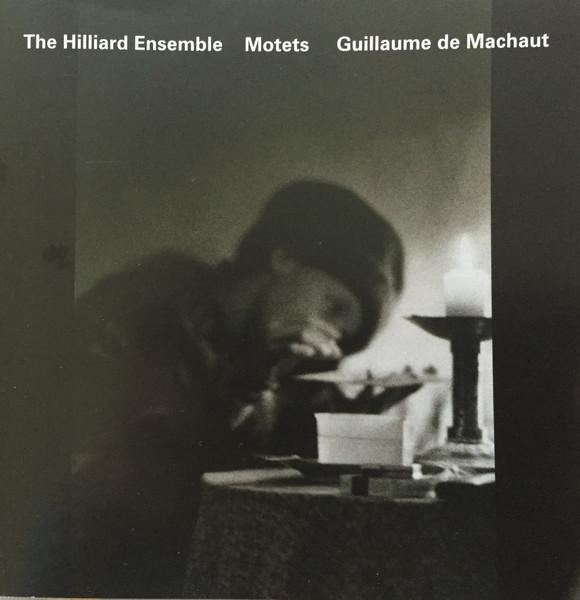
-
New Orleans and Jazz History
Rabshakeh replied to Rabshakeh's topic in Jazz In Print - Periodicals, Books, Newspapers, etc...
Sounds interesting. The Michael Ondaatje one is on similar lines, I think. A novelisation of Bolden. I think (I have read neither) that the Ondaatje may focus more on the pathos of Bolden's life and mental illness, which had always been a turn off for me: I have read Geoff Dyers' But Beautiful.... Tiger Rag sounds less of a put off so I'll search that out. I used to own this record. I remember being very excited by it when it came out. It and the other comps by Old Hat were really precious to me when I was really really getting into music in my 20s. -
New Orleans and Jazz History
Rabshakeh replied to Rabshakeh's topic in Jazz In Print - Periodicals, Books, Newspapers, etc...
That's really interesting. I don't actually know any of this. Was there still an NO connection there? -
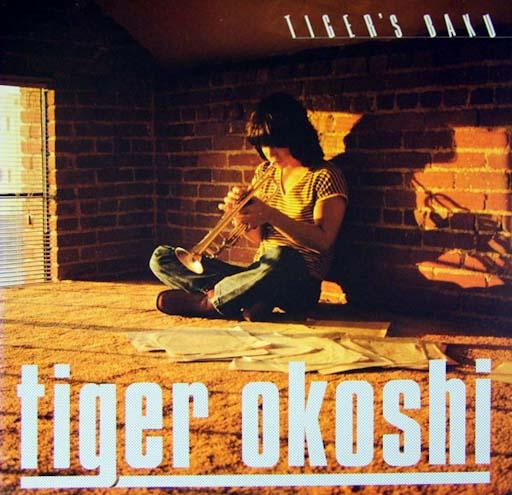
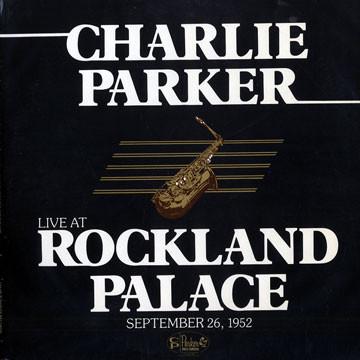
Tiger Okoshi – Tiger's Baku Charlie Parker – Live At Rockland Palace (September 26, 1952)
-
New Orleans and Jazz History
Rabshakeh replied to Rabshakeh's topic in Jazz In Print - Periodicals, Books, Newspapers, etc...
What is the connection with Booker T Washington? Was he a keen mandolinist? -
New Orleans and Jazz History
Rabshakeh replied to Rabshakeh's topic in Jazz In Print - Periodicals, Books, Newspapers, etc...
That's good, although of course... What's "black country", by the way? Does "black country" here mean African American musicians playing their own old timey string band music? Or is this Country country, in the Jimmie Rodgers sense of white blues, but played by African American musicians? If the latter what percentage of what you'll be talking about is pre-war? -
New Orleans and Jazz History
Rabshakeh replied to Rabshakeh's topic in Jazz In Print - Periodicals, Books, Newspapers, etc...
Okay. Count me in for that. -
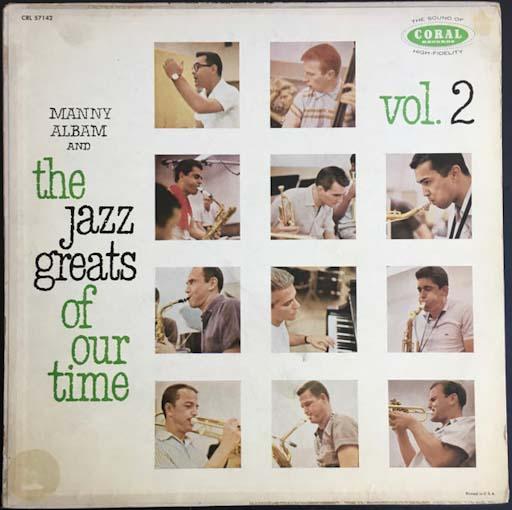
Bob James - Hands Down Rare to get a consistently great Bob James record, and this isn't one. But as always there are some great singles. Manny Albam – The Jazz Greats Of Our Time - Vol. 2 This one on the other hand is a great record all the way through. Absolute corker.
_cover.jpg.6126596f69d099453e2e52b0f8adf7e9.jpg)
-
New Orleans and Jazz History
Rabshakeh replied to Rabshakeh's topic in Jazz In Print - Periodicals, Books, Newspapers, etc...
Yeah. I don't take the river thing seriously, but that river does also go through a lot of other cities. -
New Orleans and Jazz History
Rabshakeh replied to Rabshakeh's topic in Jazz In Print - Periodicals, Books, Newspapers, etc...
Off topic, but this one has always interested me most. I sometimes wonder about how many of the distinctive features of 20th African American music actually evolved in the context of string band dance music. It was one of the main forms of African American music for over 100 years, but it is basically ignored by the histories. Nothing less sexy than a cèilidh, I suppose. We know that in the Caribbean, where the diasporic elements are comparatively much more pronounced in comparison to European, it was still a vitally important part of the emergence of the new localised musical forms (even if the fiddles mostly dropped out quickly in the recorded era). It must have been even more important in the US. Here's an example, so anyone interested: -
New Orleans and Jazz History
Rabshakeh replied to Rabshakeh's topic in Jazz In Print - Periodicals, Books, Newspapers, etc...
Sorry. I was googling Geeshee's book (which looks great - a definite purchase), then the website went down for me. The Eubie Blake track is pretty eye opening. Obviously the opening presentation of the theme seems like ragtime, and throughout the track it does resolve back into that, but it has the pulse that is unmistakable. Two points: First, are we already not into recorded jazz history by this point? Perhaps records were slow to disseminate, but Blake could have been playing the 'new sound'? I think the key point though is that here is a musician from the North and from the preceding generation who already has the very different rhythmic feeling mastered, maybe because it wasn't new to him. Second, are there any examples of Northerners (or non-New Orleans musicians) playing jazz horns at this early stage? Even textual references? I realize that the horns and the polyphony are not the key markers of the emergence of early jazz (as opposed to the rhythmic switch) but it is noticeable that the examples of non-New Orleans jazz, whether Blake or Willie The Lion Smith etc, are piano players. The James Reese Europe records do feature horns, but seem to me to be very definitely on the ragtime side, but this could be a factor of having to arrange for such a large band. I must say that the reminder of Sidney Bechet and the indirect reference to Freddie Keppard’s Original Creole Orchestra up thread do seem to me to tilt the balance somewhat in favour of a stronger New Orleans connection. That really is a very substantial number of key musicians linking to New Orleans. I'm interested. How does it compare to the Michael Ondaatje book? This stuff really burns. Next time I'll go to a nice clean concert hall. -
What's this one like?
-
New Orleans and Jazz History
Rabshakeh replied to Rabshakeh's topic in Jazz In Print - Periodicals, Books, Newspapers, etc...
Much of the reason why I am interested is that so much of the discussion of the origins of jazz is heavily laden with New Orleansiana, whether riverboats, brothel districts or Mr. Bolden. If you were take that stuff out of the first episode of Burns's documentary, all you would be left with would be some monologues about America, and an instructive section where Wynton talks drum patterns.