_forumlogo.png.a607ef20a6e0c299ab2aa6443aa1f32e.png)
Rabshakeh
-
Posts
7,654 -
Joined
-
Last visited
Content Type
Profiles
Forums
Events
Blogs
Everything posted by Rabshakeh
-
That's a good one, and a nice description. Helluva record. Cutting out the piano seems to set Booker free. Ted Curson is another, connected, player who also never gets his due amount of love. I always need to be reminded to listen to him. Anyway, time for some Mingus At Antibes...
-
Looking back over this (rather contentious) thread, I can see quite a lot of attention paid to the Periodisation of Pepper. Folks seem agreed on two periods: (1) the earlier work, and then (2) a later Trane-influenced period (which is apparently typified by Blues for the Fishermen and the Vanguard sessions). There is a bit of discussion over preferences, with a few people suggesting that the borrowed Traneisms were a little awkward and shallow; others love them. However, a couple of the above-quoted responses also suggest another later period in which Pepper moved past the slightly awkward Traneisms that he had initially borrowed and found an integrated sound. Are there any recordings that are considered to capture that third and final stage? For the record, I like late Pepper a good deal, I'm just asking out of interest.
-
It feels like there is always more Sun Ra to discover.
-
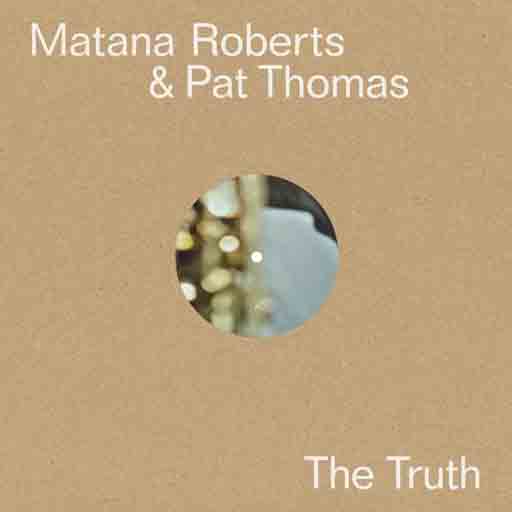
The Quest (New Jazz, 1961) by Mal Waldron You can't argue with Eric Dolphy, Booker Ervin, Mal Waldron and Charli Persip! Always thought that the cover made Waldron look like some sort of mystic sage. Now onto: Matana Roberts' & local hero Pat Thomas' The Truth. The last gig I saw was these two with Peter Brotzmann and John Edwards in December 2019. I assume that this was recorded that week whilst Roberts was in town.
.jpg.2576851f30e0f597fcb1c1d6f38680ae.jpg)
-
This was the one.
-
What are the duo records? I know of Live In New York (1976). Are there others that I have missed? Missed this one completely. I had thought his first was Dogon AD. I'm looking forward to it.
-
I was listening to this the other day. It's surprisingly good: up there with all three players' best. I must say that I hate the cover art though.
-
A big plug for The Quest by Mal Waldron. Booker with Eric Dolphy.
-
There is one really good historic thread on this forum giving an overview of the development of jazz organ from novelty to deadly serious. I'll see if I can dig it out later.
-
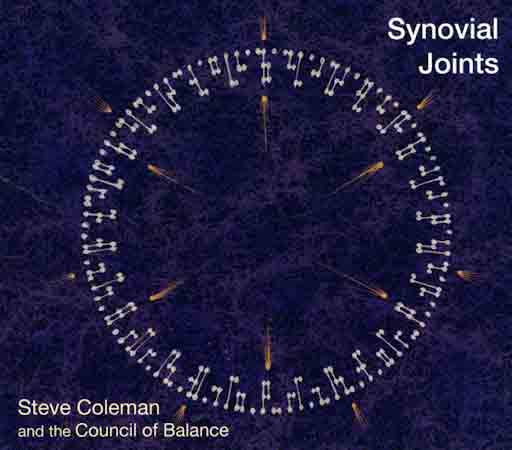
Now playing: Synovial Joints (Pi, 2015) by Steve Coleman and the Council of Balance Impressive that such a large big band still sounds so open. Now moved on to: Arni Cheatham's Thing (1972)
-
 Agreed. What I find so impressive is that for once it is a populist / crossover approach that works. It has breathed such a life into the London scene.
 -
Thanks for the link to this.
-
I meant... musically.
-
How did you find this one? It's just out, I think.
-
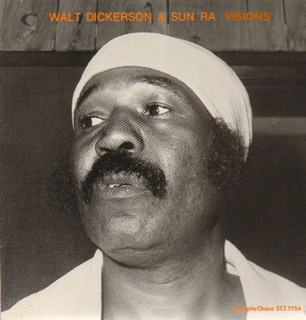
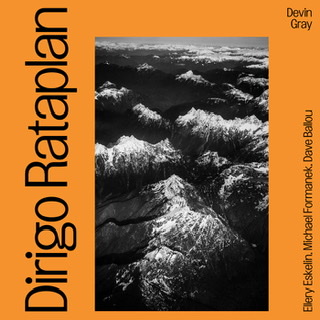
Walt Dickerson & Sun Ra - Visions (Steeplechase, 1979). Devin Grey - Dirigo Rataplan (Rataplan, 2018).
-
Great album. Those late McLeans are some of his best.
-
On the subject of the Butcher/ Lehn/ Shipp Tangle record, there's a new duo album on RogueArt between Shipp and Evan Parker called Leonine Aspects which I have been enjoying and would recommend. It's not a million miles away from the interplay between Shipp and Butcher. I'm not that familiar with Parker in this sort of setting, but his approach is similar to Butcher's, and less like his own solo or group work, to my ears. I think it works well. Nice work coming out on RogueArt at the moment.
-
Unleashed by Tiger Trio (Myra Melford, Joelle Leander and Nicole Mitchell) (RogueArt, 2016). Highly recommended for those who know and like the players.
-
I feel this one gets unfairly overlooked, probably because it's cover makes it look like a B sides collection. It's one of my absolute favourites.
-
Not sure at all, but a 1972 release still shrink wrapped seems reasonably unlikely. The other possibility is that it is some sort of bootleg.
-
I haven't seen any news of a formal release, and there's nothing on Discogs, but I bought it first hand from a shop at the end of last year somehow. It is marked as being Cadet. It is definitely not used and sounds decent (not superb).
-
The Trovesi Damiani Quartet's Roccellanea (Ismez, 1984) Good stuff.

-
Thanks
-
I've just discovered this old thread whilst wondering exactly the same thing as the OP. Abrams is also on the even more commercial That Is Why You're Overweight, although he's less of a presence there than on Instant Death. For added AACM points, that album, once it's worked through its funk and comedy tracks, has a track of near unaccompanied solo saxophone by Eddie Harris towards the end. It's an odd thing to find on what's otherwise a funk record. Does anyone know of any examples of Harris playing free on record, with this group or otherwise?
-
It always makes me happy when this thread comes back to life. Not so much my wallet.