_forumlogo.png.a607ef20a6e0c299ab2aa6443aa1f32e.png)

HutchFan
-
Posts
20,939 -
Joined
-
Last visited
Content Type
Profiles
Forums
Events
Blogs
Everything posted by HutchFan
-
Rab, Limiting Moody to just three picks is tough! But I'll give it a shot. My blog selection -- Never Again! (Muse, 1972) -- is the Moody album that made me realize I'd been overlooking him. I'd always considered Moody to be a sort of Robin to Dizzy's Batman. WRONG! Moody is a totally bad MFer in his own right -- and he's got his own, very distinctive thing apart from Diz (even though he's also very complementary to Diz in a Miles-and-Coltrane sorta way). Never Again features Moody with Mickey Tucker on organ, so the album has a Soul Jazz vibe. But that's always true of Moody's music; he's ALWAYS soulful -- think of players like Jug or Fathead or Ben. Moody is right there with them. I'd also choose Heritage Hum (Perception, 1971). It features Moody on flute (on most cuts), and it's a showcase for his reflective and lyrical side. Killer band too with Sam Jones & Freddie Waits. My third choice would be Return from Overbrook (Chess/GRP). It's a bit of a cheat because it compiles two of Moody's Argo LPs on a single CD: Flute 'n the Blues (1956) and Last Train from Overbrook (1958). The thing to remember about these records -- and most of Moody's Argo/Cadet LPs -- is that Moody's groups (usually a septet) often performed like a little big band, not just making music for listening but also for dancing. So, even though Moody came up in the Bop era, his bands were a sort of throwback to earlier times, when bands made more dance-oriented music. Moody's groups were moving around in the same sorta space as, say, Ray Charles' bands. So you shouldn't come to Moody's albums expecting some Blue Note-y bop or hard bop. Moody was in a different bag. It's very musical and soulful -- but operating in a slightly different space. ... Or at least that's how I think about it. Both before and after the Argo/Cadet albums, Moody made more "straight jazz"/bop. But I dig the Argo/Cadet stuff precisely because it's something different, vibe-wise. I hope that helps!
-
Hodges on "Multicolored Blue" ... Sublime.
-
Yessir, I do.
-
Groove Hut CD reissue that also includes Willette's other Argo LP, Mo' Rock
-
-
Now spinning: Lou Donaldson - Ha' Mercy (Cadet) A 2-LP compilation of cuts from Donaldson's 8 LPs for Argo/Cadet
-
-
Now spinning: This set repackages three James Moody albums originally released on Argo: - Flute 'N The Blues, - Moody's Mood For Love, and - Last Train From Overbrook.
-
Awful news. I've loved Griffith's music for many years.
-
More Basie:
-
Ah, but it's what's inside the cover that matters!
-
Walter Allen's "Hendersonia"
HutchFan replied to Larry Kart's topic in Miscellaneous - Non-Political
Nice find! The least-expensive listing on abebooks.com is $71.13. ... You got an amazing deal. Good reason to poke around at library sales. -
Yep, the Blue Note LT series featured covers that were somewhat reminiscent of CTI. They all came from Michael Cuscuna's explorations in the BN archives. Hutcherson had three LPs in the series: Patterns, Medina, and Spiral. The latter two feature Hutcherson with Harold Land -- and they're among Hutcherson's very best recordings, IMO. It's nutty that that they sat on the shelf for a decade. Both LPs were released subsequently on a single CD with a more "typical-looking" Blue Note cover: One of my desert-island discs.
-
It's an outstanding record.
-
Sounds like I like the record more than you -- but I agree 100% re: Jaws' playing on "Ode to Billie Joe." It's something! NP: Disc 2
-
More Oliver Nelson. Now playing: Up next:
-
Thanks for re-sharing this thread, Jim. I somehow missed it the first time. NP:
-
The Best of Nancy Wilson: The Jazz and Blues Sessions (Capitol) Excellent compilation produced by Will Friedwald Music, incredible; cover, badass.
-
Hank Crawford - Memphis, Ray and a Touch of Moody (32 Jazz/Atlantic) Disc 2 - Originally released as Soul of the Ballad and Dig These Blues
-
James Moody - Heritage Hum (Perception, 1972) with Michael Longo, Sam Jones, and Freddie Waits -- and on two cuts, Eddie Jefferson Such a gentle, lovely record -- and so soulful.
-
One of my favorites albums on the Bee Hive label. Frank Foster !!!
-
Great story.
-
Not a dumb question. I was wondering the same.
-
Hooray for Sonny Rollins !!!
-
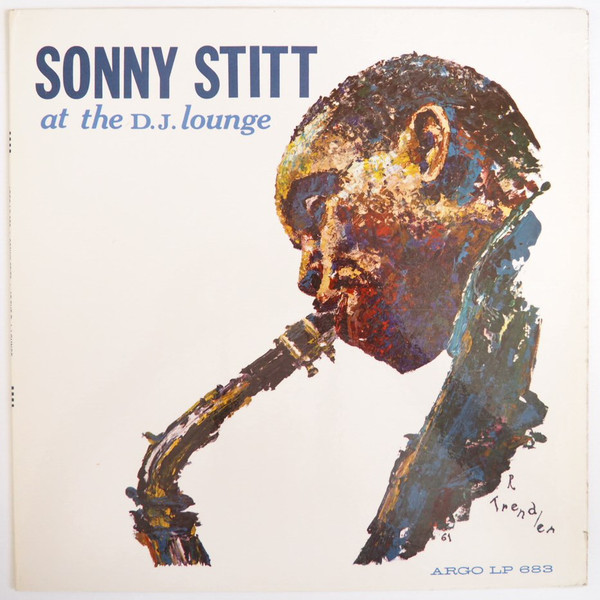
What that story also shows is that Stitt had a deep, DEEP understanding of chords and chordal relationships -- and that was the basis of his playing. Stitt's ability to analyze the situation and call out a tune that he KNEW his "adversary" would not be able to play well indicates that Stitt's approach to music is comparable to the way an expert chess player can analyze a chess board. That is, he thought in pattern-like, even mathematical, terms. And that's (one reason) why Stitt could cut other sax players so effectively on the bandstand. Of course, I'm not saying that Stitt was a literal mathematician. No more than I'm saying that Dexter wrote poems. They're just analogies. EDIT: By the way, I don't think Jim's description of Stitt as a "comfort" player is a contradiction in any way to the analogy that I'm offering. I think we're just focusing on different aspects of the same thing. For example, when we think of "comfort food," we think of things that are regular and familiar and predictable. Biscuits and gravy. Mashed potatoes. Chili. BBQ. We like these foods because we know what's coming, and we LIKE what's coming. Turning to music, the Blues is just the same, right? I, IV and V. The familiarity -- the knowing what's coming -- is what makes it feel so good. ... Well, what's more predictable than math? 2 + 2 always equals 4. That ain't ever gonna change. Of course, Stitt was operating on a MUCH higher level than that. But it was still mathematical -- regular and predictable.