_forumlogo.png.a607ef20a6e0c299ab2aa6443aa1f32e.png)

HutchFan
-
Posts
21,065 -
Joined
-
Last visited
Content Type
Profiles
Forums
Events
Blogs
Everything posted by HutchFan
-
Oscar Peterson album for those who don't like much OP
HutchFan replied to Larry Kart's topic in Recommendations
Larry, I just did a little poking around and found one of the interviews I mentioned. This particular one is by Ted Panken. (Full text here.) I would like to ask one thing, and please decline to answer if it’s too personal. That’s the circumstances of your leaving America and the illness you had in the ’60s. Is there anything you can say about it for the purposes of this article? Well, I left America, because at that time every jazz musician was called a junkie, automatically, and after a while it got to the point where if you had the name you just had to have the game, too. So I started using drugs, and I took an overdose, and I was out for about 6 or 7 months, in East Elmhurst Hospital, and they gave me shock treatments and spinal taps and all kinds of things to relieve the pressure on my mind, to get my memory back, because I couldn’t remember where I was, I couldn’t remember anything about the piano or anything. You lost your memory from it? Yes. And I lost my coordination. My hands were shaking all the time; I couldn’t keep time. So then I got out of there, and when I got out of there, Marcel Carne asked me about writing music in Paris, and I said, “Of course! Let’s go! Let me get out of this.” Then I got to Europe, and I found in Europe there was so much respect and love for me that I didn’t need any drugs. I didn’t need any drugs at all. So you didn’t get involved in it in the earlier years? Did it happen later as an accumulation of being fed up? Well, it happened when I was working with Charlie Mingus in the Bohemia, from as early as that. [1955] Then it just built and built. Built and built, yes. For someone who was doing that, you were sure functioning on a pretty high level! Not to use a pun. I thought I had control of this horse! [LAUGHS] I would bring him out at night, and have him open in the daytime and put him away at night, and I thought I had him covered. And all of a sudden, he snuck up on me and knocked me down! In quoting this, I intend no disrespect whatsoever to Waldron. Just want to show that Europe represented an "out" for him, a kind of escape. Happily, he thrived there. And I think you can hear it in the music. -
Oscar Peterson album for those who don't like much OP
HutchFan replied to Larry Kart's topic in Recommendations
To me, Mal Waldron's best, most interesting work begins after his move to Europe. IMHO, the music he recorded for Enja and Black Saint (and other Euro & Japanese labels) FAR surpasses anything he did for Prestige. And I love those Prestige sides! Not just his own stuff -- but also his backing for Jackie Mac, Gene Ammons, et al. I just think Waldron's music from the early 70s -- and onward -- is even stronger. I think he grew artistically after he became an ex-pat. Based on the Waldron interviews I've read, it seems clear that kicking the habit had a lot to do with his maturation as an artist. Milestone, of course you're free to hear things differently. It's just my take. -
Back in the day, this was fairly common -- and not just with Blue Note. IIRC, the origins of this were multi-LP record changing turntables. Putting sides 1 & 4 on a disc allows you to put two LPs on the turntable at once and hear sides 1 & 2 in sequence. Then you could flip both records and hear sides 3 & 4 in sequence. I've been enjoying this LP:
-
I was just going to mention Waldron too. I think the way Waldron is deliberately repetitive is one of the things that makes him so unique. With him, it's like an incantation, trance-inducing, shamanistic.
-
Oscar Peterson album for those who don't like much OP
HutchFan replied to Larry Kart's topic in Recommendations
Along with Walking the Line and Another Day, don't forget the solo piano LP called Tracks. It was recorded at the same sessions that yielded those two trio records. Those three records are likely my favorite Oscar Peterson recordings. There really is something different about those MPS recordings, isn't there!!! -
Awfully tempting for sure. Whether I pull the trigger will likely come down to cost.
-
That Marian McPartland record is FANTASTIC, imho. And not at all what one might expect from her; it's much more hard-charging and aggressive. In fact, on that particular record, McPartland's playing reminds me a bit of Joanne Brackeen's style in the 1970s. Concord has reissued most of McPartland's Halcyon LP on CD, but I don't think they've ever gotten 'round to Interplay. And that's a shame -- because I think it's one of MM's very best records.
-
Three of the five CDs in the box feature Pullen: Don't Lose Control and the two live discs from the Vanguard. Hand to Hand and Gentlemen's Agreement feature Hugh Lawson on piano.
-
Post a Landscape/Cityscape Pic
HutchFan replied to A Lark Ascending's topic in Miscellaneous - Non-Political
Those Godwin pix look like ECM covers. JK. They're striking images. -
Ordered this LP tonight: Looking forward to hearing it.
-
Shelly Manne - Essence (Galaxy, 1977)
-
Yes! Alves is wonderful. His two records with the Brazilian Trio are excellent too.
-
Thanks for the link to the info on Joe Dodge, Jim. Very interesting stuff.
-
How about Will Vinson?
-
I've always liked his solos on "Balcony Rock", where he shows he could play the blues (though I can't think of any other examples) and Le Souk, where he goes East a few years before Miles and Coltrane did. Both on Jazz Goes to College. If I were limited to just one DBQ record, it would be Jazz Goes to College.
-
paul, what do you think of that hodes LP? I've never heard that one.
-
Interesting stuff about Konitz and Scientology. I had no idea. Even if Konitz was just dabbling with Scientology, it reminds me of something that I remember in Konitz's book. I remember him describing the experience of going to see a certain musician and then talking about how he was playing "wrong" -- and then sort of being offended by it in a moralistic sort of way. (Don't hold me to this b/c it's been a while since I read the book, but I think it was Art Pepper.) And it wasn't as if Konitz felt like the artist was taking a "different path" than his; it was an issue of right and wrong/black and white. (I remember reading about Tristano and his crew getting up and leaving in the middle of other musicians' sets -- as if the music were offending them, somehow reprehensible. A similar sort of thing.) Konitz is obviously an extremely intelligent, thoughtful guy -- and incredibly brilliant musician, one of my all-time favorites. But that stuff has always struck me as darn odd if not nutty.
-
LOL!!!
-
Funny. Konitz becomes most fascinating to me after his self-imposed break from jazz in the 1960s. Before that, for me, he was much more hit-or-miss. Some of it is great -- but some of it doesn't appeal to me. OTOH, I LOVE how Konitz's tone seemed to get wilder and woolier in the latter 60's and into the 70s. Those Milestone records are particularly wonderful, I think. And that's where the changes in Konitz's sound are really evident. By way of contrast, Desmond's sound seems much more consistent straight thru from start to finish. My very favorite Desmond records are the pre-Morello DBQ (at the beginning) and then jump all the way to end with the duos with Brubeck (1975: The Duets) and Live! (also from 1975). BTW: I do agree that Desmond's appeal has nothing to do with him being an intellectual or not. (Or my being an intellectual or not, for that matter.) From my point of view, it has more to do with whether I prefer oranges to mangoes or peaches to plums or X to Y. It's a personal preference. That's it.
-
I'd second that recommendation. Migenes is a sassy, sexy Carmen.
-
Amen and Amen! You know, I've never really thought about it before but there is quite a bit of commonality between them. To me, the biggest difference would in the way that Konitz reacts to what he calls "schmaltz." In his book, he throws that term around a lot, and it's BIG red light for him. Something to be avoided at all costs. And that attitude "toughens up" Konitz whole approach. On the other hand, you could call a lot of what Desmond did -- I'm especially thinking of the CTIs -- schmaltzy. Most definitely. But I also think that Desmond's music benefits from that sometimes -- as if he's trying to find something more purely beautiful and delicate than what Konitz is after. Sometimes Desmond misses -- and those misses end up sounding like bigger misses than Konitz's (at least to my ears). But when Desmond connects... phew. It's a thing of beauty.
-
Interesting insights, Allen. Thanks for sharing that.
-
I'd never gotten around to buying Donald Byrd's Electric Byrd. After listening to it regularly over the last few weeks via YT, I decided to give the SHM-CD version a try. I'm looking forward to hearing it. I love the music -- and sound-wise, I'm certain that it'll flog YouTube!
-
Album covers from the same photo shoot
HutchFan replied to Chuck Nessa's topic in Miscellaneous Music
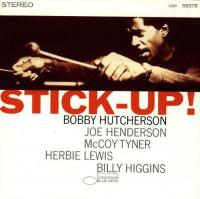
Not only the same session -- but the exact same photograph. They're just cropped a bit differently: -
Thanks for sharing that, Justin. Makes me wish that I'd been there!!!