_forumlogo.png.a607ef20a6e0c299ab2aa6443aa1f32e.png)

ghost of miles
-
Posts
18,114 -
Joined
-
Last visited
-
Days Won
2
Content Type
Profiles
Forums
Events
Blogs
Everything posted by ghost of miles
-
Perhaps a way to help artists on Spotify
ghost of miles replied to medjuck's topic in Jazz Radio & Podcasts
I have a couple of friends who do this. -
Gotta admit I’m impressed by the deep-cut nature of much of this New York Times playlist: 15 essential black liberation jazz tracks
-
Digging this so far! Brecker Brothers live in 1980:
-
-
1939 broadcasts of Harry James’ big band with Frank Sinatra:
-
James Joyce/Bloomsday centennial
ghost of miles replied to Chrome's topic in Miscellaneous - Non-Political
Me at the same tower popping out of the stairwell from which "stately, plump Buck Mulligan" emerges in the opening chapter of Ulysses, "bearing a bowl of lather on which a mirror and a razor lay crossed." June 2016, a couple of days before Bloomsday... we really wanted to stick around, but had to head off to the UK for a Stone Roses concert. It was a magical trip!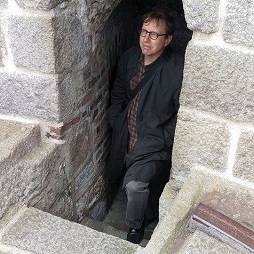
-
You have a very different takeaway from the Snopes article than I do. And if he gets "cancelled," it will be because he's evidently a sexual harasser. But that's about as relevant to his study as your citing his ethnicity. Here's why I'm skeptical of Roland Fryer's study Fryer's paper came to opposite conclusion as a paper last year because it used different data I'm not an economist, crime expert, etc. Just saying that your citing of this paper doesn't exactly close the case when it comes to U.S. law enforcement and the disproportionate shooting of African-Americans.
-
COVID-19 III: No Politics For Thee
ghost of miles replied to ghost of miles's topic in Miscellaneous - Non-Political
Things continuing to get worse in Arizona--and I doubt this is the only state where this will be the case. -
James Joyce/Bloomsday centennial
ghost of miles replied to Chrome's topic in Miscellaneous - Non-Political
Dubliners and Portrait Of The Artist, which are definitely the more accessible titles in the Joycean oeuvre. I've started Ulysses a couple of times, but so far have gotten through only the first four chapters, embarrassed to say. My grandfather was obsessed with Finnegans Wake and had a considerable library of books *about* it... not sure he ever completed a reading of it, though! There's a definite musicality to Finnegans Wake if you read any of the passages aloud to yourself, though, or so I've found when I've tried it. -
James Joyce/Bloomsday centennial
ghost of miles replied to Chrome's topic in Miscellaneous - Non-Political
Happy Bloomsday! Celebration is online this year because of Covid-19. Photo below is me in Dublin with a statue of the great man himself, just a day or two before Bloomsday 2016.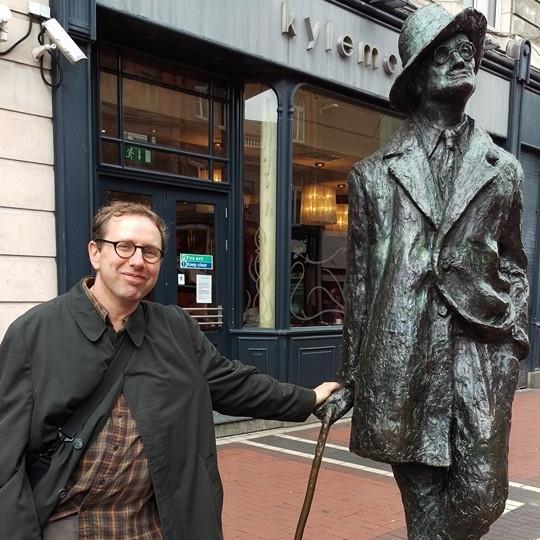
-
Apparently all kinds of problems with this "study", which isn't a peer-reviewed study at all, but a working paper. And not that this ought to matter either, but Harvard suspended Fryer for two years in 2019 after multiple sexual harassment allegations. Yes, because unions are so powerful and evil! And they are the true problem in America today, not the extreme shift in wealth over the past 40 years that has gone to a very small and very rich number of Americans, while the rest of us have seen wage stagnation. Fresh proof that strong unions help reduce income inequality Unions have been taking it on the chin, legally speaking and otherwise, since I was a kid. Ironically enough, IMO police unions have remained so strong in large part because they're the one union that conservatives *can* get behind. Politically speaking, look at who the NYPD union's in bed with. As somebody who continues to strongly support unions in general, and thinks they're needed more than ever as a counterweight to big business, I'm not in favor of simply busting up police unions, and I doubt it could be done all that easily anyway. But there are other ways for municipalities and state/fed govt to negate their ability to block reforms.
-
OK, much appreciation for the clarification. It's no big deal to me either way, and I have no evidence to the contrary. And I don't stay up nights worrying about whether or not the Davis estate is being fairly compensated--much more concerned about supporting living artists, or the estates of artists who didn't leave their families quite as flush as the Davis estate presumably is. But there seem to be a fair # of titles that fall into a gray area when it comes to copyright/legitimacy and the rules of this board.
-
Blakey 1965 - The New Jazz Men - Vinyl Only
ghost of miles replied to Dan Gould's topic in New Releases
+2. Maybe this will follow a similar trajectory as the Tompkins Square "LP-only" release of Sonny Clark's 1960 trio session. Initially they said they had no plans to do a CD version, then released it in that format a year later. I'd love to hear this, but not keen on shelling out that much money for a vinyl version that's missing a track. -
Here's a really nice story about a black inspector who as a precaution called the police to let them know he was going to be out on a site doing some work, and ultimately struck up a friendship with the officer who talked with him. I'd meant to post it earlier this morning, as a sort of antidote to the general culture of hostility that prevails right now.
-
I was responding to Catesta in that regard. I rarely, if *ever*, copy and paste an entire article like that. I did so in this instance because it was behind a paywall, which I know doesn't justify it, even if I am a paid subscriber--but I thought it had important points that are quite relevant to this discussion. But if we're going to get holier-than-thou about such issues, why is this thread allowed to stand, when it is calling attention to what seems to be a bootleg not authorized by the Davis estate?
-
I copied and pasted the article because it was behind a paywall. I'm a paid subscriber to TPM, so I was able to access it. Delete it if you wish--or I will, since it's got some folks so out of sorts.. The point is partly, WTF is the NYPD Union doing tweeting about Doug Jones, ffs? And talk about an overreaction! Jesus God almighty, look at the crap the NYPD union folks put out about this. It's just further evidence that cop culture in this country has gone off the deep end. Here's the link instead, though it gives you only the introductory para. You think what NYPD union tweeted out wasn't an overreaction, perhaps? You think in the current climate, or ANY climate for that matter, that it's grossly irresponsible? It's not the first time they've done this kind of crap. That was part of the point of Marshall's article. Would have been good advice for the NYPD "spokespeople" to heed as well. Plus this bogus tale has already made its way into the rightwing media ecosphere, Twitterverse, etc. "So bad out there that food-service employees are trying to off cops!" etc.
-
-
I'd much prefer to see this material getting released via Sony's Bootleg series... but is said series defunct? Dormant? Can't believe they've run out of things to issue, especially from the late 1960s/early 70s period.
-
COVID-19 III: No Politics For Thee
ghost of miles replied to ghost of miles's topic in Miscellaneous - Non-Political
So much for hydroxychloroquine: FDA revokes authorization of drug Trump touted -
“West Coast Manne: Shelly Manne In The 1950s”
ghost of miles replied to ghost of miles's topic in Jazz Radio & Podcasts
I thought about trying to make room for a Lighthouse recording--not to mention tearing my hair out over what to include from the Black Hawk. Quite a wealth of music to choose from, that's for sure. -
Thanks for the heads-up on this... I'll definitely be getting it. Any sign of a release date?
-
“West Coast Manne: Shelly Manne In The 1950s”
ghost of miles posted a topic in Jazz Radio & Podcasts
Last week’s Night Lights show, broadcast in honor of drummer Shelly Manne’s centenary, is up for online listening: West Coast Manne: Shelly Manne In The 1950s It includes music from Manne’s collaborations with Shorty Rogers, Jimmy Giuffre, and Russ Freeman; an excerpt from Bill Holman’s Quartet; tracks from Manne’s recordings of the music from My Fair Lady and Peter Gunn; a sideman appearance with Ornette Coleman; a cut from the first Poll Winners album; and a live recording at the Black Hawk in San Francisco. -
-
Which Mosaic Are You Enjoying Right Now?
ghost of miles replied to Soulstation1's topic in Mosaic and other box sets...
You've nearly reached the end of the Commodore trail! I'm only 59 LPs behind you!