_forumlogo.png.a607ef20a6e0c299ab2aa6443aa1f32e.png)


Larry Kart
-
Posts
13,205 -
Joined
-
Last visited
Content Type
Profiles
Forums
Events
Blogs
Everything posted by Larry Kart
-
In preference to Ambien, which I had been using when I had sleeping problems, my doctor switched me to this: http://www.webmd.com/drugs/2/drug-8647-610/doxepin-oral/doxepincapsule-oral/details He said it was less habit-forming and more effective. My version of it is liquid; you put some drops on your tongue with a dropper. Don't need to use it much, but when I do, it does the trick. Only problem I've found is that unless you set an an alarm clock or the like, you tend to sleep about eight hours after you take a dose, which can be annoying if you came stark awake at, say, 3 .a.m. and took a dose then.
-
Maybe I'm just echoing what Schildkraut said to you.
-
Allen: In terms of comparing RCA Bud, or other late Bud, to vintage Bud, I haven't done that recently. All I can say, as I said above, is that listening to that RCA material the other day, I heard a wonderful feeling of "aliveness" in it -- not an untroubled aliveness to be sure but a rare sense of in-the-moment decisions and acts, which is something that I prize in jazz, if only because it is something that the music more or less inherently promises but often does not deliver. Yes, with Bud -- at this time especially -- it's tricky to disentangle that from the various emotional precipices upon which is he often barely standing, but nonetheless... For one thing, while listening I half-consciously found myself mentally shuffling through a number of other accomplished, stylishly somewhat or closely related pianists of the time and asked myself if any of them played with such immediacy. No, I thought, for all their virtues. Maybe the Earl Hines one began to hear in the mid-'60s or Cecil Taylor. IIRC, some musician who was around at the time and in a position to have such an opinion, maybe Jackie McLean, said that he thought Bud played more than Bird. I wouldn't say that myself, at least not with a snap of the fingers, but we're talking about levels of inventiveness that probably are at the limits of human achievement and perception.
-
Turns out that I've got more late Bud than I thought, including most (all but "Live in Geneva) mentioned in this interesting post from Amazon: one of five essential Bud Powell concerts available on CD By Ben Nevis on January 21, 2011 Format: Audio CD Verified Purchase "Live in Geneva," an import from Gambit Records, contains one of five essential Bud Powell concerts now available on CD. In fact, the best of these performances are as indispensable as anything Bud ever recorded in concert at any period. The first ten tracks (almost all of them at least five minutes long, and some as long as seven or eight minutes) feature Bud Powell on piano, M. Cortesi on bass, and Jackie Cavussin on drums, and were recorded at the Hot Club, Geneva, Switzerland, on February 1, 1962: "Ornithology," "Swedish Pastry," "Hot House," one of Bud's most affecting interpretations of "I Remember Clifford," "Just One of those Things," "Anthropology," "Round Midnight," "Jordu," "I Know What You Know," and "Blues in the Closet." These first ten tracks are breathtakingly beautiful. The pyrotechnics are just as phenomenal as that of any of Powell's early (1947-1953) recordings, at times sizzling, at times lyrical, at times swinging. The sound quality is not very good, but it's decent enough, so as not to be a significant distraction. Tracks eleven and twelve, "Idaho" and "Perdido," are bonus tracks (also in decent but not great sound), featuring a duet: Bud on piano and Johnny Griffin (also known as the Little Giant) on tenor, recorded in Paris on February 14, 1960. In an interview late in his life, Bud called Griffin his favorite sax player, and it shows here--the two are just amazing together. Yes, it's late Bud, but there is a mythology regarding his late period that simply does not hold up to examination. Some of the best tracks in Powell's career come from concert and studio sessions recorded in Europe between November 1959 and August 1964. Yes, there are some disappointing late dates (especially from September 1964 on, with Bud's ill-fated return to New York), and, yes, his early period as leader, 1947 to 1953, is consistently amazing, but the most consistently disappointing work--clunking, uninspired, mediocre--comes from 1954 to 1956, which is the first half of his middle period, 1954 to 1958. But when Powell left for Paris in 1959, it marked the beginning of one of the most remarkable periods in his music life. And Bud is on fire at the Hot Club in 1962. His inventiveness here is at least the equal to that of his legendary quintet work at Birdland in May of 1950, with Charlie Parker and Fats Navarro, or his stunning trio work at Massey Hall in 1953, with Charles Mingus and Max Roach, or the various Birdland trio radio sessions in 1953, or the absolutely lovely late Bud concerts in Lausanne in 1962, in Copenhagen in 1962, and in Essen in 1960. Which is to say, the performances on "Live at Geneva" are among the most masterful, the most intricate, the most engaging in the history of jazz. So don't wait until this extraordinary CD disappears; pounce. _____________________________________________________________ Five Essential Bud Powell Concerts Available on CD: 1. Birdland, May 17, 1950, the legendary quintet work with Bud, Charlie Parker on alto sax, Fats Navarro on trumpet, Curley Russell on bass, and Art Blakey on drums (available on RLR's 2-CD set "Charlie Parker: Complete Live at Birdland" and Proper's 4-Cd set "Charlie Parker: Chasin the Bird," and five of the fifteen tracks are also available on Proper's 4 CD-set "Bud Powell: Tempus Fugue-It"). Poor sound quality, but Bud, Bird and Fats are on fire at Birdland. Arguably the greatest recorded concert in jazz history. 2. Massey Hall, May 15, 1953, another legendary quintet with Bud, Charlie Parker and Dizzy Gillespie, but it is in the trio pieces that Bud really shines, with Charles Mingus and Max Roach (available on the Jazz Factory's "Complete Jazz at Massey Hall"). Very good sound quality, considering the time period. 3. Birdland radio broadcasts, 1953, trio pieces from various dates in February, March, May and September of that year with various personnel, including Oscar Pettiford, Roy Haynes, Charles Mingus, Art Taylor, George Duvivier, and Max Roach (available on Fresh Sound's 2-CD set "Birdland 1953: The Complete Trio Recordings"). Poor sound quality, but indispensible Bud. And a lot of it, some 42 tracks of Powell at his best. 4. Hot Club, Geneva, February 1, 1962, trio pieces with M. Cortesi on bass and Jackie Cavussin on drums, in decent but not great sound quality (available on Gambit Records' "Live in Geneva"). Bud sizzles like it's 1953 or 1950. With two bonus tracks featuring a duet: Bud and Johnny Griffin on tenor, recorded in Paris on February 14, 1960. Just priceless. 5. Lausanne Radio, January 31, 1962, Bud with Bob Jacquillard on bass and Mike Stevenot on drums, and with lovely sound quality (available on Stretch Archives' "Live in Lausanne 1962"). Swinging and upbeat and one of my favorite concert performances. Period. _______________ The Best of the Rest of Bud Powell Live, Available on CD: 6. Essen Jazz Festival, West Germany, April 2, 1960, Bud with Oscar Pettiford on bass, Kenny Clarke on drums, and (on four tracks) Coleman Hawkins, in good sound quality (available on Black Lion's "The Complete Essen Jazz Festival Concert"). Hawkins is just wonderful, but Bud is at his best on those tracks without CH. 7. Cafe Montmartre, Copenhagen, April 26, 1962, Bud with Niels-Henning Orsted on bass and William Schioffe on drums, in good sound quality (available on Delmark's "Bouncing with Bud"). Swinging and upbeat and just lovely. 8. Paris, Club Saint-Germain in 1957 and 1959, La Radio Television Francaise in 1959, Blue Note Cafe in 1959 and 1961, trio, quartet, and quintet sessions with various personnel, including Pierre Michelot, Kenny Clarke, Clark Terry, Barney Wilen and Zoot Sims (available on Pablo's "Parisian Thoroughfares"). The six tracks from the Club Saint-Germain are among my favorites. Most tracks have surprisingly good sound, a couple less so. But Bud's playing is sizzling throughout. 9. Paris, duets, trios, and quartets from sessions at unspecified clubs in December of 1959, and February, June and October of 1960, with Pierre Michelot on bass, Kenny Clarke on drums, and on two tracks Barney Wilen on sax, and two other tracks a duet with Bud and Johnny Griffin on sax, in poor sound on some tracks, decent sound on others (available on Xanadu's "Bud in Paris"). At times sizzling, at times lyrical, but beautiful Bud through and through (the two duet tracks with Griffin are also available on Gambit Records' "Live in Geneva," as noted in item #4 above). 10. Club Kavakos, April 5, 1953, Washington DC, Bud with Charles Mingus and Roy Haynes (available on Collectibles' "Inner Fires"). Poor sound quality. Exceptional Bud. But just a little too much drum solo for my taste. Others may find this concert as rewarding as the extraordinary Birdland broadcasts of 1953 (see item #3 above).
-
Thanks, mjzee. Very interesting thread. I need to get more latter-day Bud.
-
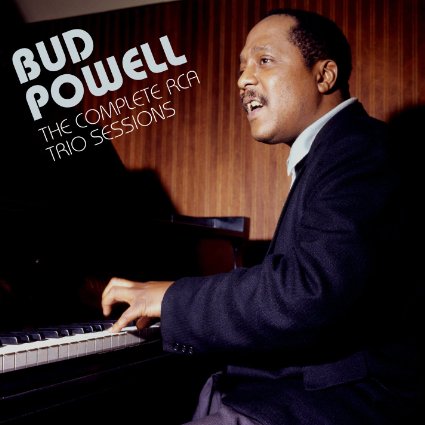
I've got this material, minus a few tracks that appear on the issue depicted below, on a RCA-Bluebird disc from 1987, "Time Was," that combines two Powell LPs; and much to my surprise, after years of hearing that Powell was in grim shape at the time, I find that much of it is quite lucid, even inspired. Even if the four standards that begin the album have their thick, halting moments, I think annotator Doug Ramsey goes too far when he says that "these tracks have the detachment of a lounge performer," and by the time we get to Powell's "Coscrane" or "Midway" or bassist George Duviver's handsome line "Another Dozen," there are frequent passages of splintered brilliance from Powell, plus much intense blues feeling. Haven't heard many things recently that seemed as consistently "alive." What a player Bud was!
-
 I thought that "explified" was taken from Babs Gonzales or Slim Gaillard and that it meant how you felt after drinking a fifth of cognac.
 -
Not again!
Larry Kart replied to danasgoodstuff's topic in Jazz In Print - Periodicals, Books, Newspapers, etc...
Because, among other things, they'd never see it? Or wouldn't care to read it even if they did? -
Jazz Heritage was/is an arm of the (classical) Musical Heritage Society. In its later days, at least, JH was run like an old-fashioned record club where this month's offerings were shipped to you unless you told them in time that you didn't want them. Further, even within this framework JH operated in a scam-like manner, at least in my experience. Several years ago I ordered something from JH based on a magazine ad, but the ad didn't say anything about their record-club structure and that by ordering one had signed up to be a member. When I said no to their first monthly offer -- surprised/dismayed that this was the deal -- and tried to cancel my membership, they sent the discs to me anyway and at prices that were anything but discounted. (MHS discs always were at bargain-label prices.) When I complained, sent the discs back, and refused to pay for them, they sic-ed a collection agency on me. I paid up what they said I owed in order to get out of this. Also, the several times I called their office in an attempt to get things straightened out before I finally gave up and paid, there was no one there. P.S. MHS was run like a record club, too; I used to be a member many years ago. But I don't recall MHS operating in the scam-like manner that JH did in my case.
-
I remember, Chris.
-
I very much like K. Amis' 1966 science fiction novel "The Anti-Death League." Unexpectedly perhaps, it's full of deep, semi-hidden (perhaps, to some degree, from Amis himself) currents of feeling -- an un-ironic yearning for emotional connection. A strange, touching, unguarded book. Reminds me a bit of Jocelyn Brooke's Kafka-esque (though Brooke didn't know Kafka's work when he wrote it) novel "The Image of a Drawn Sword" (1950). Link to a very good piece about "The Anti-Death League." It does, however, of necessity give away all the plot points. So don't look unless you've read the book or don't intend to. https://astrofella.wordpress.com/2015/07/02/the-anti-death-league-kingsley-amis/
-
The Jazz Heritage version is 2-CDs, the whole concert. Have listened only to the first one so far.
-
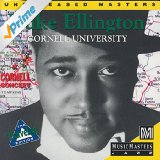
An Amazon comment: "As Stanley Dance explains this was almost a note-for-note replaying of his 5th Carnegie Hall concert from a month earlier. The big difference and improvement (from the 2 VJC discs) being a happier atmosphere prevailing when performed for a far hipper enthusiastic University audience." Have this not on MusicMasters (the original issuing label) but bargain label Jazz Heritage, which may account for a slight but annoying upper-register "gargle" on a few tracks, but this concert -- recorded during the '48 recording ban -- is just a joy so far. Ben Webster joins Al Sears, Hodges, Procope, Carney, and Jimmy Hamilton in the reed section; trumpets are Francis Williams, Shelton Hemphill, Harold Baker, Al Killian, and Ray Nance (actually cornet); trombones are Lawrence Brown, Quentin Jackson, and Tyree Glenn: the band is as loose as can be (in a good sense); the program includes a good deal of non-usual material, including Duke's wryly knowing sendup of bop on Part II of "The Symphomaniac," Strayhorn's Carney feature "Paradise," et al.; Wendell Marshall is the new man on bass, Al Hibbler and Kay Davis. vocals. The icing on the cake for me is the often maligned Sonny Greer, who was in superb form on this date, laying about/kicking the band along with mucho abandon, taste, and inventiveness. The man could find between-the-cracks places to accent that were falling-down-a-staircase oblique and beautifully so ( I know -- Greer, with his taste for liquid cheer, may have fallen down a few actual staircases in his life). Damn if he doesn't sound like Tony Williams at times. Very nice to hear Duke's voice announcing tunes, interacting with the audience. For some reason -- maybe it's just me -- he seems so THERE.
-
Woody Guthrie and Donald Trump's dad
Larry Kart replied to A Lark Ascending's topic in Miscellaneous - Non-Political
Jim deep-sixed the Politics Forum at some point in 2015 IIRC because it had become a place where personal insults and other forms of bad behavior were flowing freely and escalating, and Jim had decided long before that that such behavior had no place on Organissimo. Further, speaking as a moderator, policing such a forum under the rules for general behavior on the board that Jim had established was just impossible -- in terms of time and energy alone, plus the assumption on the part of most disputants that it was the moderator's job to act as a kind of one-person Supreme Court and dispense justice/decide who was right and who was wrong. -
Woody Guthrie and Donald Trump's dad
Larry Kart replied to A Lark Ascending's topic in Miscellaneous - Non-Political
Dmitry -- We no longer have a Politics forum on Organissmo; thus your posts here and on the Cosby thread are out of line. Please desist. -
What's with the French sense of humor?
Larry Kart replied to Dmitry's topic in Miscellaneous - Non-Political
I remember going to see "Mon Uncle" when it came out. My friend and I laughed at the first thing and didn't stop throughout. Saw it again recently -- still liked it, but it didn't make me laugh as much or in quite the same way. Perhaps it was that I could see this time a certain politique to it that bordered on smugness. -
Huey Long Charles Colson Theodore Roosevelt From a 1/19 David Brooks column in the NYT
-
Just What the World Needs: New 3 CD SET/CONCERT
Larry Kart replied to AllenLowe's topic in Offering and Looking For...
Some Lisa Parrott on alto and baritone; her sister is bassist/vocalist Nicki Parrott: https://www.youtube.com/watch?v=17szl-bFToU https://www.youtube.com/watch?v=2lf34B1QNmA (her solo begins at about 3:30) https://www.youtube.com/watch?v=SK8dKTGNKWs http://www.lisaparrott.com -
Harvey Pekar was a big fan of Bove. When I was editor of the Chicago Tribune Books section, Harvey lobbied to review a recently translated Bove novel. I was happy to tell him "yes." http://articles.chicagotribune.com/1995-08-06/entertainment/9508060144_1_emmanuel-bove-carol-volk-night-departure
-
For an example of latter-day Woods at his cheesiest, check out this "Watch What Happens" from “American Song Book, Vol. II.” A blatant piece of bebop pole dancing, IMO. https://www.youtube.com/watch?v=SNCBCNjYJ68 By contrast, here’s Woods’ handsomely shaped solo on Quincy Jones’ “A Sleepin' Bee” from 1956 (Mingus, bass; Herbie Mann, flute; Art Farmer, trumpet): https://www.youtube.com/watch?v=UtNeLmpsT4A or this from Jones’ “Walkin’” (Woods begins at about the 7-minute mark, though the whole track is fine, Lucky Thompson especially): https://www.youtube.com/watch?v=VPRFLIgHC98
-
I've stated my case more than once here, but much latter-day Woods sounds artificially hot and "jazzy" to me. Why things came to be that way -- if indeed they did -- is one of the music's mysteries to me.
-
A good period for Phil Woods.
-
What Classical Music Are You Listening To?
Larry Kart replied to StarThrower's topic in Classical Discussion
What's that you say? What's that you say? -
What Classical Music Are You Listening To?
Larry Kart replied to StarThrower's topic in Classical Discussion
Yehudi wasn't the world's snazziest fiddler, but at his best, as here, he was like Szigeti among the most musical. And Kentner is terrific. BTW, Menuhin and Kentner not only sound like they were joined at the hip, but they also were married to sisters.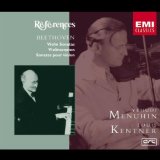
-
From Paul Krugman's blog, his favorite Rickman line, from "Bottle Shock": "[Y]ou think I’m an arsehole. And I’m not, really. I’m just British."