_forumlogo.png.a607ef20a6e0c299ab2aa6443aa1f32e.png)

Rabshakeh
-
Posts
7,689 -
Joined
-
Last visited
Content Type
Profiles
Forums
Events
Blogs
Everything posted by Rabshakeh
-

Recommendations for Record Stores in...
Rabshakeh replied to Rabshakeh's topic in Miscellaneous Music
Does anyone have any San Diego recommendations? Not a US city that I know... -
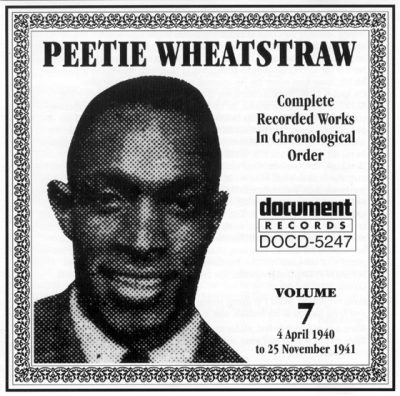
Peetie Wheatstraw – Complete Recorded Works In Chronological Order Volume 7 (4 April 1940 To 25 November 1941)
-
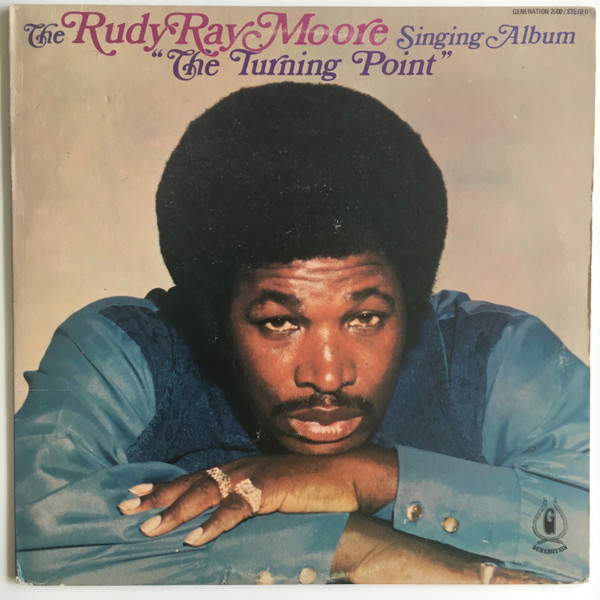
Rudy Ray Moore – The Turning Point
-
My first listen to this. Really superior stuff.
-
John Scofield Band – überjam
-
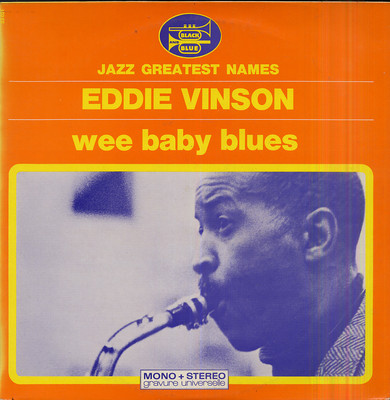
Eddie Vinson – Wee Baby Blues
-
Wait until you read the notional book. It will just be endless dense notional chapters. One of which can definitely be the notional "soul boy" chapter (great name).
-
I definitely do mean that. Big Jim McNeely etc. I think it is really essential to a deep knowledge of Jazz to appreciate the way that it, to some extent, represents an industry-led bifurcation of the African American music that had existed up to that point. But at the same time I wouldn't necessarily give it a chapter in a jazz book, although I would want it covered as part of swing in the 1940s or the phenomenon of rise of the tenor player.
-
To give my own response to the post, I have always been impressed by the approach taken by the likes of the Jazz Wax blog, which takes a very expansive approach to "Jazz". It includes big band pop, R&B, mambo records and easy listening, for example, as a part of Jazz's story. Having said that, I am not really sure that it would be necessary to include those musics in a historical overview of Jazz, despite the very substantial and natural overlap they have with the jazz most of us enjoy. Such a book or course would be bloated. I think that in many cases the commercial jazz of the late seventies through mid nineties has less in common with "Jazz" than the likes of Bacharach or Perez Prado. Despite that, I do think that the radio friendly "jazz" of that period should be recognised as a very substantial chapter in the history of Jazz, as a whole. It was the artistic terminus of many trends that had existed in jazz (and specifically but not exclusively fusion) up to that point. More importantly, it was extremely popular among people who regarded themselves as jazz fans. Extremely popular to the point that it absolutely outsold the music most of us enjoy. It was also the form of jazz that probably most influenced non-jazz genres, like R&B, acid jazz, gospel, neo-soul etc. As such, I think that it does probably need a chapter or a lecture or a podcast, as one of the key trends of that two decade period that still shapes the music. (The other three key trends that would need to be included in this notional book or course for the years 1977 - 1995, in my view, would be the acoustic jazz revival; the emergence of an international and institutionalised avantgarde improvisation; and the explosion of retrospective reissues, with its black hole effect). All of this is without prejudice to the fact that, as I assume is the case for most of us, I do not really like 90% of the music in this category. There are some exceptions there (Winelight is great. Sanborn was good at times. I like Whalum) but I don't think it was a particularly fruitful period for jazz, artistically. In due course this view may become old fashioned, just as 1950s views of Jimmy Smith or the criticisms of modal jazz look old fashioned. But I am not really all that sure and any revival of interest in this area would need to take an unexpected form, in my view.
-
It is full of zingers.
-
This Onion article from back in the day is a classic: https://theonion.com/no-one-sets-out-to-be-a-smooth-jazz-musician-1819584390/ I think that the most authentically interesting about smooth jazz proper is the intersection with the contemporary trends in "urban contemporary" R&B. From a British point of view, the likes of Incognito and Sade of some sort might have been the last time that jazz of some sort was in the charts. I'm always amazed at the love for Incognito (who I never really enjoyed) among both listeners of a certain age and also younger musicians. Every Incognito fan I have ever met regards himself or herself as a "jazz" fan. Sade is obviously having a big comeback at the moment among younger listeners, although that is perhaps more ambiguous in its relation to jazz. I was also interested to find out that the Fast Show's Jazz Club sketch ("Niiiiice!") which at the time I regarded as such an attack on jazz, was in fact intended by Johnny Thomson, who regarded himself as a big jazz fan, as some sort of purificatory distancing from the excesses of critically acclaimed jazz. His own music picks can be found here, and are clearly Fuzak-aligned: https://www.theguardian.com/music/2016/nov/11/john-thomson-london-jazz-festival-fast-show-cold-feet
-
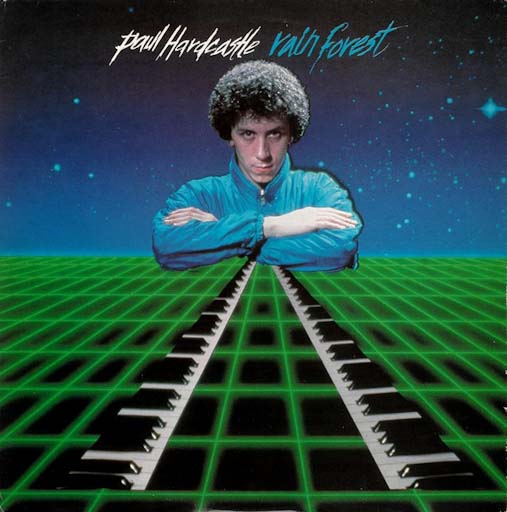
Paul Hardcastle – Rain Fores
-
Or a seminar or podcast or teaching session or whatever. The point is do you direct people to it or not. And not the roots (which I think we all agree on); the fruit. Commercial jazzes 1977 - 1993 or whatever.
-
Surely you remember them. Like podcasts, but in text on pages made of mashed vegetable matter. Very cumbersome.
-
Thanks
-
I forgot Windham Hill. That and the wider New Age movement was a part of this too. Perhaps it is a chapter on the Commercial Jazzes of the Late 1970s to early 1990s. Prior to the environmental collapse caused by the twin rise of Gorlitz and the swinging retro pop revival. This is a fun and quite poignant list. So many hopes and dreams on there. Guys in rented evening dress for the cover shoot, recording under the covers so their kid sleeping in the next room doesn't get woken up, etc.
-
A bit off topic but I reckon that a person could make a cracking double CD of post-CTI Bob James. He really does have some excellent tunes, albeit on some pretty crappy records, some times.
-
"Bedroom" / underground smooth jazz... There was a list that got published somewhere a while back. Maybe you posted it? Someone who knows his or her stuff did.
-
What I mean is that the likes of the Rippingtons maybe played on a different radio station, or something.
-
Funny to use Jokerman font on a jazz album cover. Not one you'll see in the coffee table books any time soon...
-
Oh yeah. I forgot Braxton. What are these records? I can't find this one on Discogs. Is it part of a series? And if so do you recommend them?
-
It's a funny umbrella genre. I'm not sure that the above artists are strictly smooth jazz in the way that Winelight or Kenny G are. More pop fusion, perhaps? Save for Botti who is more easy listening, maybe. I wasn't really meaning to ask though about whether members like smooth jazz or commercial fusion (I assume generally not that much) but really whether members regard this as a legitimate genre of jazz that is worth bringing to the attention of students. Even if the course is just a circle around the album cover for Winelight and another circle saying "Everything Else".
-
I think that I have mentioned before, but I wouldn't be at all surprised is Smooth Jazz becomes an area of interest at some point in the near future. It is a genre that is uncool at least partly due to association with the Gorlitz machine. We've all watched as soul jazz and 70s spiritual jazz emerged from the ashes to become extremely hip. What form such a revival would take is unknown to me, partly because I think Smooth Jazz is a bit of an umbrella genre and also because I'm definitely of the Gorlitz-scarred generation. I suspect that the music is much better handled as singles than albums (despite being an album led genre) and some enterprising Brooklyn record label will put together a good comp at some point.
-
But if that's the case, are we not including soul jazz, however you define it? I think most of us in this forum would want the various subaltern forms of 1960s jazz included. I certainly would.
-
This is a fairly generous course/book. It has a chapter or lecture on soul jazz, cool and west coast jazz, fusion, etc. It's not a Ken Burns thing that is very narrowly defined.