_forumlogo.png.a607ef20a6e0c299ab2aa6443aa1f32e.png)
All Activity
- Past hour
-
Thanks all guys for replying. My goal with the thread wasn't nessicarily the dropping of names but more detailed information would be appreciated if anyone knows of course. AI gives me this: 🇺🇸 Randy Weston Nationality: American Country in Africa: Morocco (primarily Tangier) Period: From 1967, approximately 5+ years resident Type of stay: Long-term residence Activities: Relocated to Tangier after a U.S. State Department African tour Founded the African Rhythms Club Collaborated extensively with Gnawa musicians Integrated North and West African rhythmic structures into jazz composition Significance: A central figure in Afrocentric jazz philosophy, framing jazz as part of a larger African continuum. 🇺🇸 Don Cherry Nationality: American Country in Africa: Morocco (including Jajouka, Rif Mountains) Period: Mid-1960s onward (no fixed documented residency length) Type of stay: Extended immersion periods Activities: Lived and performed with local musicians (including the Master Musicians of Jajouka) Studied ritual and collective musical forms Developed an early “world jazz” approach integrating African and non-Western traditions 🇺🇸 Robert "Juice" Wilson Nationality: American Country in Africa: Morocco (Tangier) Period: Settled in 1936 (exact duration unclear but long-term) Type of stay: Emigration Activities: Performed in Tangier’s International Zone jazz scene Became part of one of the earliest North African jazz communities 🇺🇸 Benjamin Boone Nationality: American Country in Africa: Ghana (Accra) Period: Approx. 1 year Type of stay: Fulbright residency / academic exchange Activities: Research in Ghanaian music traditions Performances and recordings with local musicians Cross-cultural jazz collaboration 🇺🇸 René McLean Nationality: American Country in Africa: South Africa (notably Cape Town) Period: Mid-1980s to late-1990s Type of stay: Long-term residence / educator Activities: Consultant at Mmabana Cultural Center Faculty member at University of Cape Town Developed jazz education and research programs 🇺🇸 T. K. Blue Nationality: American Countries in Africa: Multiple (West and North Africa) Period: Repeated stays over several decades Type of stay: Extended project-based residencies Activities: Cultural exchange leadership Performances and Afro-diasporic research Longstanding collaborations rooted in African traditions 🇩🇪/🇺🇸 Volker Goetze Nationality: German-American Country in Africa: Senegal (West Africa) Period: Long-running collaborations (2000s–present) Type of stay: Repeated extended artistic residencies Activities: Close collaboration with griot master Ablaye Cissoko Album production and intercultural composition Deep engagement with Senegalese musical traditions 🇫🇷 Martial Solal Nationality: French (born in French Algeria) Country in Africa: Algeria (Algiers) Period: Youth until 1950 Type of stay: Upbringing and early musical formation Activities: Developed early jazz language in Algiers Studied and performed before relocating to Paris 🇫🇷 Didier Malherbe Nationality: French Country in Africa: Morocco (Tangier) Period: 1964–1965 Type of stay: Extended stay / musical immersion Activities: Lived in an artistic community Absorbed Arabic modal systems and rhythmic concepts 🇫🇷 Barney Wilen Nationality: French Countries in Africa: Morocco, Algeria, Niger, Mali, Senegal, Burkina Faso Period: 1969–1970 Type of stay: Extended travel and field recording Activities: Recorded material later released as Moshi / Moshi Too Documented and incorporated local musical traditions 🇺🇸 Al Cohn, 🇺🇸 Billy Mitchell, 🇺🇸 Dolo Coker, 🇺🇸 Leroy Vinnegar, 🇺🇸 Frank Butler Country in Africa: Senegal (Dakar) Period: 1980 Type of stay: Live recording session Activities: Recorded the live album Xanadu in Africa in Dakar Among the earlier documented bebop recordings on African soil 🇺🇸 Archie Shepp Nationality: American Countries in Africa: Primarily Algeria; also broader Pan-African engagements Period: Late 1960s–1970s (notably participation in the 1969 Pan-African Cultural Festival in Algiers) Type of stay: Extended visits / cultural-political engagement Activities: Participated in the Pan-African Cultural Festival (Algiers, 1969) Engaged with African liberation movements and musicians Incorporated African political consciousness and musical elements into his work Significance: Key figure linking avant-garde jazz with Pan-Africanism. 🇺🇸 Steve Reid Nationality: American Country in Africa: Ghana (primarily), extended West African engagement Period: 1970s (several years living in West Africa) Type of stay: Long-term residence / study Activities: Lived in Ghana studying traditional percussion Immersed himself in African rhythmic systems Integrated African polyrhythmic concepts into spiritual and free jazz contexts
-
with Craig Taborn, Adam Rogers, and Nate Smith Helluva band, helluva record.
-
❤️
-

Sun Ra offer from Sundazed Records
Stompin at the Savoy replied to felser's topic in Offering and Looking For...
Maybe partly because my eyesight is not great but I have never understood the appeal of accessing the internet on a smartphone. I have an iphone and love it because it's a phone, an alarm clock/stop-watch, a decent camera, a compass, navigation system for car, an ok music player in a pinch with headphones, etc. But I don't generally look at things like photos or even mail on the phone. If I take photos I look at them on a pc. Email - pc. Social media - pc. You-tube and spotify - pc. Newspapers - pc. Those phone screens are too small, the speaker sound is horrible, and it's hard to maintain good posture while using them. If I'm gonna squint I'll squint at something bigger like a biggish monitor. Leaving the device aside, I agree with you about all the distraction of phone/social media etc life. These last few years I have spent so much time doom-scrolling. Recently I got very fed up with being over-stimulated and frustrated and have begun to go back to my old, pre-internet habits of reading books all the time. Stories are good entertainment and they provide a comforting way for us to see a bigger picture from a lofty vantage point where the beginning, middle and end are available to us, unlike our moment to moment experience which is just now and where the endings of things are unknown. -

What Classical Music Are You Listening To?
mikeweil replied to StarThrower's topic in Classical Discussion
-
- Today
-
Hal Singer
-
pianist John Mehegan
-
12 tracks +1 bonus (meaning, if you don't care about discussing track 13, feel free to skip it). No theme discernable to me; just some selections from my recent-ish listening which I thought might also be of interest to this group. https://thomkeith.net/2026-organissimo-blindfold-tests/ Enjoy!
-
I learned some things from this BFT! Thanks!
-
I'm sure a search of these forums will find some discussion of it. I have never been a fan, as it saddens me to hear a weak Hank Mobley struggle to blow his horn. Others hear differently.
-
What Classical Music Are You Listening To?
mikeweil replied to StarThrower's topic in Classical Discussion
-
Thanks for that. This is a world that I have no experience with, living out in the woods in an area where country music and radio pop seem to be what younger persons are aware of, and only those genres, and being someone who has a flip phone that does not connect to the internet and zero interest in watching youtube or other videos or reading blogs etc.
-

Sun Ra offer from Sundazed Records
Rabshakeh replied to felser's topic in Offering and Looking For...
I think that what has happened is that Pharaoh Sanders, Alice Coltrane, Archie Shepp and Sun Ra how now become very mainstream as "Spiritual Jazz", along with a few other names that younger listeners regard as similar, like Dorothy Ashby. I know lots of younger people for whom those artists represent their main experience of jazz. It is quite specific periods for each artist, mostly corresponding to their time on Impulse! or in the case of Sun Ra, his move towards less obviously extreme music, and particularly the Languidity, Disco 3000 and Nuclear War records. So no ESP or BYG stuff. I get the sense that these records have an aura of "conscious" afro-centric spirituality with good visuals that appeal to the Instagram and tiktok creators, but they also have a transgressive edge from the fact that they are associated with the avant-garde, without actually being difficult to listen to. I don't get the sense that the wider avantgarde jazz is really growing at all. I don't think these people enjoying Alice Coltrane's meditation records are checking out Frank Wright or Lester Bowie, let alone more recent figures like Gustafsson etc. The three exemplary figures of the avantgarde back when I got into the music: John Coltrane, Don Cherry, and for other listeners, John Zorn, seem to be much less famous with younger people than they were before. I am always a bit shocked at the collapse in name recognition for Cherry in particular. More shockingly, I have come across really quite a number of people in both real life and on the internet who profess to like avantgarde jazz, who turn up their nose up at Coltrane. I think it is because the name Coltrane is too widely known and they, in their ignorance, mistakenly regard Coltrane as music for normies. The famous cover of "My Favorite Things" seems to get mentioned as an example of creative compromise or selling out, which is obviously completely bizarre. Ascension, which for anyone learned about this music retrospectively in the text based media era was the obvious example of an avantgarde jazz record, seems to be MIA in modern discourse. I think a lot of the reason for this is that the interest in these records is spurred by social media. I.e. the growth of interest in these artists is coming in large part from short form videos where an attractive young person shows you his or her "Five essential spiritual jazz records that just hit different" and then pulls out records whilst nodding. It is generally the same records on Impulse!. That is partly because the algorithm incentivises picking the same records (the more people that mention a specific record the more likely the video is to trend) but also partly because Alice Coltrane and Pharaoh Sanders and Sun Ra records look otherworldly and cosmic. A lot of the people making these videos appear to just be recycling the same themes, so there isn't much way to break their narratives. That may explain why the previously talismanic records are retreating: John Coltrane records just have photographs of him looking serious, Don Cherry records look a bit messy and John Zorn is not handsome and his records are all on CD. As a separate phenomenon, I have also come across increasing recognition of Evan Parker, Peter Brotzmann and Anthony Braxton, although typically not connected to actually listening to their music. I think that these three get held up online as "really extreme" or "really experimental", which adds up to name recognition and some curiousity. I went to see e.g. Parker or Brotzmann (RIP) recently and the gigs were full of curious younger people who hadn't actually listened to the records but we're excited, often having travelled quite far, listening in rapt attention. Again, I think that this reflects the fact that these people's records are showing up on Instagram and Tiktok as examples of the most avant-garde or experimental jazz. I don't think that any of this is really a sign of wider interest though, any more than the resurgence of interest in Gil Scott-Heron a few years ago heralded a growth of interest in 1970s soul and funk. It is just an intersection of politics, youth culture, nice looking covers and short form video. Finally, I should add that these "young" people are in their 30s. In generational terms the popularity of these records is strictly a millennial thing. I have seen no sign whatsoever that listeners under 25 are getting into this music. -
I sent a copy of this to my pal Dave Laczko in Austin and he was raving about it as I knew he would so I’m spinning disc 1’ I can’t believe how great the sound is everytime I break out this set! Art Tatum “Jewels In The Treasure Box: The 1953 Chicago Blue Note Jazz Club Recordings” Resonance Records 3 cd set, disc 1
-
.thumb.jpg.cf52d580b24e33339100a3e183e952eb.jpg)
-
👍
-
And on to disc 2. Really like this set from last year.
-
-
The estate has made smart moves and marketing has been well-applied. The fact that the releases and re-releases have sounded so darned good has gotten me to buy and replace earlier copies (made a few new fans that way by giving earlier editions away). I think the fact that the Arkestra was still active and growing its own post-Sonny following helped. Is the avant=garde music of jazz itself more popular, slowly growing a fan base, as well? Perhaps. I am totally out of the jazz scene, I'm not young and really know no jazz fans or many jazz fans outside of forums.
-
Bill Evans “Further Ahead: Live in Finland-1964 to 1969” Elemental Records 2 cd set, disc 1
-
-
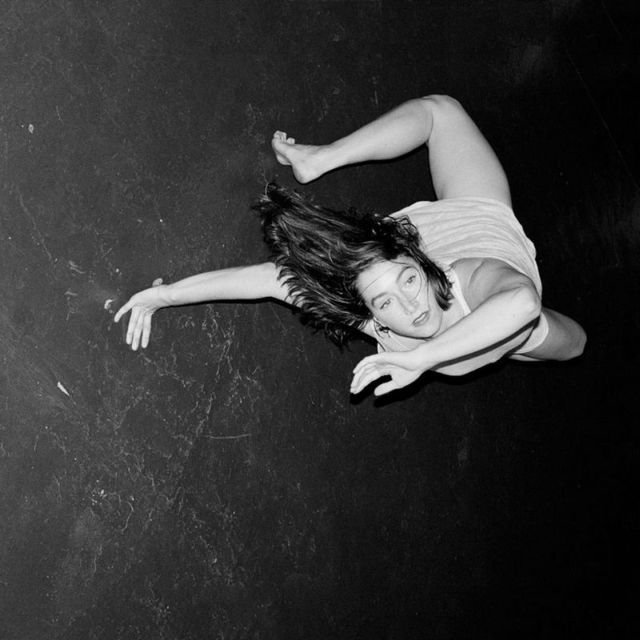
Raime - Quarter Turns Over a Living Line
-
-
Sun Ra offer from Sundazed Records
Rabshakeh replied to felser's topic in Offering and Looking For...
It really interests me how Sun Ra has been defanged in the popular culture. Some sort of pivot happened around 2010. Where he went from being perceived as an exemplar of the avant-garde that Sonic Youth was going to tell you about, to being someone whose work you could use to sell tote bags. The focus has also shifted quite radically away from his New York era records that used to define him in wider culture.



.jpg.221527c20814351ad5fc07f90d8643b8.jpg)