_forumlogo.png.a607ef20a6e0c299ab2aa6443aa1f32e.png)


GA Russell
-
Posts
19,397 -
Joined
-
Last visited
Content Type
Profiles
Forums
Events
Blogs
Everything posted by GA Russell
-
MLB 2023: how ya like it now?
GA Russell replied to ghost of miles's topic in Miscellaneous - Non-Political
I remember Ranew! I suppose from his stay with the Houston Colts. I had this card in '62.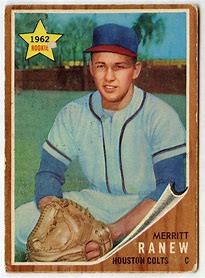
-
Speaking of Bill Withers, I saw a meme on Twitter the other day. Me: Bill, "ain't no sunshine" is bad grammar. Bill Withers: I know, I know, I know, I know, I know, I know, I know. ***** Week 5 picks https://doorfliesopen.com/2023/07/06/cfl-beat-183/ https://officepoolswire.com/football/cfl-week-5-predictions/ https://3downnation.com/2023/07/06/3downnation-cfl-picks-week-5-2023/ https://www.cfl.ca/2023/07/05/prediction-time-cfl-ca-writers-week-5-picks-2/ https://www.cfl.ca/2023/07/05/weekly-predictor-riding-with-riders/ https://pifflespodcast.com/blog/contenders-vs-pretenders-week-5/ ***** Week 5 Game Notes https://www.cfl.ca/2023/07/06/cfl-ca-game-notes-a-look-at-week-5-3/ ***** Having left winless Edmonton, Kai Locksley has signed with winless Hamilton. https://www.cfl.ca/2023/07/05/ticats-sign-former-elk-kai-locksley/ ***** Gene Gaines has died at 85. RIP. https://3downnation.com/2023/07/06/ottawa-redblacks-wall-of-honour-inductee-gene-gaines-passes-away-at-85/ ***** Having won his first and only start last week, Tyrie Adams is out for the year with an injured ACL. https://3downnation.com/2023/07/05/ottawa-redblacks-lose-promising-qb-tyrie-adams-for-rest-of-season-with-acl-injury/ ***** Brett Boyko has signed with the Elks. https://3downnation.com/2023/07/03/edmonton-elks-sign-canadian-ol-brett-boyko-one-other/ ***** This thread's view count is up another 1,500 since June 15, and we are now at 219.3 thousand!
-
Steve, let us know how they are!
-
Billy Mintz Quartet New England Tour August 12th - 15th, 2023 Billy Mintz Quartet Tony Malaby - tenor saxophone Roberta Piket - piano Don Falzone - bass Billy Mintz - drums, compositions 8/12/2023 3pm two sets Warren House of Pizza 464 Main St. Warren, RI 8/13/2023 5pm one show The Dance Hall 7 Walker St. Kittery, ME 8/15/2023 7:30pm two sets Lily Pad 1353 Cambridge St. Cambridge, MA “The leader walks alone and, like Paul Motian, he’s got a great way of drifting through the waves while steering the ship.” - Jim Macnie, Village Voice “If you are a fan of modern jazz drumming but have not heard Billy Mintz, you have not heard it all.” – Tom Conrad, JazzTimes A veteran of both the LA and New York jazz scenes, sought-after drummer Billy Mintz is that rare breed of jazz musician who is as comfortable playing standards in a piano trio as he is performing in the creative music scene. Mintz's engaging compositions, ranging from stunningly melodic to rhythmically playful, reflect a mature and deeply gifted artist who has quietly been working on his craft. He is joined by three of New York’s most respected musicians, his long-time colleagues Tony Malaby (tenor sax), Roberta Piket (piano) and Don Falzone (bass). The quartet makes three rare New England appearances. Billy and Roberta Teaneck NJ 07666 u
-
I enjoyed this one.
-
Happy Independence Day! Americans born July 4 include... Stephen Foster - 1826 Bill Withers - 1938 Alan "Blind Owl" Wilson - 1943 ***** Week 4 results Plays of the Week https://www.cfl.ca/2023/07/04/plays-of-the-week-week-4-2023/ ***** Ottawa 26....Edmonton 7 Two first-time starting QBs, and the underdog won. https://3downnation.com/2023/07/01/elks-elixir-does-the-trick-and-11-other-thoughts-on-the-redblacks-first-win-of-the-season/ https://3downnation.com/2023/07/01/dont-teach-me-how-to-doege-six-thoughts-on-the-elks-loss-to-ottawa/ ***** Winnipeg 17....Montreal 3 The start of the game was delayed one hour and forty minutes due to lightning. The Bombers scored a touchdown early, and then led the remainder of the game. But I think it's noteworthy that the Als' defense held the Bombers to 17 points. Last week the Bombers scored only six against the Lions. Something is up. Has the league figured out how to defend against Buck Pierce's offense? https://3downnation.com/2023/07/01/winnipeg-blue-bombers-own-line-of-scrimmage-soak-alouettes-11-other-thoughts/ https://3downnation.com/2023/07/02/alouettes-problems-in-the-trenches-come-to-forefront-in-rainy-loss/ ***** Toronto 45....BC 24 The rare CFL Monday Night Football. The last two undefeated teams, and the underdog wins at home. Statistically, Adams had a great game, except that he threw six (!) interceptions. https://www.cfl.ca/2023/07/03/all-six-argos-ints-from-monday/ https://3downnation.com/2023/07/04/vernon-adams-jr-throws-six-to-their-stomachs-10-other-thoughts-on-the-lions-pick-filled-loss-to-the-argos/ https://3downnation.com/2023/07/04/argonauts-prove-they-are-cfls-best-team-10-thoughts-on-torontos-big-win-over-b-c-lions/ ***** Power Rankings https://3downnation.com/2023/07/03/3downnation-power-rankings-week-5-2023/ https://www.cfl.ca/2023/07/04/power-rankings-embrace-the-turmoil/ https://cflnewshub.com/cfl-news/cfl-week-5-power-rankings-argos-tame-the-lions-to-cement-their-top-standing/
-
Return Of The Film Corner Thread
GA Russell replied to JSngry's topic in Miscellaneous - Non-Political
Through July 28. All Criterion Collection titles are half off at Barnes & Noble stores and BN.com. -
Thank you for your suggestions! I'm saving up my new CDs to open on my birthday in November, so patience is something I have plenty of. I'll follow up in the fall, or when you guys receive yours.
-
MLB 2023: how ya like it now?
GA Russell replied to ghost of miles's topic in Miscellaneous - Non-Political
Happy Bobby Bonilla Day! -
Happy Dominion Day! Canadians born July 1 include... Dan Aykroyd - 1952 Louise Penny - 1958 Pamela Anderson - 1967 ***** Week 4 picks https://3downnation.com/2023/06/30/3downnation-cfl-picks-ottawa-redblacks-look-to-snap-long-home-losing-streak/ https://rodpedersen.com/week-4-cfl-picks-2023/ ***** Matthew Cauz picks his Top 10 Canadians. https://www.cfl.ca/2023/06/30/o-canada-cauzs-top-10-nationals/ ***** Dakota Prukop has returned to the Bombers. https://www.cbc.ca/news/canada/manitoba/dakota-prukop-blue-bombers-quarterback-1.6890194 ***** Ben Roethlisberger now has a podcast, and on the most recent one he wore an old CFL t-shirt. https://3downnation.com/2023/06/27/former-pittsburgh-steelers-qb-ben-roethlisberger-sports-cfl-t-shirt-thanks-to-canadian-trainer/ ***** Grey Cup Final tickets go on sale today at 10:00 am eastern. https://www.cfl.ca/2023/06/14/ticats-unveil-plans-for-enhanced-stadium-for-110th-grey-cup/
-
Brandon Sanders - Compton's Finest
-
Art Pepper Meets The Rhythm Section (Contemporary Records 70th Anniversary Remastered Edition) https://artpepper.bandcamp.com/album/art-pepper-meets-the-rhythm-section-contemporary-records-70th-anniversary-remastered-edition
-
Brandon Sanders Makes His Long-Awaited Debut With the August 25 Release of "Compton's Finest" On Savant Records Recording Features Eight Straight-Ahead Tunes, Performed by a Quintet Featuring Vibraphonist Warren Wolf, Saxophonist Chris Lewis, Pianist Keith Brown, Bassist Eric Wheeler, Plus Guest Vocalist Jazzmeia Horn June 29, 2023 The only thing drummer Brandon Sanders has to prove on Compton’s Finest, set for an August 25 release on Savant Records, is his musicality. Making his recording debut at the age of 52, Sanders is past the youthful need for flashy pomp and circumstance. He instead focuses on serving the material—and supporting an ace roster of bandmates that includes vibraphonist Warren Wolf, tenor saxophonist Chris Lewis, pianist Keith Brown, and bassist Eric Wheeler—with taste and maturity. Though he’s only now recording his first album, Sanders has been playing drums for the better part of three decades. Thus this “arrival” finds him already brimming with both competence and confidence. His subtle but unmistakable touch on the kit is the result of, in Sanders’s own words, years of “practicing, practicing, trying to develop my craft.” Based in New York (where he works as a social worker as well as a musician), Sanders grew up in Compton, California—the famously troubled Los Angeles suburb. The title of the album (and its eponymous second track) are in the spirit of celebrating rather than denigrating the drummer’s hometown. “I wanted to show that there is a positivity in Compton,” Sanders says, “that people have come out of there and done positive things.” He couldn’t have provided a better example than Compton’s Finest. Between the lively, genial readings of the standards “Softly, as in a Morning Sunrise” and “Monk’s Dream,” the melodic soul of Sanders’s two originals “Compton’s Finest” and “SJB,” or the masterful vocals from special guest Jazzmeia Horn on Stevie Wonder’s “I Can’t Help It” and Duke Ellington’s “In a Sentimental Mood,” Sanders’s maiden voyage on record is a serious accomplishment. Part of that accomplishment, of course, is his selection of an ideal supporting cast. Wolf has been a friend of Sanders’s going back to their days together at Berklee College of Music; Horn is another friend of years’ standing; and Lewis, Brown, and Wheeler are three of the most exciting and in-demand talents in New York, for reasons that are clear when you hear them on the album. Not to be left out is Willie Jones III, Sanders’s fellow drummer and Angeleno, who served as producer. “I am proud to work with Brandon,” Jones says. “He has instincts like a DJ and understands the pace of the recording must function like a live performance. As a musician and a bandleader, Brandon is intuitive and knows how to support the band.” As Compton’s Finest shows, he knows a lot more than that. Brandon Sanders had the stars aligned for a life in jazz. Born February 20, 1971, in Kansas City, Kansas to a violinist mother and a trombonist father, he moved to Los Angeles as a toddler but came back every summer to visit his grandmother, who operated a renowned jazz club in Kansas City. By his teen years he was obsessed with the music. However, it wasn’t initially his life’s plan. Sanders earned degrees in communication and social work from the University of Kansas (where he was also a walk-on practice player for the basketball team) and laid the groundwork for a long and successful career as a social worker. It wasn’t until he was 25 that he began learning to play the drums. Yet he threw himself into it, to the point that he went back to school at Boston’s prestigious Berklee College of Music. Moving to New York in 2004, Sanders soon found himself a regular participant in the city’s busy jazz scene, creating a formidable reputation while working with the likes of Joe Lovano, Jeremy Pelt, and Esperanza Spalding. It was his old friend Warren Wolf who urged Sanders to record an album, encouragement that has now at last borne fruit as Compton’s Finest. “As a kid I was introduced to everyone from James Brown, John Coltrane, and Sarah Vaughan to Stevie Wonder and Duke Ellington,” says Sanders. “These artists were constantly played on my mother and father’s turntable. My new album is a reflection of all the joys I experienced growing up listening to that music.” Photography: Eva Kapanadze EPK: Brandon Sanders | Compton's Finest Brandon Sanders Web Site
-
I have DM'd Jim for the proper address to send a check for an autographed copy, but no response yet. Paypal now wants my phone number, which I won't give them. Any ideas?
-
Week 4 Game Notes https://www.cfl.ca/2023/06/28/cfl-ca-game-notes-a-look-at-week-4-3/ ***** Week 4 Checking Down https://www.cfl.ca/2023/06/28/checking-down-news-and-notes-from-week-4-2/ ***** Week 4 picks https://doorfliesopen.com/2023/06/29/cfl-beat-182/ https://officepoolswire.com/football/cfl-week-4-predictions/ https://www.cfl.ca/2023/06/27/prediction-time-cfl-ca-writers-week-4-picks-2/ https://www.cfl.ca/2023/06/27/weekly-predictor-backing-the-redblacks/
-
Week 3 results Plays of the Week https://www.cfl.ca/2023/06/26/plays-of-the-week-week-3-2023/ ***** BC 30....Winnipeg 6 It's been a long time since the Bombers did so little. https://www.cbc.ca/sports/football/cfl/winnipeg-blue-bombers-bc-lions-recap-june-22-1.6885866 ***** Montreal 38....Hamilton 12 Fajardo is looking better than pre-season expectations. The Ticats are now 0-3. https://www.cbc.ca/sports/football/cfl/montreal-alouettes-hamilton-tiger-cats-recap-june-23-1.6887277 ***** Sask 29....Calgary 26 See-saw battle. Harris has been good this year so far. https://www.cbc.ca/sports/football/cfl/saskatchewan-roughriders-calgary-stampeders-recap-june-24-1.6887641 ***** Malik Henry hurt his Achilles tendon untouched on a pass route, and is out for the year. That's a big loss. https://www.cbc.ca/sports/football/cfl/calgary-stampeders-achilles-henry-injury-1.6888284 ***** Toronto 43....Edmonton 31 The Elks' third-string quarterback Jarret Doege looked good in the fourth quarter. I expect him to see more action. https://www.cbc.ca/sports/football/cfl/toronto-argonauts-edmonton-elks-recap-june-25-1.6887999 ***** The Elks today released their second-string quarterback Kai Locksley. https://www.cfl.ca/2023/06/26/report-elks-to-release-qb-kai-locksley/ ***** Dahrran Diedrick has died of cancer at 44. RIP. https://www.cbc.ca/sports/football/cfl/dahrran-diedrick-death-cfl-nfl-june-24-1.6887860 ***** Power Rankings https://www.cfl.ca/2023/06/26/power-rankings-a-new-world-order/ https://3downnation.com/2023/06/26/3downnation-cfl-power-rankings-b-c-lions-new-king-of-the-jungle/ https://cflnewshub.com/cfl-news/cfl-week-4-power-rankings-lions-rule-the-roost-after-roaring-past-bombers/ https://pifflespodcast.com/blog/contenders-vs-pretenders-week-4/ ***** Sask announced that they made C$3.9 million last year, plus an additional C$3.3 million by hosting the Grey Cup Final. https://www.cbc.ca/news/canada/saskatchewan/roughriders-agm-1.6884557 ***** One of the Redblacks' biggest stars DeVonte Dedmon is out for the year with an injured shoulder. https://www.cfl.ca/2023/06/26/report-redblacks-devonte-dedmon-out-for-the-season/ https://3downnation.com/2023/06/26/ottawa-redblacks-kr-devonte-dedmon-ruled-out-for-season-with-shoulder-injury/ ***** The Als revealed their new alternate uniform. https://3downnation.com/2023/06/22/bleeding-rouge-montreal-alouettes-unveil-new-alternate-uniforms/
-
-
Prime Day 2023 will be July 11-12. I don't think I found anything last year either.
-
Week 3 picks https://doorfliesopen.com/2023/06/22/cfl-beat-181/ https://3downnation.com/2023/06/22/3downnation-cfl-picks-winnipeg-looks-to-keep-rolling-in-week-3/ https://officepoolswire.com/football/cfl-week-3-predictions/ https://rodpedersen.com/week-3-cfl-picks-2023/ https://www.cfl.ca/2023/06/20/weekly-predictor-hangin-with-hamilton/ https://www.cfl.ca/2023/06/21/from-the-editors-desk-im-ready-for-week-3/ https://www.cfl.ca/2023/06/20/prediction-time-cfl-ca-writers-week-3-picks-2/ ***** Power Rankings https://3downnation.com/2023/06/19/3downnation-cfl-power-rankings-argos-buoyed-by-chad-kellys-performance/ https://www.cfl.ca/2023/06/19/power-rankings-the-champs-make-things-interesting/ https://pifflespodcast.com/blog/safimods-week-3-cfl-power-rankings/ https://cflnewshub.com/cfl-news/cfl-2023-week-3-cfl-power-rankings-grey-cup-champion-argos-crash-the-party-in-style/ ***** Week 3 Game Notes https://www.cfl.ca/2023/06/21/cfl-ca-game-notes-a-look-at-week-3-2/ ***** Week 3 Checking Down https://www.cfl.ca/2023/06/21/checking-down-news-and-notes-from-week-3-2/
-
Week 2 results Plays of the Week https://www.cfl.ca/2023/06/19/plays-of-the-week-week-2-2023/ ***** Calgary 26....Ottawa 15 Arbuckle had the world on a string when he left the Stampeders. Now people are wondering if he is good enough to be a starter. https://3downnation.com/2023/06/16/self-inflected-wounds-stymie-victory-12-other-thoughts-on-the-redblacks-loss/ https://3downnation.com/2023/06/16/stampeders-down-redblacks-in-sloppy-affair-and-eight-other-thoughts/ ***** Winnipeg 45....Sask 27 See-saw battle until Janarion Grant returned a punt 90 yards for a touchdown. https://3downnation.com/2023/06/17/collaros-harris-shine-as-bombers-beat-riders-12-other-thoughts/ ***** BC 22....Edmonton 0 This was both BC's first shutout victory and Edmonton's first shutout loss since the '70s. https://3downnation.com/2023/06/18/lions-listen-to-mama-knock-out-elks-12-other-thoughts-on-b-c-s-home-opener/ https://3downnation.com/2023/06/18/the-wrong-kind-of-history-six-thoughts-on-the-edmonton-elks-first-shutout-loss-in-47-years/ ***** Toronto 32....Hamilton 14 Kelly looked great for a first-time starter. https://3downnation.com/2023/06/19/chad-kelly-flourishes-as-qb1-15-thoughts-on-the-argos-season-opening-win-over-hamilton/ https://3downnation.com/2023/06/19/smoked-in-the-big-smoke-10-thoughts-on-hamiltons-32-14-loss-to-the-argonauts/
-
"Labeled", Cool Jazz Show Sunday afternoons on WKCR
GA Russell replied to sgcim's topic in Jazz Radio & Podcasts
Thanks for the tip! Sounds great. -
I once saw Mel tell (I think) Johnny Carson, "My best records were for labels you never heard of." I assumed he was thinking about Bethlehem and Verve.
-
Am I supposed to recognize the girl on the right? Have Gun Will Travel Seasons 1-4 $24.95 https://www.hamiltonbook.com/have-gun-will-travel-seasons-1-4-dvd
-
The Grey Cup Final tickets go on sale Canada Day. Hamilton has announced some of its plans. https://www.cfl.ca/2023/06/14/ticats-unveil-plans-for-enhanced-stadium-for-110th-grey-cup/ Pre-Sale here https://am.ticketmaster.com/hamilton/ism/MjNHUkVZ ***** Marc Liegghio has signed with Hamilton. https://3downnation.com/2023/06/17/ticats-sign-canadian-kicker-marc-liegghio-suspend-seth-small/ ***** The July 29 Argos-Roughriders game in Halifax has sold out. https://3downnation.com/2023/06/15/touchdown-atlantic-clash-between-riders-and-argos-sells-out-for-second-straight-year/ ***** Derek Dennis has retired. https://3downnation.com/2023/06/14/four-time-all-star-ol-derek-dennis-announces-retirement-from-cfl/ ***** Kwaku Boateng, who is a favorite of mine, has not recovered from his Achilles injury, and has been let go by the Ticats. https://3downnation.com/2023/06/13/hamilton-tiger-cats-release-canadian-dl-kwaku-boateng/
-
More Week 2 picks https://rodpedersen.com/week-2-cfl-picks-2023/