_forumlogo.png.a607ef20a6e0c299ab2aa6443aa1f32e.png)
-
Who's Online 3 Members, 0 Anonymous, 212 Guests (See full list)
-
Forum Statistics
70.7k
Total Topics1.6m
Total Posts -
Member Statistics
9,247
Total Members2,298
Most Online
-
Topics
-
-
Posts
-
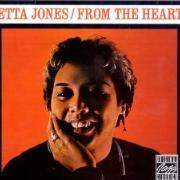 I think it might have been but I'm not 100% sure. @cayetano I'm surprised you didn't guess this one actually. And agreed, it's a fantastic album!
 -
My apologies to everyone for the late reveal here. I've been unable to devote the time necessary to write it up. Life is hectic and free time has been sparse these past few weeks. Before I get to it, I want to extend appreciation to everyone who listened, and everyone who posted their impressions. This was a scattershot set with a lot of variation in style. I had no plan or theme in mind other than to give a wide range of music for y'all to chew on. The songs: 1. Sun Ra "Fall Off the Log" from Sun Song on Delmark (also released on Jazz By Sun Ra vol. 1) Solos from Pat Patrick on bari sax, John Gilmore on tenor and Julian Priester on trombone. I wanted to include a tune from Ra and the early stuff is maybe a little harder to guess than other eras. This one got picked quick though. 2. Tom Skinner "The Journey" from Voices of Bishara, Live at the "mu" Live set from 2023 with Tom Skinner on drums, Kareem Dayes on cello, Chelsea Carmichael and Robert Stillman on tenor sax. Dayes and Skinner really shine on this one and this live set is highly recommended if you dug the tune. 3. Kawashima Makoto & Nishizawa Naoto "TAKE 4" from the record DUO (Hamachidori) I knew this one would stretch the patience of the BFT audience a bit, but I like it and thought it might hit for at least some of you. As I mentioned in the clue, Kawashima's folk forms become evident with close listening (at least for me, I'm sure others can pick it up much faster) and it was those forms coming into focus that make this entire album an incredible listen. This is the last song on the record, and it comes across as kind of a grand finale that summarizes the entire work. Nishizawa's percussion adds an element that makes me think of Chinese opera for whatever reason. Added note, the Hamachidori might be an additional clue as to what informed this work. I tried to research connections as to its meaning, and found that it can be a reference to traditional Okinawan song/dance: It could also be a reference to Iwate prefecture's sake which is called Hamachidori. Iwate prefecture is in northern Japan. Kawashima is from around Tokyo, which isn't really close to either Iwate or Okinawa. So I still don't know the exact reference but it was fun looking it up. 4. Vito Price "Eye Strain" from Swingin' the Loop Basie rhythm section members Freddie Green and Gus Johnson called me to this album. I didn't know much about Price but came to find out he basically never led a recording again in the 20th century. 5. Mars Williams, Darin Gray & Chris Corsano "Set One 2 (Part C)" from Elastic I've recently come to learn about Mars Williams and have discovered that everything Corbett vs Dempsey has released with Mars on it is worthwhile. This was recorded in 2012 on Groundhog Day, and released in 2024. 6. Black Unity Trio "In Light of Blackness" from Al-Fatihah An entire universe contained within a song. This one is deep. And intense. A pre-Abdul Wadud Ronald DeVaughn on cello, Joe Phillips on alto sax and bass, and Hasan Abdur Shahid on percussion. Gotta Groove reissued this in 2020 and thankfully so. Originally recorded on Christmas Eve, 1968. 7. Sonny Fortune "This Side of Infinity" from From Now On Sonny on alto, Eddie Henderson trumpet, Joe Lovano tenor, John Hicks piano, Santi Debriano bass, Tain Watts drums, Steve Berrios percussion. Brilliant tune, excellent recording and something I really wanted to include on this BFT. 8. Mound City Blue Blowers "Darkroom Strutter's Ball (78rpm version)" Yeah, this is the kind of ancient recorded music that I love. Thanks to Mosaic for putting out the Coleman Hawkins set. Recorded in NYC 1931. Let's see if I can get the credits correct: Eddie Condon and/or Jack Bland on banjo/guitar and vocals, Al Morgan bass, Jimmy Dorsey on clarinet, Red McKenzie on comb (and possibly vocals), Muggsy Spanier on cornet, Frank "Josh" Billings drums, Jack Russin piano, Coleman Hawkins tenor sax I love everything about this from the tempo, to the weird instrumentation and old style recording. We're lucky to have this stuff. 9. William Parker "Sacred Prayers" from Migration of Silence Into and Out of the Tone World, The Fastest Train Song nine comes from CD 9 in this box set from Parker. He plays these instruments on this disc: Keringot, Hochiku, Shakuhachi [In D & A], Stereophonic Bamboo Flute, Ojibway Overtone Bass Flute, Pocket Trumpet, Malakan Flute, Chinese Shakuhachi. And with him is Coen Aalberts on the following: Conch Shell, Winti Flute From New Guinea, Cricket Sounds, Bird Sounds, Bamboo Brushes, Whistles, Drums This boxset has been great to listen to very very slowly. I don't think I'd have enjoyed it as much had I torn into it and played it from start to finish. This 9th disc is an album unto its own, and this song was a good one from it. 10. Charles Kynard "Odds On" from afro-disiac With Purdie on drums, Jimmy Lewis bass, Grant Green guitar, Houston Person on tenor and Kynard on B3. Don Schlitten with photo credit. Kynard has been a recent discovery for me. I've loved everything I've played by him and felt like including one of his tunes on this BFT. This Meters-inspired song fit the bill. 11. Johnny Hartman "By Myself" Once again, Mosaic did a phenomenal job putting out the Bee Hive box set. Included is this album and this version of By Myself smokes. First of all, Frank Wess on tenor. Good god y'all. Then there's Keith Copeland drums, Billy Taylor (!!!) on piano, Al Gafa guitar, Keith Copeland drums, and Joe Wilder on trumpet. Helluva band. Uptempo works here and I thought it would make a great closer. I had a feeling it would be sussed out immediately and it was. Didn't care 'cause I just wanted to share. Cheers everyone. I hope you enjoyed at least parts of this BFT. Thanks for stopping by and giving an ear.
-
-
-
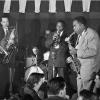 I would give a strong recommendation for the Decca sessions of 1935-1946. Maybe some of the chosen songs leave something to be desired, but this is Louis Armstrong in his absolute youthful prime giving mostly timeless interpretations of jazz and pop standards. Much of his later work with the All Stars is also fine, but I would it a notch below this. There is also a box of the complete RCA recordings (not on Mosaic), which are absolutely essential. You already have a taste of that on the Portrait of the Artist box.
-