_forumlogo.png.a607ef20a6e0c299ab2aa6443aa1f32e.png)
All Activity
- Past hour
-
Okay, thanks; I had not seen anyone complaining about that sound, I use discogs but don't read reviews/comments/forum.
-
It is a great recording, particularly when Dizzy Gillespie and Max Roach go at it together. Historic!
-
-

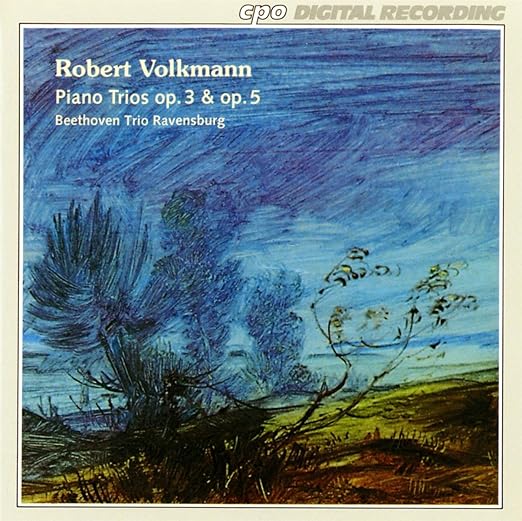
What Classical Music Are You Listening To?
Peter Friedman replied to StarThrower's topic in Classical Discussion
-
Just searched - you are right! It's on "Dizzy Gillespie Vol. 4 - 1943-44" (Masters of Jazz MJCD 86) - by sheer coincidence and chance one of the very few Masters of Jazzes I own. A live recording from the Onyx Club. Fidelity is ultra-ultra low (audibly an exceedingly worn acetate) but it IS interesting. Pity the beginning is missing. Now if the Gillespie combo already had this tune in their live set lists in Jan. 1944 it is all the more probable that the spring, 1944, dates of the Boyd Raeburn live recordings on the IAJRC and Circle LPs are correct.
-
There is a small group live recording by Dizzy Gillespie of Night in Tunisia supposedly from January 1944, with Budd Johnson, George Wallington, Oscar Pettiford, and Max Roach.
-
-
- Today
-
Sean Mason quintet. A cool Horace Silver-y kind of vibe.
-
I was referencing earlier to people on Discogs disliking the sound of the Waldron
-
 Sounds like Resonance is moving away from the Seattle tapes as a source. While the opening batch didn't make me open my wallet I do have hopes for future enticement.
 -
Wilson is hard to categorize. For example, I came across some glowing reviews of Roland Kirk albums (Blacknuss, and Rahsaan Rahsaan) or Yusef Lateef, Charles Mingus... Still going through the many issues available...
-
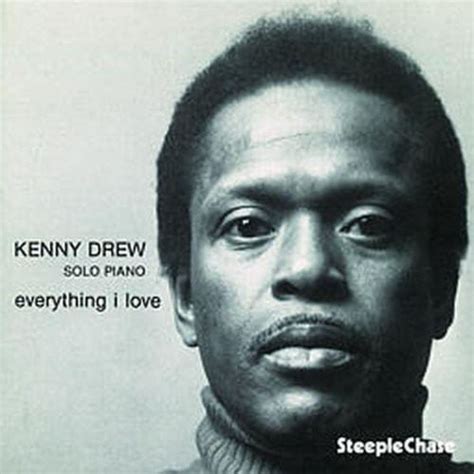
Re-visiting this recent release from Japan. Kenny Burrell “Round About Midnight at the Cafe Bohemia” Blue Note Japan 2 SACD release, disc 1
-
I thought the Waldron sounded okay, it was the Evans I was referring to as persons not liking the sound. The first set has distortion that is unpleasant to hear. The second set sounds better.
-
A few factual odds'n'sods to add to this discussion: a) The label shot of the double-billed "Night in Tunisia (Interlude)" on Electrola (EG 7778) is no indicator of any transitional period where both titles may have coexisted. This German pressing visibly was released nowhere near the actual recording or U.S. release date of this version of "Night In Tunisia". The next one up in the Electriola catalog was "Cubana Be / Cubana Bop" by the Gillespie band on Electrola EG 7779 originally recorded on 22 December 1947 (about 22 months later!) - of which I have a copy in my collection, incidentally. So Electrola visibly released a batch of Gillespie recordings in 1948. It is quite possible that they simply added the "Interlude" part because they were aware of this original titling and wanted to get this as correct as possible. (Yes, European labels in those days - when they had a lot of catching up to do jazzwise - often had knowledgeable consultants in their offices. Which may also be the reason why they even gave the recording dates on the labels, for example.) Another indicator is the note "Empf. d. GJC" in a corner of the label which means "Recommendation by the German Jazz Federation". I.e. this coupling was one of the records the German Jazz Federation had found valuable enough to recommend to its members and jazz listeners in general and therefore apparently urged a label to release a German pressing for easier availability on the home market. A process that of course took its time, hence the somewhat delayed release ... At any rate, this mention of "Interlude" had nothing to do with how this was being handled in the USA at the same time. b) Re- the first recorded evidence of "Night In Tunisia/Interlude" by the Boyd Raeburn Orchestra: The "Boyd Raeburn" album of 1944-46 broadcast performances on IAJRC 48 lists a recording of "Night In Tunisia" (listed as such) among a batch of tunes from airshots of 27 March and 3 April 1944 at the Hotel Lincoln (NYC). The liner notes do not dwell on this "first" (but just mention that Gillespie "sold his chart on 'Night In Tunisia' "), but this would place this performance about 8 months PRIOR to the Sarah Vaughn recording. Which begs the question: Do we trust the knowledge of the IAJRC people (liner notes by Jack McKinney, dated 1986) or don't we and did they get the date wrong? (Which can happen, after all ...) BTW, some more indicators: According to Bruyninckx, the Raeburn band recorded "Night In Tunisia" for V-Disc (matrix VP 689, disc 275) on 11 May 1944, though I have a doubt about this recording date. My copy of the "V-Disc Catalogue" book Vol. 1 (1-500) by Wante/De Block has a handwritten note by its previous owner next to this track that reads "NYC, Dec. 24, 1944". It seems this is the date given on the back cover of the V-Disc big band LP on (Japanese) DAN VC-5026, and this STILL would place it BEFORE the Sarah Vaughn recording. So the Mosaic box should have some info on this too. Also acc. to Bruyninckx, another on-location recording of "Night In Tunisia" by the Raeburn band (Liederkranz Hall, 13 June 1944) is on Circle LP 22. b) Just to get this straightened out - the Tristano recordings of "Interlude" were made for KEYNOTE (the Harry Lim label), not "Keystone".
-
I’ve listened to the Waldron but I could see why people aren’t happy with the sound. Lot of background noise, bass hardly audible and drums not very much either.
-
 I have all the releases so far except the Collier. Looks promising for the future!
 -
A warmer morning! Should be a beautiful day. We’re due for another! Starting off with “Motion II” by Out of/Into which is a great “supergroup” of jazzers now on the scene. I’ve been neglecting “In A Silent Way”–it’s been too long since I’ve spun this one. I’m listening to the Mobile Fidelity Lab SACD.
-
 I didn’t see this posted here. If it is, you can remove this post. Joe Segal's 10,000+ Jazz Recordings. Wow... This could be a treasure of jazz recordings from Joe Segal, former owner of the Jazz Showcase in Chicago. =================================== This is from the Chicago Tribune newspaper: Never-before-heard tapes by late Jazz Showcase founder hit shelves — just in time for his 100th birthday. By Hannah Edgar | For the Chicago Tribune PUBLISHED: April 27, 2026 at 5:45 AM CDT In 2012, record producer Zev Feldman was on a mission. He’d recently released two hugely successful archival recordings on Resonance Records — a label he now co-runs — and he was on the prowl for more.Mutual friends told him the same thing: You have to meet Joe Segal. By then in his 80s, Segal was still co-running the Jazz Showcase, the club he founded as a floating jazz series in 1947. Over breakfast, Segal handed Feldman a CD of saxophonist Stan Getz, playing live at the Showcase. Eager, Feldman asked if he had more recordings. “He said, very nonchalantly, ‘There’s more where that came from,’” Feldman recounts. Around 10,000 more, in fact. Unbeknownst to most, Segal, who died in 2020, had fastidiously captured years of Jazz Showcase performances from the venue’s soundboard, with musicians’ consent. Three trips to Chicago, countless crates and about a year-and-a-half of nonstop listening later, Feldman has curated four double- and triple-LP sets gleaned from live Showcase performances in the 1970s. The records document long-past performances by saxophonist Joe Henderson and his quartet; pianist Ahmad Jamal with bassist John Heard and drummer Frank Gant; multi-instrumentalist Yusef Lateef with pianist Kenny Barron, drummer Albert “Tootie” Heath and bassist Bob Cunningham; and pianist Mal Waldron with saxophonist Sonny Stitt, bassist Steve Rodby and drummer Wilbur Campbell. All four albums were released on vinyl on April 18, Record Store Day, with a CD and digital release on April 24 — what would have been Segal’s 100th birthday. Feldman thinks the Segal collection may be a strong contender for the most extensive live jazz archive of its kind in the world. He notes that Segal often recorded multiple renditions of the same tunes, across evenings — a producer’s dream. “In all of my years of experience, there’s nothing like it anywhere in the world. Not at the Library of Congress, not at Oberlin, not in France, where the ORTF and Radio France archive is, or the BBC,” Feldman enthuses. “It’s like the Fort Knox of jazz in Chicago.” Armed with a Wollensak reel-to-reel tape recorder, Segal also recorded shows at other city venues. This first batch of albums includes one such show: a 1967 set by singer-songwriter Terry Callier at the now-defunct Earl of Old Town, released on Feldman’s own label, Time Traveler Recordings. In addition to presenting concerts at the Earl, Segal once worked a day job as a host at the folk venue — one of many he held over the years to finance the Showcase. “People would ask us, ‘Are you not for profit?’” says Wayne Segal, Joe’s son and the current proprietor of the Jazz Showcase. “And we would say, ‘Yeah, we’re not-for-profit, but not by choice.’” Owner Wayne Segal inside Jazz Showcase, the club his father, Joe Segal, founded, in Printers Row on April 14, 2026. (Eileen T. Meslar/Chicago Tribune) Growing up in a working-class Philadelphia family, Segal first discovered jazz on the radio. After military service downstate, he moved to Chicago to attend Roosevelt University on the GI Bill. “From then on, I always was around musicians,” Segal told the Tribune in a 1992 interview. “Musical people charmed me. I admired them for being able to do these things, because I couldn’t.” Higher education didn’t appeal to Segal much, beyond the cachet it gave him to pursue his life’s passion. He wrote about jazz for the Roosevelt University Torch and produced his first concerts under the university’s banner — Charlie Parker was an early guest. Roosevelt didn’t get wise until a decade later, at which point he was kicked out without a degree. College didn’t stick, but concert presenting did. After bopping around venues, the Jazz Showcase planted deeper roots under the Happy Medium in Streeterville, then the Blackstone Hotel. It spent about a decade at 59 W. Grand Ave. before moving to its current location, 806 S. Plymouth Court. The list of notables the Showcase has presented over the years could fill a book — though the club’s North Star was always Segal’s beloved bebop. In his last minutes, Segal was listening to Charlie Parker, whose visage still dominates the Showcase stage’s backdrop. Segal was named an NEA Jazz Master in 2015. Decades after dropping out, his alma mater, Roosevelt University, finally presented him with a degree: an honorary doctorate. “Aside from the musicians themselves, no one did more for jazz in Chicago than impresario Joe Segal,” wrote former Tribune jazz critic Howard Reich when Segal died in 2020. The musicians who frequented the Showcase weren’t just headliners but friends. Segal was around the same age as many of them — including those documented on this first batch of releases. Henderson and fellow tenor Johnny Griffin used to play at the Showcase every April 24 to celebrate not just their shared birthdays but Joe’s too. Wayne remembers trying to care for his father in his last years, only to be waved off during hours-long phone conversations with Sonny Rollins. And in the Showcase’s scrappier days, Segal would let artists crash on his couch, or request a cut only equal to his bus fare home in order to make sure they walked away in the black. Though Segal is gone, his artist-first ethos guided the Resonance and Time Traveler releases. Feldman worked closely with the late artists’ estates to ensure that royalties go to their next of kin, where they belong. “A lot of families are very happy that these recordings are coming. It’s not just the fans,” Feldman says. “It’s always about the musicians, and I know Joe would feel very passionate about that, too.” As for what’s next, if it were up to Feldman, nearly all of Segal’s records would be released to the public. But he has to be fiscally “realistic.” Nor will he budge without full signoff from artist estates. “I’ve got to run my P&L, my financial analysis, my forecasting. It’s where the rubber meets the road in terms of the economics of these projects,” he says. “A project can hemorrhage a company if it doesn’t do well.” But — to echo Segal — Feldman promises there’s much more where these five releases came from. Though details are still getting worked out, he promises a bevy of A-listers, many of them in tantalizing and unusual configurations. “Imagine seeing all of your idols, the people that you really immortalize and worship. They were on these tapes,” Feldman says. Owner Wayne Segal holds CDs of live recordings of artists from their performances at Jazz Showcase on April 14, 2026. (Eileen T. Meslar/Chicago Tribune) The five releases are hitting the streets a year before the Jazz Showcase’s 80th anniversary — a remarkable milestone for a jazz-only venue. Wayne says the club has buoyed a surge of young audiences, particularly college students. Some have crossed state lines to attend, checking out the Showcase during a weekend in Chicago. Some are enrolled at the Loop schools just a short walk away — like Roosevelt, his dad’s alma mater. It’s just another way his dad’s spirit is made new every night at 806 S. Plymouth. “He’s still with me here,” Wayne says. “I walk up the stairs, I turn the key, I come in the club and I go, ‘Hey, Pops — we’re gonna have a good night tonight.’” “Joe Henderson — Consonance: Live at the Jazz Showcase,” “Ahmad Jamal — At The Jazz Showcase: Live in Chicago,” “Yusef Lateef — Alight Upon The Lake: Live at the Jazz Showcase,” “Mal Waldron — Stardust & Starlight: At The Jazz Showcase” and “Terry Callier — At The Earl of Old Town” are all out now; For more information at resonancerecords.org. Hannah Edgar is a freelance writer.
 -
Thanks very much! So it IS on that site. The search page I checked dit not list that magazine - for whatever reason ... After a first glance at some issues I'd say that mag is a great source of information for collectors of historical turntables, radios and amps. Filtering out the jazz content is a bit more of a chore. And to say that the categories in the "Reviews" section do reflect somewhat "conservative" tastes would be quite an understatement (just look at the typical contents of the "Music in between" and "Folk" sections ). The advent of R'n'R must have unsettled them no end (though they'd probably never have admitted it on their pages) ...
-
PDF files for the publication are available here: https://www.worldradiohistory.com/Archive-All-Audio/High-Fidelity-Magazine.htm here are the search results for John S. Wilson: https://www.worldradiohistory.com/Archive-All-Audio/Archive-High-Fidelity/Search/search.cgi?zoom_sort=0&zoom_xml=0&zoom_query=John+s.+Wilson&zoom_per_page=10
-
Not mincing one's words (particularly in areas such as reviews) is far from the worst of character traits. And something unfortunately more and more lost these days. "Reviewers" afraid of panning a record (or book or movie or whatever) when called for in their opinion and proceeding along the lines of "if I dont like it I won't review it" instead is a way of chickening out IMHO. Actually, checking my book shelves I see I do own the "The Collector's Jazz" (Swing and Traditional Jazz) by John S. Wilson, but honestly, whenever I consulted it (not that often, admittedly) I never did so to really distill the author's preferences out of the book. @hopkins: Would you have a link to the online source for "High Fidelity"? What you said sounds interesting. THe magazine does not seem to be on the World Radio History site.
-
-
May 4 Ron Carter - 1937
.thumb.jpg.951070a719679b282abfb24c7a1b0438.jpg)
-


.jpg.88d6d7bea0b4050feab926e1bbe334a9.jpg)