_forumlogo.png.a607ef20a6e0c299ab2aa6443aa1f32e.png)
All Activity
- Today
-
 I am the last one if it´s about fan of Oscar Peterson, but the few I can listen to is with Brown and Thigpen, where he is not so overwhelming. Night Train and We Get requests is more spare, more inside music than just banging all then 88 keys
 -
The first pre-season game is tomorrow with a 3:00 pm eastern kickoff. Riders vs. Stamps. You can watch it here. https://www.cfl.ca/2026/05/14/preseason-week-1-saskatchewan-roughriders-vs-calgary-stampeders/ ***** Tips on watching pre-season games. https://www.cfl.ca/2026/05/17/5-things-to-watch-during-cfl-preseason-games/ ***** Sask analysis https://pifflespodcast.com/blog/riderville-roundup-may-17-2026/ ***** ***** Sherman Lewis has died at 83. I had his bubble gum card in 1964. RIP. https://www.bing.com/search?q=Sherman+Lewis+dies&efirst=0&ecount=50&filters=tnTID%3a"PE_8EE931C1-1C86-48E9-9198-6E720783AD65"+tnVersion%3a"6683622"+Segment%3a"popularnow.carousel"+tnCol%3a"5"+tnOrder%3a"5c2bb640-ad62-4116-b0b7-7f2abd8fa6aa"&form=HPNN01
-
infos plz: Alice Coltrane I suppose ?
-
The more I am involved my self in jazz being in increasing demand since I have that damn good band "Bop-Explosion", the more I get tired of regular straight ahead for LISTENING. My faves now are especially those who have a very spiritual side of it. Alice Coltrane, Pharoah Sanders, Albert Ayler. My own band started playing bop type music, but I got rid of it and compose other, my own stuff, and for listening records like this one thrill me, or make me believe, pray.....
.jpg.6689c685ce16c3a96832eea707e7c25a.jpg)
-
this one I have. But my favourite Bird is the CBS double LP "One Night at Birdland". Just longer solos, more interesting sidemusicians who sound good in top form. But as a starter, I also had the Bird Savoy. But even then it sounded a bit oldfashioned from the sound, I mean the drums are not very well recorded. I like on "Birdland" the magic of Art Blakey´s drums very much.
-

My Friend's New Blog Dedicated to Jazz in the 1990s
Д.Д. replied to HutchFan's topic in Miscellaneous Music
That Harold Danko Coltrane album is excellent! I always forget about Danko. -
 It's a great record and no reason it can't be 'all of the above', silos are for grain not music.
 -
 Thanks BBS. Say what you want about AAJ right now there are about 50 views here, and almost 600 over there, plus 20 "shares". Pretty good reach.
 -

Francis Wolff & Blue Album Art Books
greggery peccary replied to greggery peccary's topic in Offering and Looking For...
Sold. -
-

What Classical Music Are You Listening To?
Peter Friedman replied to StarThrower's topic in Classical Discussion
Beethoven Piano Sonatas No.1 & No.3 by Michael Korstick - above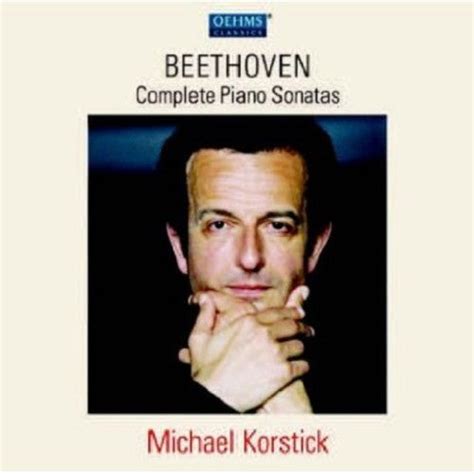
-
Dallas, Austin, Houston, San Antonio, Etc. Jazz & Other Concerts
kh1958 replied to kh1958's topic in Live Shows & Festivals
May 17, 2026: Lucia, Eldorado Ballroom, Houston May 21, 2026: Stockton Helbing, Bank of America Theater, Richardson May 23, 2026: Ken Vandermark, Monk's Jazz Club, Austin May 29, 2026: Shelley Carrol, Scat Jazz, Fort Worth May 30, 2026: Jackie Venson, Beer City Music Hall, Oklahoma City Amina Scott Quartet, Monks Jazz Club, Austin June 2, 2026: Chuck Redd, JazzTX, San Antonio0 June 6, 2026: L Shankar (double violin), Unity Church of the Hills, Austin Abhisek Lahiri (Sarod) & Subrata Bhattacharya (Tabla), Kathak Rhythm Studios, Plano June 7, 2026: Eleonora Strino Duo, Unity of Dallas June 8, 2026: Eleonora Strino Duo, Bates Recital Hall, Austin June 9, 2026: Eleonora Strino Duo, Dianne Benaco Concert Hall, San Antonio June 10, 2026: Eleonora Strino Duo, Bayou Theater, Houston Bill Charlap Trio, Parker Jazz Club, Austin June 11, 2026: Shelley Carrol, Bank of America Theater, Richardson June 12, 2026: Bill Charlap, JazzTX, San Antonio Quamon Fowler, Scat Jazz, Fort Worth June 13, 2026: Bill Charlap Trio, Windmills, The Colony June 17, 2026: Hamilton de Holanda Trio, JazzTX, San Antonio June 19, 2026: Mohini Dey, Windmills, The Colony June 20, 2026: Mohini Dey, Windmills, The Colony Shelley Carrol, Scat Jazz, Fort Worth June 21, 2026: Delvon Lamarr Organ Trio, Lowdown, Tulsa June 25, 2026: Youam Silberstein, JazzTX, San Antonio June 26, 2026: Oz Noy, Windmills, the Colony June 27, 2026: Oz Noy, Windmills, The Colony June 30, 3036: Jason Marsalis, Parker Jazz Club, Austin August 1-2, Satchmo Summerfest, New Orleans August 22, 2026: S. Akash (flute) & Vivek Pandya (tabla)/ Manas Kumar (violin) and Ojas Adhiya (tabla), Unity Church of the Hills, Austin August 27, 2026: Buddy Guy, Majestic Theater, San Antonio August 28, 2026: Buddy Guy, Austin City Limits August 29, 2026: Buddy Guy, Cynthia Woods Mitchell Pavilion, The Woodlands August 30, 2026: Buddy Guy, Majestic Theater, Dallas September 5, 2026: Samara Joy, Afro4 Jazz Band (Nigeria), Riverfront Jazz Festival, Dallas September 20, 2026: The Bad Plus, Lowdown, Tulsa October 10, 2026: Niladri Kumar (sitar), Stafford Center, Houston October 11, 2026: Niladri Kumar (sitar), Austin October 18, L. Shankar (violin), Selvaganesh Vinayakram, Swaminathan, Amit Kaythekar (percussion), Matchbox4, Houston -
Victor Campbell, Live at the 2026 New Orleans Jazz and Heritage Festival (Munck Music)
-
I really need more coffee. . . but I’ll be having some out later. . . so I have decided to have a jolt of Rusty instead. Rusty Bryant “Legends of Acid Jazz, Vol. 2” Prestige cd with Bill Mason, Leon Spencer, Wilbert Longmire, Idris Muhammad, Jimmy Ponder, Ernest Reed, Buddy Caldwell
-
https://i.postimg.cc/K8VSzBf3/IMG-3296.jpg
-
Thanks for the thread. Unfortunately, I have nothing helpful to add. But it is a nice coincidence, since I was just thinking of Jenkins a couple of weeks ago when I realized I don't have Jazz Eyes, so listened to it online. Looking around, I came across an earlier thread on his discography, most of which was repeated above. As pointed out, all his recordings except for the 1990 Clifford Jordan big band date were in 1957. What a year for him! I always enjoyed the Jenkins, Jordan, and Timmons album, so I gave it another spin. Based on the comments above, I listened again to the album with Kenny Burrell, and it's also a nice one. Edit: The Mobley album with Jenkins never stood out to me among the 50s Mosaic albums, so I didn't listen to it much, but I was much younger then. I'll have to give it another chance!
-
Jackie
-
What Classical Music Are You Listening To?
Chuck Nessa replied to StarThrower's topic in Classical Discussion
-
-
From the german MCA Coral reissue series Jazz Lab (Vol 1 to 20) MCA Coral PCO 7351 - Jazz Lab Vol. 15 Mat Mathews Quintet & Quartet feat. Herby Mann
-
From the german MCA Coral reissue series Jazz Lab (Vol 1 to 20) MCA Coral PCO 7346 - Jazz Lab Vol. 13 - "Jazztime USA" - rec. 1953
-
-
 A timely reminder ... In fact, only yesterday I spun the "Honky Tonk" version by Ernie Fields on his "in The Mood" album on London/Rendezvous. Just one of many cover versions ... (I've had another one for about as long as I've been buying records - one by Sandy Nelson on the only LP of his that I own There must be covers by almost any instrumental band in activity in the 1956-65 era, I guess. ) As for the question if "this was jazz", IMHO it can be filed under either jazz or R&B or (Fifties) Rock'n'Roll with equal justification - it all is a matter of the open-mindedness of the listener's approach to the music. It just depends on to what degree you accept and remember that jazz played to live audiences MAINTAINED a dancing function even while modern jazz generally set the tone in jazz (but did not advance into every corner of the actually existing real-life jazz scene ) - and to what degree you are aware that there was much more to R'n'R than rockabillies at the one end, white teen boys at the other and black doo-wops maybe in between. For the record, my Bill Doggett albums (not that many, a handful on King and one on Columbia) are filed in the Blues/R&B section on my shelves. Middle ground? Maybe ... As for how the tune came into being, I re-read the tale of its gestation in "Jazz With A Beat" now and will study your writeup on AAJ more closely. But this probably is a case of a "good story" becoming part of what people after a while are inclined to consider the truth (one of several, depending on one's preferences or sources or on which one has been told most often ;)). And I guess while reading the printout of your text I'll spin "Honky Tonk Number Three" from the "Everybody Dance the Honky Tonk" album on King. So thanks for getting this story out there!
 -
Seventy years ago this summer, a group of jazz men made a record that became the genre’s first million-seller. The group was the Bill Doggett Combo, and the track was “Honky Tonk, Parts 1 & 2.” It sold 4 million copies worldwide and went to #2 (Pop) and #1 (R&B). While Bill Doggett always said that the group spontaneously created the song on a bandstand in Lima, Ohio, the full story is perhaps a bit more nuanced and deserving of a full airing. Let’s get the question of “Yes, but was it jazz?” out of the way. First, as writer Tad Richards argued in Jazz with a Beat: Small Group Swing 1940-1960 (2024), many musicians coming from a jazz background were recording “R&B” from the 1940s until Soul Jazz became the dominant subgenre with commercial appeal. And the jazz bona fides of these musicians cannot be disputed. Leader Doggett was a pianist and arranger for Lucky Millinder, Music Director for Ella Fitzgerald, and arranged the first recording of Thelonious Monk’s “Round Midnight” for Cootie Williams in 1944. After several years with Louis Jordan, he set out on his own, forming an organ trio and recording for King Records. The similarity between Doggett’s sound and that of Wild Bill Davis led Doggett to hire a tenor saxophonist named Percy France, making his group one of the first of the organ + tenor combos. The group found success and toured and recorded steadily from 1952 onward. France left in early 1956, despairing that the group would ever attain the success he felt it deserved. “Honky Tonk, Parts 1 & 2” was recorded six months later and featured his replacement, Clifford Scott. Scott had two runs with Lionel Hampton starting at the age of 20, before he joined Doggett in late 1955. Billy Butler was a guitarist with a great affinity for Charlie Christian and recorded with Dizzy Gillespie, Eddie “Lockjaw” Davis, Johnny Hodges and many other jazz men, in addition to his busy schedule with blues and R&B musicians. Drummer Berisford “Shep” Shepherd was a childhood friend of Doggett’s, whose earliest gigs in New York City were with Benny Carter and Artie Shaw. The group itself released A Tribute to Ellington the year after “Honky Tonk” became one of the biggest hits of 1956. Just how did “Honky Tonk” come to be? In a 1992 broadcast on the cable channel BET On Jazz, Doggett told the story to host Ramsey Lewis: “We were playing in Lima, Ohio on February the 19th, 1956, on a Sunday, playing a one-nighter. And we got in town early, so the guys went by the restaurant and stop by the beer joint, had a couple of tastes so they were feeling pretty good, and we started playing the dance and we’d been playing about an hour and all of a sudden Billy Butler, our guitarist, started playing this opening introduction that you hear on Honky Tonk. So, by the time he played about four or five bars, people started to dance. He played the first chorus and then we found out that he was going to be playing a blues. I (came) up in Philadelphia and I've been used to shuffle rhythm. I played five years with Louis Jordan (and) that's all we played was the shuffle. So, when he played this particular introduction then I started playing the shuffle and then after we did the first chorus and Billy played three more choruses which was the format in the band. Then Scotty (Clifford Scott) came in and played, and he was our Texas influence, he was the blues influence in the band. So, after we played it about three minutes, then Scotty looked over at me and said, “Do you want some of this?” and I say “No, this is good enough like it is,” and then we went into the last two choruses. Later on that night somebody came across the floor and said, “Hey Bill, play that song that y'all played about three or four songs ago.” And I said, “Which one?” I named quite a few because we'd recorded with King Records and he said “No, not those, play the one where the guitar player starts it off.” So, I said, “Well Billy, can you do it again? He said, “Yeah, I can do it again.” And the strange thing about it is, we played it exactly the same way. Because you know, a musician don't play things the same way twice. Not in the same night. You know, you experiment with it. But we played it the same way. And it got that wonderful reaction. And we played it about three or four times that night. So, I said, well I'm going to give this thing a name. So, I said, well it sounded like some of those old honky-tonk joints we used to play when we went down south on those one-nighters, you know with the spittoon and sawdust on the floor. So, that's how the name came. The name, the tune and everything all came at once.” Doggett expanded on the story in an interview with Phil Schaap on WKCR-FM on February 18, 1991: “So now we're on our way back home. We stop off at Little Rock. So that's when I call Syd Nathan and I say,“Hey Syd, I'd like to record a two-part song.” He says, “Two parts? Man, that's unheard of.” Because at that time there were only 50 places on the jukeboxes. So, he said, “Man, if you record a two-sided song, you're taking up two spots on the jukebox.” He said, “The jukebox operators aren't gonna go for that. If it don't hit, you're in trouble.” We stop off in Cleveland at a place called the Loop Lounge. And we play this tune, and the people go wild over it. So I say, well, ladies and gentlemen, we're on our way to New York, and we're going to record this particular tune, so be on the lookout for it. So there's a record shop in Cleveland, one of the biggest ones at that particular time; it was called Record Rendezvous. So they hear about this record, people going into the stores and saying, look man, we want that record of Bill Doggett’s, called Honky Tonk. So, he gets 150 requests for the tune after I make the announcement at the club that night. So, he calls down to Cincinnati. He says, “Hey, Syd, send me up so many boxes of that new record of Bill Doggett that's called Honky Tonk.” He said, “Honky Tonk? Bill don't have a record of it.” He said, yes, he did, because he played it in Cleveland. And I've had 150 people come in here asking for it. So we came into New York and went to Beltone Studios on 33rd Street, and we recorded Honky Tonk.” The recording took place on June 16, 1956, and because the song was a group effort, the composer’s credit went to B. Doggett, S. Shepherd, C. Scott, and B. Butler. According to Doggett, within two weeks King Records was pressing 100,000 copies every week, and on December 15, Doggett received his first royalty check, for $50,000 ($600,000 in 2026 dollars). Forty years later, drummer Shep Shepherd told an interviewer that royalties from Honky Tonk regularly covered his monthly phone bill. A remarkable tale of kismet, but is it all true? Other bandmates have told tales that are in some ways quite different and worth considering. John Broven's sleeve notes for the CD Honky Tonk! (Ace 761) told a slightly different story both in the playing and the recording: "Honky Tonk" was conceived by Clifford Scott and Billy Butler (who played guitar in Doggett's combo) in an informal hotel room jam session before a dance in Lima, Ohio. That night, on stage and without rehearsal, Butler told Bill Doggett and drummer Shep Shepherd to "just play a shuffle," and when they got through, the people started to applaud. They wouldn't get off the dance floor, they just continued to stand there and applaud "more, more, more...” So they did it again, played some other tunes and had an intermission, and when they came back the audience started yelling "We wanna hear that tune!" And they didn't even have a name for it. When the band got back to New York, they set up a recording session with a studio down on 31st Street. The engineer turned the machine on, he goes out to take a smoke - he wasn't regulating the controls, he wasn't doing anything - and Doggett's band went on and just played. When they started to stop, he said "Keep it up!", which they did, and that's how it became a two-sided record. And Shep Shepherd told an entirely different tale in a National Association of Music Merchants interview recorded June 13, 2008: “One rehearsal we were supposed to have and Doggett was coming with a whole lot of music, arm full of music. And the guys were just jamming and Billy Butler on the guitar said, “Look here, man, here's how my uncle did it down on the back porch down home.” And Clifford Scott and his agile mind (started playing) and I put a little backbeat on it, you know. And Doggett came and said, “Break that up. We've got to rehearse. We've got to fly out of here and make a recording down in Cincinnati and come back and make the gig.” So, we never touched it again. But in Cincinnati, all that music was recorded, and the person in the booth said, “We need one more number.” Doggett said, “What about that thing you guys were jamming on when I came in, that honky-tonk type number?” So, we went into it. And the guy in the booth said, “Keep on going, keep on going, keep on going.” So, we just kept on doing it. Weeks later, there's Honky Tonk on the market, Part one and Part Two. He'd faded it out in the middle and brought it back in and made Part Two out of it. Each of us became co-writers on Honky Tonk and Honky Tonk swept the country.” Finally, the story of “Honky Tonk” is not complete without the recollection of Doggett’s first tenor saxophonist, Percy France. Doggett was interviewed by Phil Schaap for the WKCR-FM Percy France Memorial broadcast on January 11, 1992 (France died on January 4, 1992 after being hit by a car in his native New York City): “Percy France was the young man that really turned me and my group around, because I had started recording with King with a trio. And when I heard the music that I had recorded with King on a playback, Wild Bill Davis and I sounded so much alike, so I thought I’d add a saxophone. I would place Percy France’s sound more in the realm of a Don Byas. You know, some of the guys at that time were doing a lot of honking. And I think that that was the difference in Percy’s sound. And Percy being a young man, you would think that he would follow in that tradition. But he was following in the tradition of the more elite players.” France recorded and toured with Doggett from 1952 through 1955, helping to establish the Doggett Combo in the burgeoning R&B field. But he later told friends that he didn’t feel the band was getting the acclaim it deserved and chose to leave. Six months after his last recording session with the group, “Honky Tonk” was laid down, with Clifford Scott playing tenor. But according to France, the group was playing “Honky Tonk” while he was in the band. When France returned to active performing in the late 1970s, he often made “Honky Tonk” his set closer, or if appearing as a sideman, it was his feature. One of his groups was Honky Tonk Part 3. Phil Schaap told me that he believed France when he said that Honky Tonk first took shape while he was in the band, and he also sometimes bent the truth a bit, implying that it was France’s tenor sax on the King recording when introducing the tune on WKCR broadcasts from the West End. So where does the truth lie? It’s certainly possible that France’s story is borne of resentment for having missed out on the biggest hit of Doggett’s career. Clifford Scott recorded over a dozen singles for King Records after Honky Tonk took off, recorded two albums of similar music for World Pacific, and recorded as a leader and sideman on Pacific Jazz after that, while France’s discography in that era consisted of sideman appearances on Blue Note (Jimmy Smith’s Home Cookin’ and Freddie Roach’s Down to Earth), and on Sir Charles Thompson & The Swing Organ (Columbia). On the other hand, guitarists are well known for inventing and reworking riffs. It’s hardly impossible that Butler played the opening guitar lick more than once before the legendary gig in Lima, Ohio. Perhaps France played on those earliest performances of what became Honky Tonk, but it was Clifford Scott’s tenor sax that was the “secret sauce” that made it such a hit with the dancers on that night in February 1956. Shep Shepherd said this about the saxophonists in the Doggett group: “Clifford was one of the most exciting (tenor players) and (knew) what people liked and gave it to them. A lot of the other guys were very good, but they were playing for themselves as (artists). I describe it that way because each of them had their own thing. But Scotty was profound enough and experienced enough to give those people what they wanted. He could play a lot more notes than that, but that's what he chose to do and that's what they went for and that's what he kept doing.” Doggett’s tale of an Immaculate Musical Conception always seemed a little too perfect. I’ll let Tad Richards have the last word: “It’s such a good story that it probably can’t be completely true, but as The Man Who Shot Liberty Valance put it, when the legend becomes truth, print the legend.” And seventy years ago, Bill Doggett, Clifford Scott, Billy Butler and Berisford “Shep” Shepherd became legends with “Honky Tonk, Parts 1 & 2.” https://www.allaboutjazz.com/honky-tonk-at-seventy-bill-doggett
-
After some mono listening, this beautiful sounding stereo cd, Adullah Ibrahim “The Balance” on Gearbox.