_forumlogo.png.a607ef20a6e0c299ab2aa6443aa1f32e.png)

Chuck Nessa
-
Posts
28,830 -
Joined
Content Type
Profiles
Forums
Events
Blogs
Everything posted by Chuck Nessa
-
Sorry to hear this.
-
He's on Facebook.
-

What Classical Music Are You Listening To?
Chuck Nessa replied to StarThrower's topic in Classical Discussion
I have that lp since the late '60s. -
I used to have that lp, but relinquished it in a vinyl purge. As far as I know only Chronochomie has been reissued.
-
What Classical Music Are You Listening To?
Chuck Nessa replied to StarThrower's topic in Classical Discussion
Recently discovered my favorite Ives Sonata #1 was reissued here: -
July 24 reissues at CDJapan - Flying Dutchman, etc.
Chuck Nessa replied to felser's topic in Re-issues
Time predated Mainstream. -
If you are intrigued you should search for recordings by Ronald Smith or this one:
-
What rock music are you listening to? Non-Jazz, Non-Classical.
Chuck Nessa replied to EKE BBB's topic in Miscellaneous Music
Fritz Kasten (drums and alto sax) was a college friend and was a groomsman in our wedding. -
What rock music are you listening to? Non-Jazz, Non-Classical.
Chuck Nessa replied to EKE BBB's topic in Miscellaneous Music
-
Sigh.
-
I was at that gig. Didn't know it was issued.
-
-
I have about 10 cartons of these magazines and am trying to decide what to do with them. Not necessarily a complete run, but many pounds of paper. I hate the idea of recycling them but..........
-
Missing an old friend.
-
No, that was Leo Kottke's mom.
-
What Classical Music Are You Listening To?
Chuck Nessa replied to StarThrower's topic in Classical Discussion
Yes those are the recordings I mentioned. IIRC, the original Ensayo issue was a 2 lp set and we only issued 1 disc. -
What Classical Music Are You Listening To?
Chuck Nessa replied to StarThrower's topic in Classical Discussion
I am enjoying your posts about this set. I haven't had the time to delve into the box but remember some of the recordings from lps. While working at HNH we issued a wonderful disc of Boccherini Quintets - I should search for a reissue of that. -
Stan Getz Quartet at the Village Gate November 26th, 1961
Chuck Nessa replied to soulpope's topic in New Releases
Notes and lines. -
Peter Cherches? He was posting on FB today.
-
Stan Getz Quartet at the Village Gate November 26th, 1961
Chuck Nessa replied to soulpope's topic in New Releases
The mix drove me to stop listening halfway through the first disc. Sax and piano on the left and bass and drums on the right. Everyone seemed near the top of their game. I think they should have done a fold down. -
Rene Thomas.
-
What's the earliest recorded stereo release in your collection
Chuck Nessa replied to medjuck's topic in Audio Talk
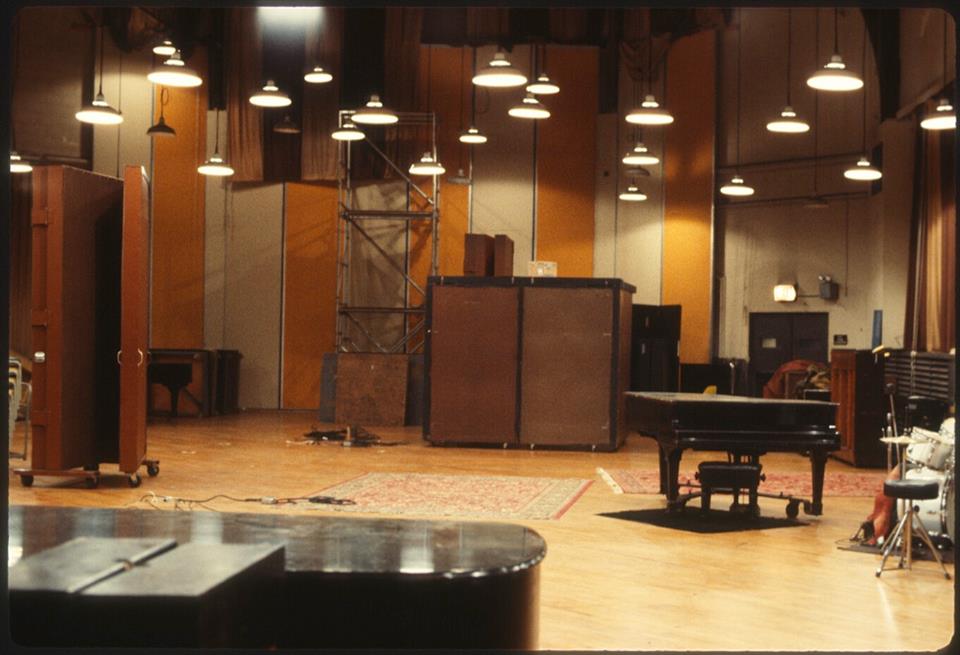
I have a number of RCA classical recordings from the '50s. From Wiki: On October 6, 1953, RCA Victor held experimental stereophonic sessions in New York City's Manhattan Center with Leopold Stokowski conducting a group of New York City musicians in performances of George Enescu's Roumanian Rhapsody No. 1 and the waltz from Tchaikovsky's opera Eugene Onegin. There were additional stereo tests in December, again in the Manhattan Center, this time with Pierre Monteux conducting members of the Boston Symphony Orchestra. In February 1954, RCA Victor made its first commercial stereophonic recordings, taping the Boston Symphony Orchestra, conducted by Charles Münch, in a performance of The Damnation of Faust by Hector Berlioz. This began a practice of simultaneously recording orchestras with both stereophonic and monaural equipment. Other early stereo recordings were made by Toscanini (never officially issued) and Guido Cantelli respectively, with the NBC Symphony Orchestra; the Boston Pops Orchestra under Arthur Fiedler; and the Chicago Symphony Orchestra under Fritz Reiner. Initially, RCA used RT-21 quarter-inch tape recorders (which ran at 30 inches per second), wired to mono mixers, with Neumann U-47 cardioid and M-49/50 omnidirectional microphones. Then they switched to an Ampex 300-3 one-half inch machine, running at 15 inches per second (which was later increased to 30 inches per second). These recordings were initially issued in 1955 on special stereophonic reel-to-reel tapes and then, beginning in 1958, on vinyl LPs with the "Living Stereo" logo. RCA has continued to reissue many of these recordings on CD.[16] Another 1953 project for RCA was converting the acoustically superior building Webster Hall into its main East Coast recording studio. RCA operated this studio venue from 1953 to 1968. -
What's the earliest recorded stereo release in your collection
Chuck Nessa replied to medjuck's topic in Audio Talk
Jetty Valburn's Everybody's label - EV 3005. Duke Ellington. Reflections in Ellington: The 1932 Band in True Stereo. -
-
Keep what you have and smile. The current reissue of the Budapests are better - https://smile.amazon.com/Budapest-String-Quartet-Complete-Beethoven/dp/B0776K6TTN/ref=sr_1_1?crid=183JZLNA3HIDP&keywords=budapest+quartet+beethoven&qid=1565228441&s=music&sprefix=budapest%2Cpopular%2C162&sr=1-1