_forumlogo.png.a607ef20a6e0c299ab2aa6443aa1f32e.png)


hopkins
-
Posts
412 -
Joined
-
Last visited
Content Type
Profiles
Forums
Events
Blogs
Everything posted by hopkins
-
-
Have you checked out this World Broadcasting series - available on CD in 5 volumes ? https://archive.org/details/cd_duke-ellington-and-his-orchestra-volume-1_duke-ellington-his-orchestra https://archive.org/details/cd_duke-ellington-and-his-orchestra-volume-3_duke-ellington-his-orchestra https://archive.org/details/cd_duke-ellington-and-his-orchestra-volume-4_duke-ellington-his-orchestra https://archive.org/details/cd_duke-ellington-and-his-orchestra-volume-5_duke-ellington-his-orchestra (volume 2 is not on the Internet Archive site) EDIT: my mistake, you mention 47-52, and these are from 1943 and 1945...
-
Yes, she is a fine singer, and does seem genuine. I really enjoyed watching here in the remake of that Judy Garland movie. But not my style of singing when it comes to "Cheek to Cheek"... Her national anthem during the inauguration was nice - but then again everything that day was glorious. Back to Tony.
-
I have a lot of respect for Bennett, and am sad to hear all this. I don't understand however, why he chose to collaborate with Lady Gaga, whose is really not much of a jazz singer, IMO. But it does not change his legacy. It just feels to me like he was taken advantage of.
-
I found that out with my mother, who would hardly speak but would sing along when I played Sinatra's early hits (those she grew up with listening to the radio in the 40s).
-
The wax sessions were poorly recorded and the Storyville CD probably is probably as good as it will get. Here's one track from the CD quoted above (should play by clicking on the link in your browser): https://storage.googleapis.com/cloudplayer/samples/22%20You're%20Driving%20Me%20Crazy.flac You're Driving me Crazy - Johnny Hodges, Jimmy Jones, Billy Taylor You can listen to samples of all the CD here, and read the liner notes by Dan Morgenstern: https://archive.org/details/cd_the-wax-label-sessions_various-artists-al-hall-ben-webster-denzil
-
While I and am curious to "hear" everything by those artists I appreciate most, I am not necessarily interested in owning everything, not simply out of concern for space or cost, but because of redundancy (ex: Duke Ellington's 25 volumes of DETS broadcasts contain a lot of similar material) and some lesser interesting items (even with Ellington). The risk, of course, is missing out on some hidden "gems" if you can't find a way to listen online or otherwise without pulling the trigger and purchasing. I assume this is what drives "completists" - finding those hidden gems (and leaving no stone unturned).
-
I recieved the World Transcriptions Vol 1 LP and it is great. Will take a picture of the liner notes by Eddie Lambert - he is more eloquent than I am. "Stomp Caprice" is a fine Strayhorn composition that was never recorded again, it seems, and features Ellington's piano prominently. Nice version of "Pitter.." (duo with Raglin on bass), and much more... Definitely worthwhile getting these recordings.
-
Here is a good piece by Whitney Balliett on Art Hodes (from the New Yorker archives), which I read last night and got me interested in listening to his albums again: https://storage.googleapis.com/cloudplayer/PDF/Art%20Hodes%20Mar%2030%2C%201981.pdf There are a series of videos titled "Jazz Alley" available on DVD, parts of which are available on YouTube. Here are a few (you can search for "Art Hodes Jazz Alley" to find more):
-
I consult JDISC on occasion. I think it is the best online database available. It is very well structured. But the data itself does not seem to have expanded much over the past few years, however. Is this still being funded ?
-
 As mentioned above, I have the 3 volume Commodore set, with the booklets, but would also be interested in having a PDF version. I send a PM to RTM (no answer yet). If the person who forwarded it to him would be kind enough to send it to me as well, I would be grateful.
 -
I bought cleaning gel: https://www.winylcleaner.com/en/Winyl-Gel/ Anyone else use this? I found it works well, but am having trouble peeling it off without leaving small bits of film on the record, especially the edges. Perhaps using a piece of plastic sheet cut-out to cover the rim of the records could be useful.
-
There's the Chronological Classics 1942-1944 which contains a number of studio recordings: https://www.discogs.com/Duke-Ellington-And-His-Orchestra-1942-1944/release/11083875 The Chronological Classics does not include all recordings on November 8, 9 & December 1, 1943... The full list of songs recorded on the two November dates are available on this LP: https://www.discogs.com/Duke-Ellington-And-His-Orchestra-Volume-1-1943/release/13897041. Check this one as well for the December date: https://www.discogs.com/Duke-Ellington-The-Transcription-Years-Volume-1/release/8232409 I have not listened to the full sets. Here is what Eddie Lambert has to say about these sessions (from "A Listener's Guide" - he also wrote the liner notes to one of the above LPs): "The only studio sessions by the Ellington Orchestra during 1943 inaugurated their series for World Transcriptions. Like the earlier Standard and later Capitol Transcriptions, these have excellent sound quality. A number of them were issued on LP. The first sessions for World were on November 8 and 9, 1943. On the first, the trumpets were temporarily down to three-Jones, Stewart and Jordan-while bassist Wilson Myers subbed for Raglin. On the second, Nance and Baker returned to make the trumpets five, and Raglin was back in place of Myers." "The established Ellington repertoire recorded on these dates included C Jam Blues; Mood Indigo (with Carney playing the clarinet part); Rockin' In Rhythm (an exciting reading of the score with Carney taking over Bigard's part here too, as he had done on the Carnegie Hall performance); another excellent version of Boy Meets Horn (the one issued on VDisc); Do Nothin' Til You Hear From Me (the pop version of Concerto For Cootie featuring Hibbler and Brown); Sentimental Lady; Main Stem (the excellent version used on VDisc); A Slip Of The Lip; Things Ain't What They Used To Be (another excellent performance also found on V-Disc) and Caravan." "New numbers included three vocal features for Roche on I Wonder Why, Go Away Blues, and I Don't Want Anybody At All, while Hibbler is heard in Gershwin's Summertime. Johnny Hodges is featured in Hop, Skip and Jump (another V-Disc issue), a score later slightly modified and retitled Rockabye River. Baby Please Stop And Think About Me is a new Ellington song in a nonvocal version featuring Nance and Hamilton, as well as a rather conventional tenor solo by Skippy Williams. Three Cent Stomp (a number on the Stompy Jones chords written to celebrate the controversial issue of a three-cent stamp) remained in the book for a number of years; this initial version featured Baker, Nanton, Nance, Raglin, Stewart, and Williams. During the brief absence of Stewart in mid-1943, Jordan, a former star of the Chick Webb band, had been brought into the Ellington Orchestra, and he was retained on Stewart's return. He is featured on Tea For Two from the series of "Variations On Themes," which presented leading Ellington soloists on standard material. Another one of these, Ain't Misbehavin' featuring Baker, was also recorded at this session. (Other "Variations On Themes," apparently arranged by Mary Lou Williams, were showcases for Hamilton on Honeysuckle Rose, Brown on Somebody Loves Me, and Baker again, on Stardust.) The World Transcription recording of Tea For Two is an admirable setting for Jordan's playing, displaying his sprightly phrasing and powerful swing, while Baker's more mellow trumpet style is poised and restrained on Ain't Misbehavin'. Also recorded at the November 8 session was another arrangement by Mary Lou Williams destined to become famous. The score is based on Irving Berlin's Blue Skies and features Jordan, Brown, Williams, Stewart, Hodges, and Hamilton. Later it became a feature for the trumpet section under the title of Trumpet No End and as such was a regular showstopper at Ellington concerts." "A further session for World Transcriptions took place on December 1, 1943, and again mixed previously recorded Ellingtonia and new material. Fresh versions were cut of It Don't Mean A Thing (with vocal duet by Nance and Jordan); Johnny Come Lately; Creole Love Call (the version issued on V-Disc, with, unusually, Baker taking the growl solo and Carney both the clarinet choruses); Jack The Bear; Harlem Airshaft (a particularly fine version); and Ring Dem Bells (still in the 1930 arrangement). In addition there was a superb new Rose Room, based on the 1933 arrangement and featuring Hamilton, Brown, and Hodges. Two more of the "Variations On Themes" were recorded at this date-Hamilton's Honeysuckle Rose and Brown's Somebody Loves Me. A second showcase for Jordan, Chopsticks, is another enjoyable score-simple, swinging music which also features Ellington's piano and reminds us that as well as producing concert works Duke could always turn his hand to creating elemental jazz performances of incomparable quality."
-
Here's another good one - Soft Lights and Bobby Hackett: https://www.discogs.com/Bobby-Hackett-Soft-Lights-And-Bobby-Hackett/release/5917829
-
Some of the booklets are available on MusicBrainz but unfortunately not this one. The Internet Archive is a good source as well, but no luck there either, as only volume 2 is available: https://archive.org/details/lp_the-complete-commodore-jazz-recordings-vol_various-albert-ammons-albert-ammons-rhythm I just purchased the three volumes. I cannot scan the booklet but can take pictures and send them to you if that's ok. Will try tomorrow and PM you.
-
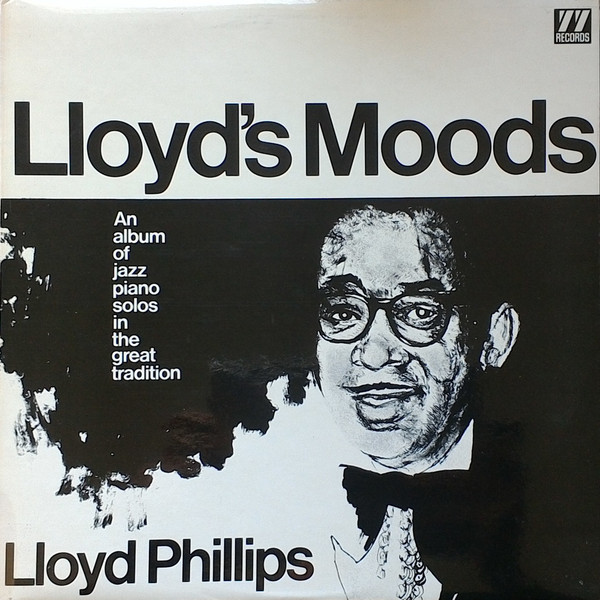
A very nice album never issued on CD. https://www.discogs.com/Lloyd-Phillips-Lloyds-Moods/release/904777
-
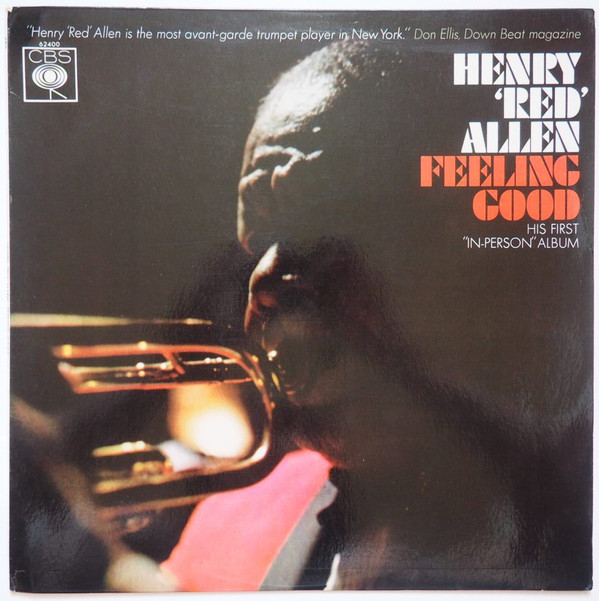
Ripped this and uploaded it to YouTube Excellent version of Perdido as well on that album, which is only available on this original LP. Great stuff. https://www.discogs.com/Eddie-Durham-Eddie-Durham/release/8417771
-
Johnny Hodges interviews
hopkins replied to jazzkrow's topic in Jazz In Print - Periodicals, Books, Newspapers, etc...
I read it recently. I cannot say I really learned much from it. It goes over some periods very quickly, and there are some lengthy tangents which are not always directly related to Hodges. Ex: a chapter entitled "The Blues" contains a long exposé on W.C.Handy, and then a few pages on Hodge's collaboration with Wild Bill Davis. There are some interesting quotes from contemporaries, but I assume you could find most of them elsewhere. Here is an interview with the author: http://jerryjazzmusician.com/2020/01/interview-with-con-chapman-author-of-rabbits-blues-the-life-and-music-of-johnny-hodges/ -
Depends on the bit rate (compression level) of the file. Typically, an mp3 file with a bit rate of 128 kbps (kilo bytes per second) will take up 60 megabytes per hour of music. Higher bit rates (less compression) will take more space.
-
Up To Date With Earl Hines https://link.tospotify.com/ZhcU09nyGbb Contains two sessions, one recorded on Nov. 5th 1964 with Budd Johnson, the other the next day with Ray Nance. Relaxed, swinging, and inventive playing from Hines and his colleagues.
-
I thought mjzee was asking about something you could use outside your home (and providing access to your music stored on a computer at home).
-
There are several ways to go about this. One option is to set up your own "cloud storage", using for example Nextcloud (https://nextcloud.com/athome/) or OwnCloud (https://owncloud.com/), which are both free for single users. There are music applications available for both: https://github.com/owncloud/music or https://github.com/Rello/audioplayer. It seems that you can also connect some iOS or Android apps with nextcloud or owncloud, for example CloudBeats: https://www.cloudbeatsapp.com/ I am sure there are plenty of tutorials available on line to help setting these up. I came to the conclusion that it is not worth the hassle and am fine with playing music on my phone from Spotify, without access to my own files.
-
Is there a complete discography on of the Prestige catalog?
hopkins replied to Hardbopjazz's topic in Discography
There's also Tad Richard's "Listening to Prestige" series http://opusforty.blogspot.com/ -
Youtube Music is the replacement for Google Play Music. You can import your albums from one service to the other, though I have not checked if that is still possible now. You can also upload your own music as you could with Google Play Music. https://support.google.com/youtubemusic/thread/52908732?hl=en I don't like the YouTube user interface, and anyway I had made the switch to Spotify a long time ago. With Spotify you can play your own music "locally" which is fine at home, but you cannot access it outside of your home network. In my living room I play my own albums (mostly CDs ripped to a hard drive) or LPs (I only buy those when I cannot find a CD version).
-
I contacted George Schuller thanks to the info provided above and he was kind enough to inform me of a new site which has been set up to collect information on Gunther Schuller's works: https://guntherschullersociety.org/