_forumlogo.png.a607ef20a6e0c299ab2aa6443aa1f32e.png)


Big Beat Steve
-
Posts
7,153 -
Joined
-
Last visited
Content Type
Profiles
Forums
Events
Blogs
Everything posted by Big Beat Steve
-
Very sorry to hear this. I really liked his posts. RIP and my sincere condolences to his family.
-
Like TTK, I've haphazardly picked up quite a bit of JATP and NGJS vinyls through the years but what I have is far from complete, except for the Verve 10-CD box set with the 1944-49 JATP recordings (which I pull out relatively often). But one I like in a special way is the 1952 session that yielded the "Jam Session #1" and "#2" LPs. One major reason for this is that when I listen to them I take time out to browse through this magnum opus - "Charlie Parker" by Esther Bubley: https://www.estherbubley.com/books_frame_set.htm https://www.amazon.com/Charlie-Parker-Esther-Bubley/dp/2850182230 An entire book filed with pics from that recording session (as well as background stories) and featuring all the participants (not just Bird - everyone!) under almost every angle and moment imaginable. A perfect way to really visualize the music and make it come alive ... The book was published by Filipacchi in France in 1995. I bought it during one of my trips to France when it was new and later found out to my surprise that this is no translated version but in fact is a French-only book that never was published anywhere else. Amazing ... (But of course the French are second to none IMO in taking chances in getting even nichiest niche subjects into print and publication)
-
No doubt.
-
Exactly - on both counts: The cover you showed is the one I have too, and an OK dust jacket for "masters of the 70s". But here it would be a turnoff. Just like with many record sleeves, this makes you wonder what the "art"work people were thinking in those stylistically garish 70s. Would it really have been that daring in the publishing business in those 70s to play the retro card at least to some extent in such cases and use a jacket a bit more in tune (literally ) with the contents?
-
This reeks of a flower-power era pressing (that doesn't exactly hint at the contents from a mile away.) My copy (Macmillan 1966) has a much more sober jacket.
-
I like them all pretty much too and have tended to grab them unheard-untried whenever I came across one (with the inevitable result of ending up e.g. with a duplicate of the Vic Dickenson twofer - two UK reissues from two different periods with two totally diferent covers so I did nto realize I already had it - and it took me a long time to shift my duplicate at last) but I differ somewhat in my preferences from those that Jazzbo named. My personal favorites that I tend to pull out most often are Buck Clayton, Sir Charles Thompson, Jimmy Rushing, and Urbie Green. But you cannot go wrong with the "others" either. And tastes differ anyway.
-
I think basically they are. The main differences IMO are that 1) they came onto the Swing scene later than the typical "elder statesmen" of Mainstream jazz (Jacquet/Cobb) or AFTER the Swing era (Davis/Griffin), and 2) overall they were stylistically somewhat more modern than the typical Mainstream musicians, including the younger ones such as Ruby Braff, 3) they had their own thing going in modern jazz and so the jazz scribes probably felt far less need to file them under the "Mainstream" tag of (no doubt) unjustly neglected swing-era jazzmen who still had a lot to say. But stylistic boundaries never were that rigid anyway so it is pointless to categorize excessively.
-
Album covers showing musicians with their children
Big Beat Steve replied to mikeweil's topic in Miscellaneous Music
Yes, you sometimes can only guess if it's the artist's child that is shown on the record cover. Like here ...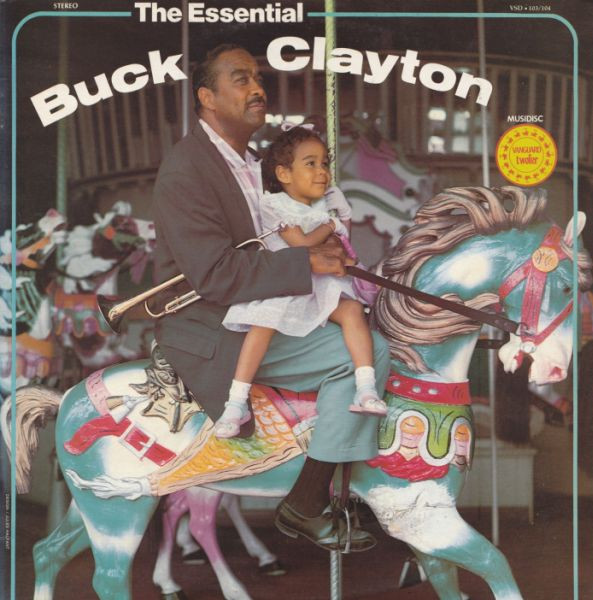
-
I remember another forumist (probably not much younger than you) who once described this same maturing and mellowing process with a dose of self-mockery as follows: "Of course I was so much older then!" BTW, as for "Trad" as a British phenomenon, of ocurse the term "Trad" was very British ("It's Trad, Dad!" ) but I'd venture to say that elsewhere in Europe the domestic oldtime/revival jazz scene had its popularity too, e.g. Sweden and Germany. And in France it not only was popular and had a youth audience (before R'n'R and the "ye-ye" era of the very early 60s really caught on) but also led to a real schism between moldy figs and modernists on the jazz scene - not unlike in the US 10 years or so before. Of course France had Sidney Bechet as the towering master of them all who pulled along an entire gang of bands and their followers. Including various excesses by the "fan scene", such as notoriously unruly behavior by certain elements at concerts of the "opposite" camp and all ...
-
Great Space-Age LPs Hidden in the Jazz Section
Big Beat Steve replied to Teasing the Korean's topic in Miscellaneous Music
Wasn't that Vic Lewis? -
Great Space-Age LPs Hidden in the Jazz Section
Big Beat Steve replied to Teasing the Korean's topic in Miscellaneous Music
More likely to that Celestial Las Vegas Heaven. -
Yes, I'd also say that the term in fact originated in the UK (through Stanley Dance) and spread from there. There was another term for this style of jazz that came up at about the same time in France: "Middle Jazz". Widely used there for a while and very descriptive IMO and amazing in that usually the French are/were loath to adopt English terms on their own but would rather "francise" them. Re- Stanley Dance and the recordings he supervised in 1958/59 for the Felsted label (as discussed almost 20 years ago here), vinyl reissues appeared on the MJR (USA) and Affinity (UK) labels, and more recently (LONG after the 2003 discussion here ) they were reissued in their entirety on a Fresh Sound box set. Some move me more than others but overall I do seem to get more out of them than Larry Kart did in 2003 (particularly the ones by Budd Johnson and Buddy Tate). "But that's just me ..."
-
Great Space-Age LPs Hidden in the Jazz Section
Big Beat Steve replied to Teasing the Korean's topic in Miscellaneous Music
I suppose you want an original or early vinyl repressing of "Adventure in Time"? Because it does exist as a budget/public domain CD reissue in the "Classic Albums" series on AvidJazz. Spurred on by your S-F thread, I got that set for the "Sons of Sauter-Finegan" LP which I had been searching for unsuccessfully on vinyl in the past. A compromise I can live with in the face of the 4 or 5 original S-F LPs I already have. -
Great Space-Age LPs Hidden in the Jazz Section
Big Beat Steve replied to Teasing the Korean's topic in Miscellaneous Music
An interesting thought ... Having read the Kenton chapter and the comments on Graettinger's lifestyle in Ted Gioia's "West Coast Jazz" not long ago, this image came to my mind too when I first read about Graettinger's Kenton recordings in this thread. Another item on the "time to relisten" list, then - though I'd certainly steer clear of THAT "diet" ... BTW, @TTK: Another suggestion trying to expand the Sauter-Finegan legacy: Have you had a listen to this? https://www.discogs.com/de/release/10738993-Eddie-Sauter-In-Germany Not as adventurous as the Sauter-Finegan recordings but he does carry some of it over into what normally would be more conventional big band jazz of the latter 50s. Which makes these fairly special in their time frame. -
Great Space-Age LPs Hidden in the Jazz Section
Big Beat Steve replied to Teasing the Korean's topic in Miscellaneous Music
As for acknowlediging jazz's currency on the world stage (and its share of post-war optimism), I still "stand by" (pun intended ) what I said earlier: Harry Arnold's late 50s big band with a reversal of the roles: not one European plus a U.S. crew throughout but one U.S. man (Quincy Jones supplying the arrangements for some but not all of the outstanding recordings by the band, Arnold and Gösta Theselius contributed many too) or, rather, two (Benny Bailey featured on many Jones charts) plus a crew of the cream of Swedish jazzmen. They were their own men and I find them not at all difficult to relax to in my (Eames) lounge chair. But yes - tastes do differ. -
Great Space-Age LPs Hidden in the Jazz Section
Big Beat Steve replied to Teasing the Korean's topic in Miscellaneous Music
Well, they decided to take the "This Modern World" (Capitol H460) 10" cover art for the 12" release of BOTH of these 10-inchers (Capitol W736). Maybe because the color dots on that cover artwork hint at the rather "far out" notations by Bob Graettinger on his charts of both of these records (wasn't there a thread about these charts somewhere here?). Of course it may be open to debate if the City of Glass cover would't have fitted both just as well on one record. FWIW, seeing the cover again now, I guess I'd grab this City of Glass release just for the cover if the price was right (though I already own both H460 and W736). -
Great Space-Age LPs Hidden in the Jazz Section
Big Beat Steve replied to Teasing the Korean's topic in Miscellaneous Music
Well, Down Beat gave it a five-star review. So it was not only the French ... I listened to it again yesterday and found it quite OK and enjoyable but would certainly not rank it as sky-high as your friends do. I suppose the adulation by your French jazz friends is as much a matter of national pride as of musical merits (in short, a mixed bag, objectively speaking ... ) Legrand was a national hero in musical France so this may explain that but after all he was the only French participating in the Legrand Jazz sessions ... (And for this reason, talking about categories, I'd never think of filing that record in my "Eurojazz" section) For recordings by a foreign bandleader visiting the US aroud that time, actually I like the recordings made under the leadership of André Persiany in the US in 1956/57 better. And in general, if it was a matter of a non-U.S. band leader upsetting the big band world I'd rather give the nods to Harry Arnold from Sweden (the original "Jazztone Mystery Band" to the initiated ... ) As for André Hodeir in the SABP section, ho hum ... some of it is a bit too cerebral for my taste ... -
Great Space-Age LPs Hidden in the Jazz Section
Big Beat Steve replied to Teasing the Korean's topic in Miscellaneous Music
Getting back to this discussion after the night .. In fact last night I had thought of Duane Tatro's "Jazz for Moderns" (not only because of its cover ) as a candidate for this thread but then discarded it as too obvious just for the cover on the one hand and too "far out" on the other. Incorrectly? And then Pete Rugolo crossed my mind - as did Johnny Richards. But I wasn't sure they'd be dismissed as "just Kenton collaborators" and therefore off the radar ... Incorrectly again since I just see that Stan Kenton seems to be part of your space-age section too ...? Difficult indeed to pin down the focus of this thread unless you have comprehensive knowledge of what is out there in that boundary area (which I do not have, but then I seem to search and file artists under "jazz" - undisputedly so by common opinion - that you don't ...). Serves me right for being out of touch with the evolution of the thread due to the time difference ... Anyway ... as for Pete Rugolo, I have "Introducing Pete Rugolo", "Adventures in Rhythm", "An Adventure in Sound - Reeds", "Rugolomania" and "For Hi-Fi Bugs". Must take time to listen to them again more closely when I have some lounge-chair leisure time ... (this is no music for "background listening"). Finally, trying to clarify your broader context for me: I was unable to find your Sauter-Finegan thread on searching briefly but I suppose you'd rank them in your bachelor pad category too? -
Great Space-Age LPs Hidden in the Jazz Section
Big Beat Steve replied to Teasing the Korean's topic in Miscellaneous Music
Ha ... "Percussion" flipped a switch with me ... and another one as I read on and come across Enoch Light and Command. So ... actually ... in that style, how would you rate "Persuasive Percussion" (command RS800 SD) by Terry Snyder and the All Stars (lineup incuding Tony Mottola, Dick Hyman and Jack Lesberg among the more notable jazz names)? I was given it very early in my collecting days (and appreciate it for the Josef Albers cover alone), warmed up to it for occasional relaxed listening "out there" but am not sure I'd expect to find it in the jazz racks (it sits outside the Jazz section in my collection too) As the occasions arose, I later picked up "Provocative Percussion vol. 2" by (nominally by Enoch Light, on Command too) so I won't dwell on it further as you have given your opinion on him - except that I do like the Snyder album a tad better (though the line-ups seem to be fairly interchangeable) but this one is a period document for its Josef Albers cover too. Another one in that vein I have is "Percussion and Guitars" (Time S2000, arrangements by Al Caiola). All space-agey enough for me, in a way. -
Great Space-Age LPs Hidden in the Jazz Section
Big Beat Steve replied to Teasing the Korean's topic in Miscellaneous Music
Re- Legrand Jazz, it is a while simce I've listened to it (BTW - yes, it is the only Michel Legrnad Jazz LP I have ) so I will spin it later today but I would not have considered it "space age bachelor pad" music the way I understand you use this term and "category" (judging by your previous - numerous - references to it). So maybe after listening to it I will understand better what kind of recordings you are typically referring to. At the moment I am somewhat in the dark too ... -
Great Blues LPs in the Jazz Section
Big Beat Steve replied to Rabshakeh's topic in Miscellaneous Music
The only case of chances I may have failed to take in recent years and regret somewhat now was when at a clearout sale by one of the local 2nd hand record stores I wasn't curious enough to grab the two original Frank D'Rone LPs they had (to make matters worse, this was not long after you brought up the name here). But considering what else from a wide field of styles there is out there that I'd like to hear and get my hands on but that won't fit my racks anymore (and that with the best will in the world I'll never be the biggest 50s/60s MOR adult pop vocalist fan ) I'll survive that miss too ... -
Great Blues LPs in the Jazz Section
Big Beat Steve replied to Rabshakeh's topic in Miscellaneous Music
Oh well ... sometimes I wonder if its the fault of the algorithms. I don't buy often on Discogs but seeing what my favorite seller shop has lumped in under "jazz" has made me cringe more than once, and this cannot all be a case of algorithms but rather a matter of how those shop staff who do the listings feel they can get more exposure. Usually a case of lots of easy (or extremely easy) listening dross thrown into the jazz bag ... But I've fast learned how to adjust my search parameters. -
Great Blues LPs in the Jazz Section
Big Beat Steve replied to Rabshakeh's topic in Miscellaneous Music
Who gives a damn? Like Rabshakeh said ... those who have a hunch there might be something out there that would appeal to them in the "blues" field but is consistently filed elsewhere, particularly ("horror of horrors!" ) under "jazz"! Not that this would happen around here, but have you never met anyone who - upon discussing apparently common interests in music and this or artist or recording that you'd consider related and potentially interesting - proclaims "oh, but that's jazz". Meaning "that's too far out for me, regardless of what it actually is - if it is jazz - as it is - I can't be bothered to check it out.". His loss? Sure ... but the kind of artificial pigeonholing that makes discussions and exchanges tiresome. So any discussion that increases awareness of what is BEYOND those standardized categories should be worth exploring and giving a bloody damn about. -
Great Blues LPs in the Jazz Section
Big Beat Steve replied to Rabshakeh's topic in Miscellaneous Music
Yes, but can you imagine anyone filing BB King in the "JAZZ" (and NOT "Blues") section anywhere? Which would be what Rabshakeh's original question referred to, i.e. blues discoveries you would not find under "Blues" but would have to look for in the Jazz section. So IMO BB King's case is settled. Charles Brown? Another of the R&B cases I mentioned earlier as candidates you would have to search for under "Jazz" first. But of course he might be too mellow for some blues fans. @John L: Same for T-Bone Walker. Like BB King, who would NOT file him under "Blues"? -
Great Blues LPs in the Jazz Section
Big Beat Steve replied to Rabshakeh's topic in Miscellaneous Music
As far as your post-WWII recommendations are concerned, you are walking straight into R&B/Jump Blues territory. A classic case of where the boundaries of blues (in its POPULAR 40s form, i.e. R&B) and jazz blur heavily and it's a matter of personal taste where you file what. Example: I do not distinguish between blues (from down-home to electrified) and R&B (rhythm and blues/jump blues/honkers & shouters, etc.) and file all these in one and the same section. So you have Memphis Minnie next to Roy Milton, etc. And all of my Louis Jordan and Buddy Johnson records are racked up there too because most of their recordings that I have would rather tend towards the R&B end of jazz. A personal quirk, maybe, but that's the way it is. Hot Lips Page, OTOH, is in the Swing section because most of his recordings I have clearly are better placed there. Not to mention that there are artists whose recorded opus covers both more straight-ahead blues and R&B-ish recordings, cf. Brownie McGhee and Jimmy McCracklin (and I am certainly not one of those who'd blame those artists for having "sold out" by recording R&B - like many folksies did back in the day). As for what I have observed in record shops (at the time when there was NEW vinyl) and more recently (in secondhand collector record stores) is that most shop staff seem to be very, very unsure of where to file all-out typical post-WWII R&B of, say, 1945 to 1960. I usually found and find these vinyls in the jazz section whereas even in secondhand collector shops classic R&B still is conspicuously absent from the Blues section (the stocks of which often veer between down-home and Chicago-type electrified blues or "white" blues). Maybe this is because most R&B I tend to look out for was reissued on subculture collector labels that rarely seem to find their way into secondhand stores but still the dividing line that seems to exist is baffling ...