_forumlogo.png.a607ef20a6e0c299ab2aa6443aa1f32e.png)


Big Beat Steve
-
Posts
7,155 -
Joined
-
Last visited
Content Type
Profiles
Forums
Events
Blogs
Everything posted by Big Beat Steve
-
Just for the record (literally ): The late 60s/early 70s French BYG reissues of Savoy material were no bootlegs but the REAL DEAL. BYG was the license holder for Savoy masters at that time and thankfully reissued a lot (though sometimes in obscure combinations and often with shoddy cover artwork - but they were there and must have filled a lot of gaps before the arrival of the much more comprehensive twofers and singles in the Arista period of Savoy from the late 70s onwards). (Musidisc incidentally also reissued a number of Savoy records and sessions - apparently after the BYG period, and sometimes with the original Savoy cover artwork, under the Savoy-Musidisc label - licensed from Savoy, according to the fine print on the back cover). The Italian budget LP labels were a differeent matter, and not limited to Savoy.
-
RIP indeed. Given her age, I had figured she had already passed. Her "Sophotocated Lady" book only touched the surface of her photo-documentary treasures. Let's hope her archives will end up with someone who will be prepared to make really good (publishing) use of it. Not like in the unfortunate case of her contemporary colleague (10 years her junior but deceased many years ago), jazz photographer Hanns E.Haehl (whose photographer credits also appeared under the "Jazz im Bild" name for a time in the 60s). His legacy of photo documents unfortunately sits in an archive storage basement without much (or any) hope of ever being worked into a book. They would very much deserve it too.
-
what happened to George Zack? (Chicago barrel-house pianist)
Big Beat Steve replied to romualdo's topic in Artists
Zack isn't included in the 1960 edition of the Encyclopedia of Jazz either. Neither is (to name one pianist of a similar caliber) Tut Soper. (A blank for both in the New Grove Dictionary of Jazz (1994 ed.) too, BTW. ) But it would be a poor jazz world (documentary-wise) if the musicians with an entry in Leonard Feather's Encyclopedia (which I do consult a lot too for jazz data up to c. 1960) would be the only ones (up to that period) worthy of consideration by the historically minded, wouldn't it? John Chilton had a different approach, concentrating on artists born before 1920 (i.e. usually pre-Modern Jazz, with the exception of Dizzy Gillespie and a few others) and (much to his credit) clearly made a point of including as many "unsung heros" from those eras as possible. -
Loretta Lynn, coal miner's daughter and country music icon, dies at 90
Big Beat Steve replied to sonnymax's topic in Artists
It's been quite a long time since I saw that film but one scene that stuck in my memory (because I found it somewhat unsettling) was when Loretta (i.e. Sissy Spacek) in her very young years was introduced to the public on stage by a eerily aged- and weary-looking Ernest Tubb (whose decades of life on the road had become engrained in his face by his later years - as in 1980). It was an impressive scene because Ernest Tubb DID have a huge stage presence but this age mismatch of someone who clearly would have appeared more zestful in the early 60s was painfully obvious. -
what happened to George Zack? (Chicago barrel-house pianist)
Big Beat Steve replied to romualdo's topic in Artists
Noted John Chilton ("Who's Who of Jazz") sez thusly: (abridged - limiting it to his post-1951 activities): Moved to Tucson, AZ, and contined working there during the 1950s and 1960s. In the late 1950s worked briefly with Ray Bauduc and Nappy Lamare and with Bob Scobey. Made regular trips to Chicago. During the 1970s worked in Tucson with Al Sanders and the Old Pueblo jazz Band. Died Arizona, 7 Nov. 1977 (aged 69). So as you can see he saw out many more of his later years than e.g. fellow pianolcoholic Bob Zurke. -
Eddie Costa - The House of Blue Lights
Big Beat Steve replied to Teasing the Korean's topic in Re-issues
After I had discovered Eddie Costa and had obtained several of his records I went on the lookout for the House of Blue Lights LP in the very early 2000s but of course no luck in finding a decent and affordable copy. So after a couple of years I picked up the Lonehill CD (though I already had the Costa-Burke trio LP on Jubilee). I never had been aware of (much less seen) the limited ed. LP reissued by Jazz Workshop/Blue Moon (i.e. Fresh Sound) two years before the Japanese UCCU-6158 CD and 5 years after the Lonehill reissue (reissued in 2005 acc. to Discogs, i.e. 7 years before UCCU-6158). Sound of the Lonehill to me is fine, visual presentation is ho-hum (but many "legit" reissues on CD are not better at all artwork-wise), and by European rules the Lonehill reissue IS legit (by now, anyway). So no qualms or quibbles. As for (re)mastering, considering the apparently huge number of previous vinyl reissues of this record in Japan (acc. to Discogs), who knows which one Lonehill used for "inspiration". -
Pity ... RIP Hope his collection (or should I say "Archives"?) finds an appreciative home and doesn't all end uip with the $$$ auction vultures ...
-
Moon reissued a couple of the earlier Xanadu and Onyx LPs 1-to-1 on CD, even imitating the cover artwork. I had one or two but don't have them anymore (found the corresponding LPs so stuck with my vinyls).
-
Leonard Feather Presents: A Battle Of Jazz
Big Beat Steve replied to Rabshakeh's topic in Miscellaneous Music
You are referring to that "Tiger Rag" played by Bird? I have it on Musidisc 30JA5108 ("Charlie Parker - Live Sessions 1947") and according to the back cover this was recorded on 20 Sept. 1947 (though the session info on these Musidisc budget LPs of the 70s aren't always totally reliable). It has been reissued on numerous other LPs. See the Discogs entry: https://www.discogs.com/de/release/2305342-Charlie-Parker-Live-Sessions-1947 The announcer's blurb at the end of the tune and prior to the closing theme mentions the musical "battle" between The Rudi Blesh All stars and Barry Ulanov Modern Jazz All Stars recorded in the New York Mutual studios for the "Bands for Bonds" broadcast series. And at the end of the Tiger Rag track there is an audible comment (by one of the musicians - Dizzy Gillespie?): "We sure took that tiger out of the jungle of Jazz!" P.S.Never mind the "Thanks" (or not). That was not what I was after at all (regardless of by whom). I was just puzzled that the specfic reply to a specific question about a reissue did not lead to any follow-up comment of any sort. -
Leonard Feather Presents: A Battle Of Jazz
Big Beat Steve replied to Rabshakeh's topic in Miscellaneous Music
You know I certainly wouldn't have wanted to solicit a "Thanks" but I am somewhat puzzled by that TOTAL silence. Ho hum ... Regarding the Ulanov radio show you mentioned, IIRC this was a good-natured match between modernist Ulanov and moldy fig Rudy Blesh, including that "Tiger Rag" played by Bird and other boppers on an episode of the "Bands for Bonds" radio show series. It's been out on a Musidisc LP and therefore no doubt elsewhere. Now as for Dixielanders getting mad if a modernist does that gimmick, well, yes ... musical awareness may sometimes have been lacking. But let's see if OTOH modernists can take their OWN music lightheartedly enough to enjoy THIS ... - without quibbling about "missed" harmonies or chord sequences or whatever ... https://www.discogs.com/de/release/2407757-Anachronic-Jazz-Band-Anthropology (The band had more releases, and in a way what they did was the reverse image of what Steve Lacy did in his very early days (with the Dick Sutton band) on the Jaguar label.) Re- that LP series on MGM that's the topic of this thread, I find it amusing and amazing anyway, though of course not earth-shattering. -
Leonard Feather Presents: A Battle Of Jazz
Big Beat Steve replied to Rabshakeh's topic in Miscellaneous Music
Considering the overwhelming silence reigning here, did I maybe do something wrong in ANSWERING your QUESTION about availability "elsewhere"? -
The really great R&B saxophonists
Big Beat Steve replied to The Magnificent Goldberg's topic in Miscellaneous Music
Indeed. And this probably is the definite reissue of his own works: https://www.discogs.com/de/release/9407353-Little-Willie-Jackson-Jazz-Me-Blues It shows he did not blow full steam all the time but also had other nuances to his playing, not unlike Earl Bostic, Joe Lutcher and others. Mention of the name of this often-overlooked sax man and looking at the cover of the CD above begs this question: Could it be that the saxophonist on the photograph below (from the reedition of the 1961 "JAZZLIFE" book by Joachim Ernst Berendt and William Claxton) is Little Willie Jackson again? This pic is an excerpt from a photo taken at the set of the "Five Pennies" film feat. Louis Armstrong and Danny Kaye but the backing musicians are uncredited in the text.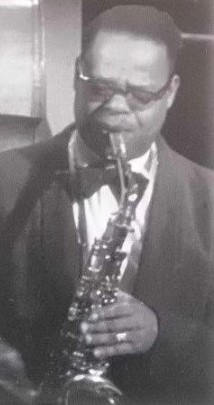
-
I think you mixed up the instigators of the sessions. As I recall (would have to check among my LPs) the "Birdlanders" sessions were organized and supervised by Henri Renaud, not André Hodeir. Renaud at any rate was less academic than Hodeir. As for their "sluggishnes", different strokes (again ...) - but I for one prefer the U.S. sessions supervised by André Persiany anyway to those supervised by Henri Renaud. Differing tastes again.
-
I bought my CD copy several years ago (as a welcome adition to the "swing-era reissues that do not duplicate what I already have" corner although in this case it is first issues, of course) and liked it but haven't listened to it in quite a while - so thanks for the reminder of its existence. Time to pull it out again. I don't think I am qualified enough to comment on Allen Lowe's assessment of the mastering. I trust his judgment but OTOH who knows what fidelity problems the source recordings may have had.
-
Leonard Feather Presents: A Battle Of Jazz
Big Beat Steve replied to Rabshakeh's topic in Miscellaneous Music
There was this CD reissue: https://www.discogs.com/release/10222725-Various-Hot-Versus-Cool-Cats-Versus-Chicks And an earlier Japanese reissue on vinyl: https://www.discogs.com/release/5759362-Leonard-Feather-Presents-Hot-Versus-Cool-A-Battle-Of-Jazz-Cats-Versus-Chicks-A-Jazz-Battle-Of-The-Se -
Leonard Feather Presents: A Battle Of Jazz
Big Beat Steve replied to Rabshakeh's topic in Miscellaneous Music
During my early eBay days in the very early 2000s this series came to my attention and somehow struck my fancy. I found the basic idea of these comparisons intriguing and one by one I scored the 10-inchers of the first three you list as well as the 12" West Coast-East Coast LP on MGM. They are no desert island discs to me but I like them all and find the comparisons not only entertaining but also quite instructive style-wise (but you need to be prepared to look at them without any preconceived notions of dead-serious "high art" that jazz might have to conform to in the minds of some). Period reviews (such as in Down Beat) were a bit lukewarm at times as by the reviewers' expectations and standards some worked better (or worse) than others and I think they found the basic idea too gimmicky (not enough "art" in the basic idea of these records?). Or maybe some of the reviewers had an underhanded axe to grind with Leonard Feather as the producer of these series? As for the cover you show, the picture had its real-life equivalent that the drawing was based on: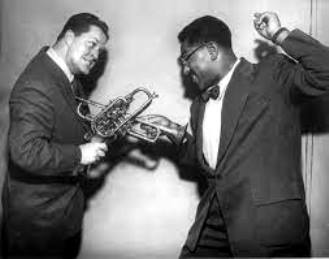
-
Re- the Third Stream records mentioned, I just checked: - George Gruntz, Jazz Goes Baroque (Philips 850876 PY) - George Grutz, Jazz Goes Baroque 2 - The Music of Italy (Philips 843827 PY) And I also now found she "only" had Play Bach No. 1 (Jacques Loussier) but also - The Swingle Singers Going Baroque (Philips B 77225 L) I.e. the primary "go-to" records of the early 60s in that substyle ... Like TTK explained, classical music from the Baroque era done in a jazz-toned vein. But of course a million miles away from jazzed-up classics like the John Kirby Sextet or Hazel Scott had done in earlier periods. Which is why these Baroque Jazz Third Stream recordings made a fairly big splash (at least here in Europe) with those who usually listened only to classical music.
-
File under "casual/occasional jazz listener". I've told the story of my late Ma before (not too long ago actually). She did listen to jazz in her somewhat earlier days (50s/60s) and did stress this when I got into jazz in the mid-70s but her jazz records consisted of several MJQ discs, two by George Gruntz and two of the inevitable "Play Bach". Now what would you make of THAT and what would THAT prove? Was it that after listening to a few Third Stream discs she decided that she didnt care enough about the rest in the field of jazz to get anything more? Bless her memory but the more I think of it the more I think this likely was the reason. Not feeling comfortable enough with jazz per se to stray too far from substyles of jazz that had ties with classical music. But what got me into discussions back then of course was that she claimed this (ie. Third Stream) was what all worthwhile jazz was all about. And no doubt there are many out there who focus on a very, very narrow segment or style of jazz (or even a single artist?) and claim this is it and this is all and this is the ultimate in jazz wherever, whenever ...
-
That echoes my impressions from way back and normally this (relative) omnipresence should have made me wary because I usually like to explore my music (any style) to quite some degree off the trodden paths of the usual "name" suspects. It actually did not turn me off him but what I had heard on the radio and bought of him as part of the rhythm section on other leaders' recordings was enough for quite a while. It took me a long time to buy any OP leader date records at all; the first ones were his initial ones on Canadian RCA (as documentary and historical evidence of him as part of the body of recorded jazz of the FORTIES, nothing else, but fine enough for that). Then came that MPS LP mentioned earlier in this thread (an atypical case apart) and later I added several others from his Verve and Pablo days as they came my way at prices where you just cannot go wrong - including his "We Get Requests" which I have come to like as part of late-night listening programming for relaxation. (But this record did get a lujkewarm review too in certain circles so there you are ... ) Your comments on his stage presence and impression point hint at what no doubt was part of his success - not being an unpredictable nut job or an odd man out no doubt helped with the general public at large, particularly in Europe. (Which OTOH would should have guaranteed more sucess to the likes of Teddy Wilson, Hank Jones etc. too, but that's the way it goes ...) And like in your case of Red Garland and Jaki Byard there always were other modern jazz pianists whose recordings I sought out much more actively - Al Haig, George Wallington, Dodo Mamarosa, Hampton Hawes a.o. But some OP is perfectly in order and has its place and cannot give rise to feeling offended. Again - in the end it all boils down to personal tastes - listen to a musician if you like him enough, don't listen if you don't like him. And if the musician you don't like isn't even the leader but only a sideman it is for everyone to decide if this one would be off-putting enough. If so, don't listen (at least not more than once). I've heard more than one session that have been ruined (for me!) by this or that musician in the line-up who marred my listening experience. But I realize the leader was satisfied enough with that musician to use him (regularly even) so it was his choice and the listeners will have to live with it. But trying to wage wars because they find this or that one would be more deserving in the place of the "name" musician is and remains pointless. Somehow this entire debate reminds me of what you read elsewhere when the names of Dave Brubeck or George Shearing come up. "It's (Brubeck or Shearing or OP - check the applicable ) so there's GOT to be something to moan about ..."
-
Yes they were wrong. But it does have a bearing IMO because the parallels are there. And because just appreciation seems to take its time in some circles. Liking or not liking an artist is always a matter of personal tastes and is perfectly OK - but the fierce hostility that some seem to be so intent on splurting out strikes me as rather odd. As if they had an axe to grind and feel "offended" bcause he reaped fame that they would insist on seeing go elsewhere? But did anyone ever force anyone else at gunpoint to listen to OP? As for "filling space", different strokes and styles - apart from not everyone wanting a Basie-style pianist in his rhythm section and some probably appreciating that OP was not one of those that Lester Young wondered where their "left people" were, it cannot have been that bad, considering all the recordings where OP was part of the rhythm section. And considering the standing of the typical front line men of these sessions, it cannot have been a case of the front line having to rely on the "name" credentials of OP in the rhythm section for their sessions either. So he cannot have gotten in their way that badly. Funny, too, this "filling space" thing - I cannot remember many reviewing complaints of the overbearing drumming of Art Blakey on certain recordings (or Buddy Rich in a different style, for that matter ...) that came close to drowning out the horns. So maybe the musicians' playing styles just ought to be taken the way they were - like it (then listen to it) or not (then skip it). Makes you wonder again why some seem to need OP as an ongoing pet peeve.
-
FWIW, there is more than one contemporary printed source from the 50s that tried to make much the same point (or should I say complaint?) about Art Tatum. The gist of them: All virtuosity, all too little jazz content.
-
See, I've never heard a recording under the name of Cecil Taylor that made me say "I gotta get that". So ...? BTW, any lame (pseudo) arguments along the lines of "If you can't hear the difference" are and remain pointless in ANY discussion of extolling the virtues and merits of one artist over another and overriding notions of "mandatory listening" . It ALWAYS is a matter of personal tastes and "different strokes" and there is NO objectivity in this. FWIW, I've not heard a recording under OP's name that made me say "I gotta get that" either - except for ONE single one - his "Travelin' On" LP in the "Exclusively For My Friends" series on MPS (for personal musical reasons beside the point here). Yet I would not blast him the way others seem to thrive on doing (to prove what exactly again - the "merits" of which "more deserving" other pianists?) And while I agree that a lot of his popularity no doubt rested among newbie and part time jazz fans, that is no mean achievement either IMO. Better at any rate as a means of getting at least a portion of those introduced to jazz via OP to go and explore jazz beyond OP. Better than certain others who came along later and went out of their way to chase, clobber and frighten away an awful lot of a potential audience, most of which ended up with only saying "jazz - that's too weird and way too much noise for me". An unfortunately deeply engrained reaction that I am still facing to this day when I just mention in passing that I listen to a huge lot of jazz. They apparently lump my tastes in with noises from styles of jazz I don't embrace either (and have no reason to be sorry for it), whereas they have no clue what there would be in the way of ACCESSIBLE swing, cool, R&B, soul jazz, etc. (even retro swing) for them to groove to - if only other styles of jazz hyped during certain periods in the past decades hadn't made entry into jazz so much more difficult even for those listeners with ears intially open beyond straight rock. Fine for those who prefer their jazz as a small insiders' high-brow circle and sneer at anything and any artist immediately accessible to anyone beyond that insiders' circle. But is it a way to carry on the jazz message?
-
Not wanting to pick nits but strictly speaking, it's legal by 3 quarters by European PD standards. As for why "3 quarters", the "To My Queen" album was recorded in September 1962, i.e. a couple of months AFTER the non-retroactively applicable 50-year cutoff date of European PD laws (meaning that whatever was in the P.D. after 50 years had passed by the time the new rules came into effect some time in mid-2012 REMAINS in the P.D. forevermore, regardless of the extension of P.D. protection in Europe for what was recorded later). But does anyone really think anybody at Concord would give a hoot about a possible infringement for this sole LP on that third-party re-reissue these days? So in the end it boils down to "Use it or lose it." And as for whether someone outside Europe (and the applicability of Europan PD laws) should be buying these items, well, that's for each and everyone concerned to decide.
-
I fully sympathize with your approach and find it sensible (regardless of what certain other usual supects may oppose as a matter of principle ... ). I did the same thing some time ago with the set on Lem Winchester - for the same reasons, and have NO qualms. And as far as I can see they're even CDs - not CD-Rs as some other (purportedly more reputable) labels may trick you into or what "people" could do for you. As for the sound quality - I cannot speak for the entire series but I have a couple of others from that series where I already had part of the LPs included, and an aural comparison with the vinyl did not come out bad for that CD set, actually. In short - go ahead and buy if you feel like owning them, if only to tide you over until you find affordable individual items (originals or older reissues or whatever else beyond this compilation you may have been thinking of). And then you can still relegate this set to your car CD player.
-
Amazon ranking or reader's reviews? (which for most of the 6 in this series seem to rate 4.5 out of 5 stars, whatever that may mean in the end and depending on one's own tastes) I am still on the fence about ordering the first few of them just for the fun of it, but I expect them to be fun for a casual read and for seeing if I will be drawn into the vinyl junkie world from THIS angle for a change ... I've read and enjoyed "High Fidelity" by Nick Hornby and "Tiger Rag" by Nicholas Christopher, I've enjoyed the recollections of record hunting in back-alley junk stores in decades gone by as related in "Back Beauty White Heat" and one of the Esquire Jazz Books or in the recollections of blues collectors (what was that again about the only known copy of one Charley Patton - or whoever - record surfacing in a stack of dusty 78s stashed under the bed of some elderly Black tenant in a shack on the wrong side of town? ), etc. So why not add one or two vaguely related books from THIS angle (and smile at the moments of "been there, done that") just to see how the the saying of "I'd kill for that record" might actually happen, even if these works are not likely to add to the canon of world literature?