_forumlogo.png.a607ef20a6e0c299ab2aa6443aa1f32e.png)

mhatta
-
Posts
495 -
Joined
-
Last visited
Content Type
Profiles
Forums
Events
Blogs
Everything posted by mhatta
-
Since Sarah Vaughan’s Continental recording (as “Interlude”) was made on December 31, 1944, this one might be slightly earlier. Dizzy is also featured on it. It appears Boyd Raeburn first performed it during a live show in New York on January 17, 1945, and Dizzy was there as well. Tristano recorded “Interlude” in New York in October 1946, which was quite early in its adoption. It’s unclear where Tristano first heard “Interlude”—perhaps he heard Raeburn in NY, or maybe he was already friends with Dizzy at the time. Interestingly, Stan Kenton was performing a song titled “Interlude” around the same time. However, when I listened to the March 1947 recording included in the Mosaic box set, it turned out to be a different song with the same title, unrelated to “A Night In Tunisia.” This might be a distant reason why Dizzy changed the song’s title and, in later years, didn’t have very favorable things to say about Kenton.
-
While there have been a few Japanese bassists who moved to the United States, Kitagawa was the most successful of them all. He was a cheerful guy from the Kansai region (Japan has regional differences too; in American terms, he was sort of like someone from Chicago). He wasn’t even 70 yet, so it was a tragic death. RIP.
-
Sadao Watanabe is a pioneer of modern jazz in Japan, but he is perhaps best known in Japan for songs from fusion albums like "My Dear Life", "California Shower", and "Orange Express"—which were not really "smooth jazz", but influenced by African-inspired world music and Brazilian music—that were frequently played on radio and television throughout the 1970s and 1980s. I’ve heard that this style of Japanese crossover music is also popular overseas these days. Incidentally, Watanabe is 93 years old and still performs live regularly; he’s full of energy.
-
Both the performance and the sound quality far exceeded my expectations. I think this is a fantastic live recording. “Giant Steps” is great, but “Satellite” is this good (including McCoy) —I wonder why it never made it into their live repertoire. I definitely want to hear the rest of the recordings.
-
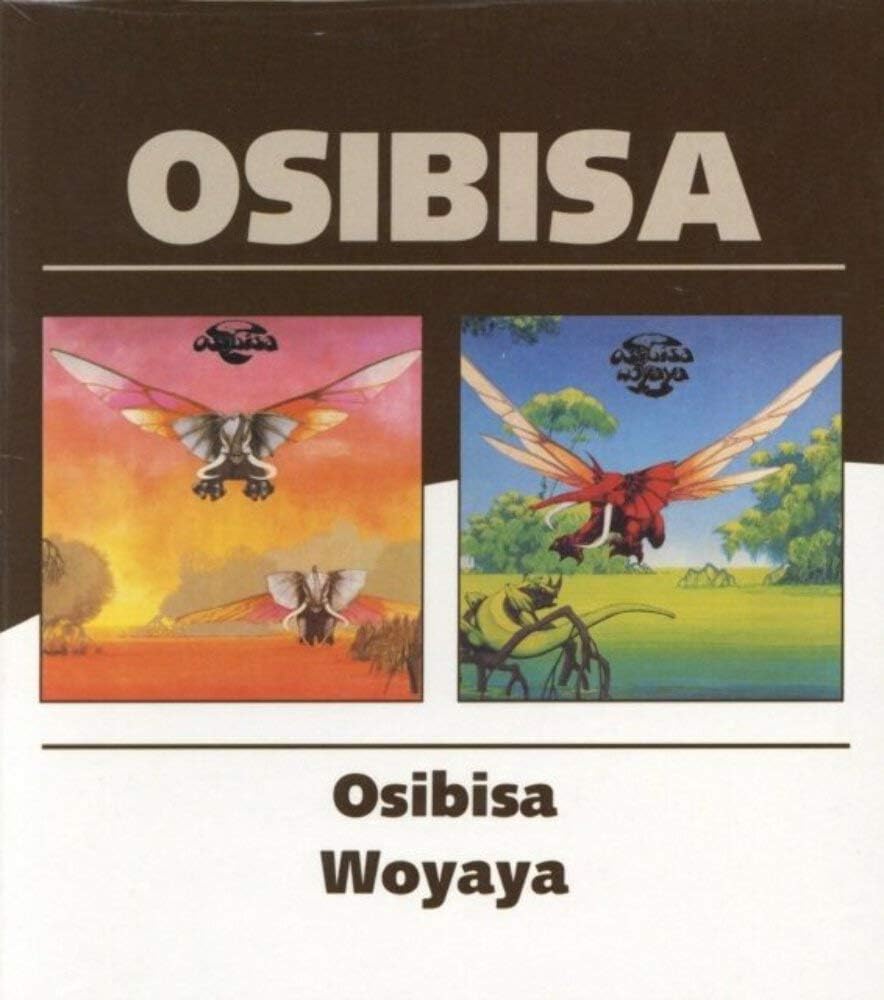
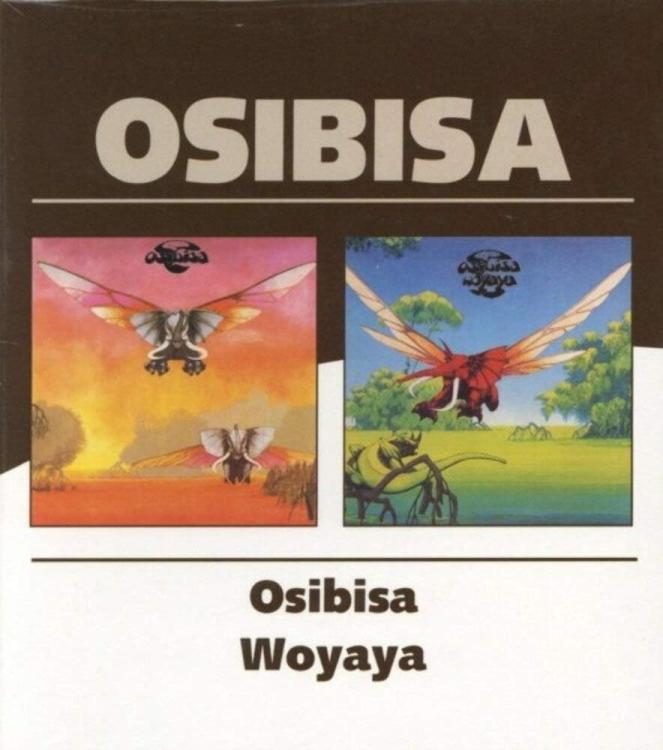
My personal favorite BGO reissue.
-
I think Lou Levy is one of the West Coast jazz veterans whose work since 1975 has been overlooked. While he has released several excellent albums as a bandleader, I feel he was essentially the house pianist for West Coast jazz from the 1970s onward. He also appeared on many Atlas recordings.
-
I was deeply moved when I heard Chet Baker perform the song “Sad Walk” in his later years. It wasn’t until some time later that I realized it was composed by Bob Zieff. Zieff is an exceptionally talented composer, and I believe his works deserve to be performed more often.
-
I didn’t know The Visitors had a third album. I’ve heard "In My Youth" because it was released on CD, and I think "Rebirth" hasn’t been released on CD, but I’ve heard it too, and it’s one of my favorites. I’d really like to give it a listen. I think they were very talented composers.
-
I recently heard Ben play “Confirmation” in 1964 and was surprised by how good he was. The theme was great, and the solo was in top form. I know there are many who disagree, but personally, I feel that Byas never quite managed to fully embrace the modern style (especially in his rhythmic groove), whereas Webster seemed more flexible with new rhythmic concepts. https://storyvillerecords.bandcamp.com/album/at-ronnie-scott-1964
-
I think he’s a very technically skilled and good pianist, but to be honest, based on the video, I don’t really understand why Allen Lowe is so excited.
-
It was a shame I didn’t get to see Geri Allen perform live. I’m probably in the minority here, but personally, while I appreciate her later, more traditional style of piano playing, I feel it was a bit “too serious.” Coming from the M-BASE scene, I preferred her earlier performances, where she really put her keyboards to work. Her music had a unique, ethereal quality—it was bright and open—and I feel like she never fully explored that potential before it came to an end.
-
Though not a Jazz Messengers album, I somehow like Bluesiana Triangle, where Blakey participated as a drummer. Since it was recorded just before his death, you don't really feel much power anymore, but it has a rich, savory flavor. I think his strength wasn't power, but rather his excellent taste. He plays piano and sings too.
-
I used to be turned off by this kind of “marketing ploy,” but I've come to think it's important to regularly remind people who don't know about them. Most jazz giants seem forgotten now or misunderstood. Better to be a nagging reminder than forgotten altogether.
-
Absolutely right! In terms of how a producer's name alone could make you buy an album by a completely unknown artist, Alfred Lion and Don were the twin pillars. Honestly, I had no idea who most of the leaders on Xanadu's albums were until I bought them. I bought them sight unseen, but they almost never disappointed. RIP.
-
I like it. Buster's bass has a slightly lower center of gravity than Ron Carter's and pushes forward more, so I think he matches better with the heavy Tony and the lighter Hank Jones than Carter does.
-

Rev. Jesse Jackson (1941-2026)
mhatta replied to clifford_thornton's topic in Miscellaneous - Non-Political
RIP. This was recorded in 1972. T -
Spike Robinson was like that too. A whole generation of tenor players who idolized Lester Young seemed to hold their mouthpieces at an angle like this, trying to imitate Prez. I don't play sax, so I don't know what effect it has. Back in the day, I tried playing flat-handed across the keys like Bud Powell, but I couldn't play well that way.
-
Some people might dislike flashy stuff like this, but I actually quite like it. Or maybe I just don't really like the song “Invitation” to begin with...
-
I also have most of the first recording (which circulated as a bootleg), but I don't have the second recording at all, the one that includes Giant Steps and Satellite. If Tiberi recorded the second one, were there other taper(s) in Philadelphia besides Tiberi at the time? (I can't recall the name, but I remember hearing there was one). The sound quality of the first recording is terrible, so I hope the second one is at least a little better.
-
Joe Henderson - Consonance: Live at the Jazz Showcase
mhatta replied to DougFelt's topic in New Releases
Joe Henderson in 1978 may not have enjoyed the widespread popularity he later achieved, but I believe he was in excellent form as a player. Also, Joanne Brackeen was at her peak. Personally, when I think of Steve Rodby, I recall him playing electric bass on Pat Metheny's best albums. However, it seems he originally played acoustic bass. I've heard a live recording of Joe Henderson in France from around the same time (November 1978), and Rufus Reid was on bass for that session (same pianist and drummer). Since Rodby was the house bassist at the Jazz Showcase, he might have been filling in for Reid. Danny Spencer wasn't particularly distinctive, but he was a competent drummer. -
I knew there was a live recording of Giant Steps with very poor sound quality (it must be somewhere on YouTube), but I don't know if it's the same one Tiberi recorded. I knew nothing at all about a live recording of Satellite. I disagree with everyone about Satellite; it's a composition I really like. I think it has a sentimental yet futuristic soaring melody. Though the core is How High The Moon, of course.
-
I clearly remember the first box set I ever bought: Rahsaan Roland Kirk's Mercury Complete Box. It was really good. The top shelf of my closet is filled with Mosaic and other LP-sized box sets, and recently I discovered a Mosaic box set of Mildred Bailey that I had completely forgotten I had bought. Thank you, past me! Back in the day, Mosaic would send paper catalogs and pamphlets to Japan, and they were a valuable source of information on Jazz at the time. I feel like there was a stronger sense of belonging to the community than there is with social media today. Nowadays, you can often listen to the audio from CD box sets via music streaming platforms. You don't even need to rip it from a CD anymore. The other day, I found Woody Herman's Mosaic Select at a used CD shop in my neighborhood and bought it in ecstasy, but it is available as The Philips Recordings on many streaming services. In the end, most of the value of box sets today lies in the liner notes, which contain information you can't find anywhere else. However, that would be meaningless unless you're a jazz researcher or enthusiast.
-
RIP. I'd heard he was seriously ill, so it's inevitable, but it's still sad. While Richie Beirach is famous for his ECM recordings, I'd also recommend checking out his lesser-known albums produced in Japan. On the Trio label, albums like Sunday Song (a duo with Frank Tusa), Omerta (a duo with Dave Liebman), and Maracaibo Cornpone (where he appears as a sideman for George Otsuka) showcase a powerful side of Beirach quite different from his more decadent ECM music, and I really enjoy them.
-
For some reason I don't remember anymore, but apparently I bought this set nearly 20 years ago. And while I did open it, I “apparently” put it in the closet (probably without listening to a single track) – I don't even remember putting it there. Today, while cleaning out the closet for the first time in about 20 years, I unearthed it. The box is slightly damaged, so I can't even sell it! I plan to listen to it now.
-
Pepper Adams (and Byrd) played that tune as The Long Two/Four on "10 To 4 At The 5 Spot." I guess probably it doesn't have a canonical name.